
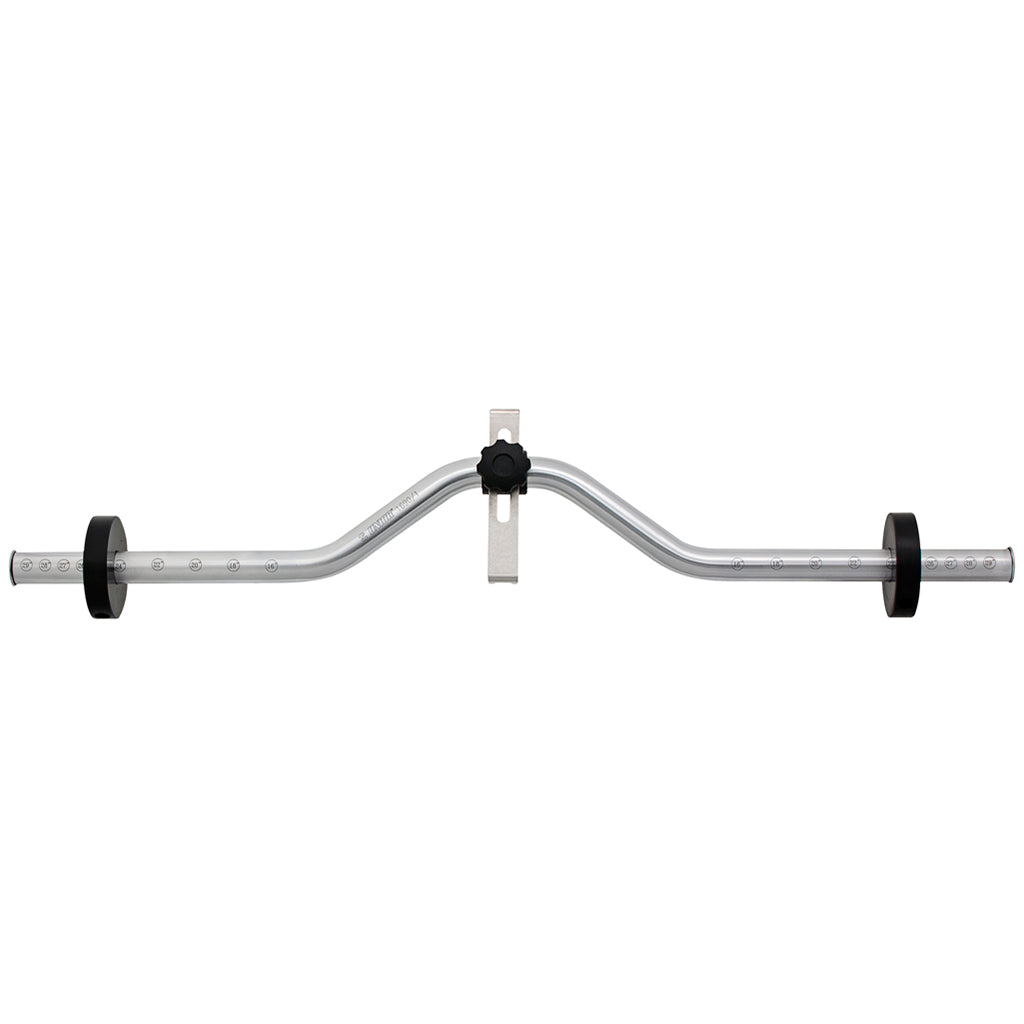

A wheel can run true and still sit off-center on the hub. The 1690/1 reads that dish: PE slides span 16 to 29 inch rims, with or without the tire, and the screw-locked middle rest indexes on the hub axle. Flip the wheel; matching reads mean the rim is centered; 667 mm long, 850 g.
Low stock
Couldn't load pickup availability
Free US shipping on orders $75+
Some exceptions apply — see shipping policy
Unior has made hand tools in Zreče, Slovenia since 1919 and sponsors professional road and mountain-bike race teams.
View full details
A wheel can be true side-to-side and round front-to-back and still be wrong. If the rim isn't centered between the two locknut faces of the hub, the bike will track strangely, the brake pads will wear unevenly, and the rear derailleur won't index cleanly. The 1690/1 dishing gauge reads that centering directly.
The gauge spans the rim with a middle rest that indexes on the hub axle. Set the gauge against one side of the wheel, note where the middle rest lands on the hub axle; flip the wheel and set the gauge against the other side, note the rest again. If both reads land in the same place, the rim is centered between the locknuts and the wheel is correctly dished. If one side is shorter than the other, the rim is dished to the long side, and the spokes on the short side need a fraction of a turn of tightening to pull the rim toward them.
The PE slides at either end of the gauge rest on the rim, or on the tire when it is still mounted, so the dish read works without stripping the wheel. That isn't a minor detail: stripping a tubeless tire off a freshly-built wheel to dish-check, then re-mounting and re-sealing, can add half an hour to a wheel build. The 1690/1 lets you skip that step.
Compatibility
- Wheels: 16 to 29 inch rims, with or without tire mounted.
- Hubs: standard front and rear hubs; the middle rest indexes on the hub axle.
- The 1690/1 is for symmetric and most asymmetric dished wheels; check the wheel's intended dish if you're working on an unusual rim/hub combination (some rims are intentionally offset).
Specs
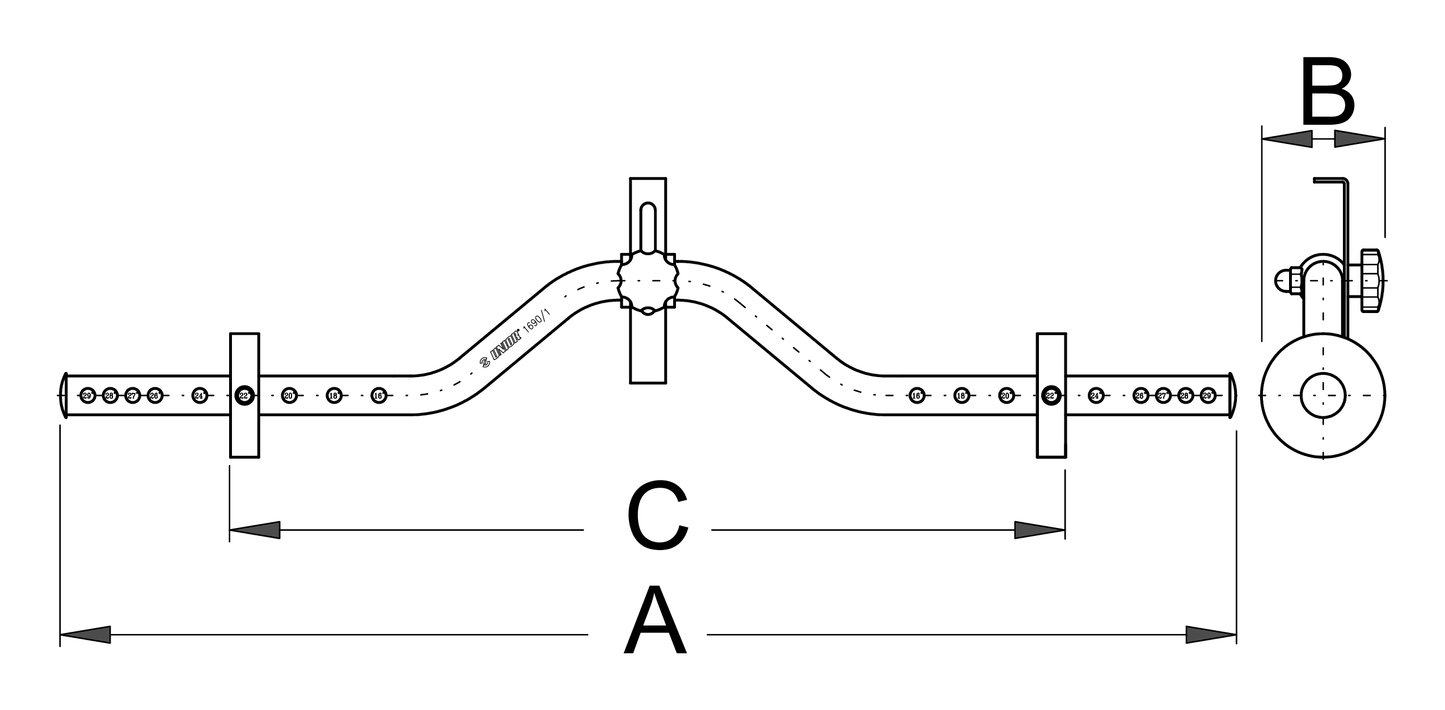
- Wheel range: 16 to 29 inch, with or without tire. Slide spacing 320–660 mm; overall length 667 mm; rest height 70 mm; 850 g.
- PE-polyethylene slides rest on the rim, or on the tire when it is still mounted, so you can dish-check without stripping a tubeless setup.
- Middle rest locks with a screw against the hub axle. Construction steel, stainless steel, and PE-polyethylene; trivalent chrome plated. Article 1690/1, SKU 618486; Unior lifetime warranty.
Built in Zreče, Slovenia
Unior has been forging hand tools in Zreče since 1919, and sponsors professional road and mountain-bike race teams. The dishing tool is one of the older designs in the wheelbuilding catalog; the principle hasn't changed since rims have been centered on hubs; and the 1690/1's construction has stayed stable across the years. Most wheelbuilders own one dishing tool and use it for the duration of their wheelbuilding life; the 1690/1 is the version we've watched our mechanics use for that life.
Pro tip from our mechanics
A wheel that's true but un-dished will read perfectly through the truing stand's calipers and still ride wrong. We dish-check every wheel after the lateral and radial true passes, and again after the tension-balance pass; the dish can shift a fraction of a millimeter as the spokes settle into final tension. If the dish has drifted, the wheel goes back on the stand for one more pass. The rest of the truing workflow is in How to true a bike wheel →
FAQ
Which rim sizes does the 1690/1 cover? 16 to 29 inch rims, with or without the tire mounted. The PE slides adjust from 320 to 660 mm apart; stamped marks on the bar match the common wheel sizes in that range.
Can I check dish without taking the tire off? Yes. Unior specifies the 1690/1 for wheels with or without a tire. The PE slides rest on the rim when the tire is off, or on the tire when it is still mounted, so a tubeless setup does not have to be stripped just to read dish.
How do I set the 1690/1 and compare the two sides? Set the slide spacing to the wheel, lean the middle rest against the hub axle, bring the slides onto the rim (or tire), and lock the rest with the thumbscrew. Flip the wheel and repeat. Matching rest-to-axle reads mean the rim is centered between the hub faces; if one side is closer, the rim needs to be pulled toward the wider side.
What is the 1690/1 made of, and how big is it? Construction steel, stainless steel, and PE-polyethylene, trivalent chrome plated. Overall length 667 mm, rest height 70 mm, slide spacing 320–660 mm, 850 g. Article 1690/1, SKU 618486, covered by Unior's lifetime warranty.
 Tech Tips
How to true a bike wheel
Tech Tips
How to true a bike wheel
