
SKU: P/N: 627784
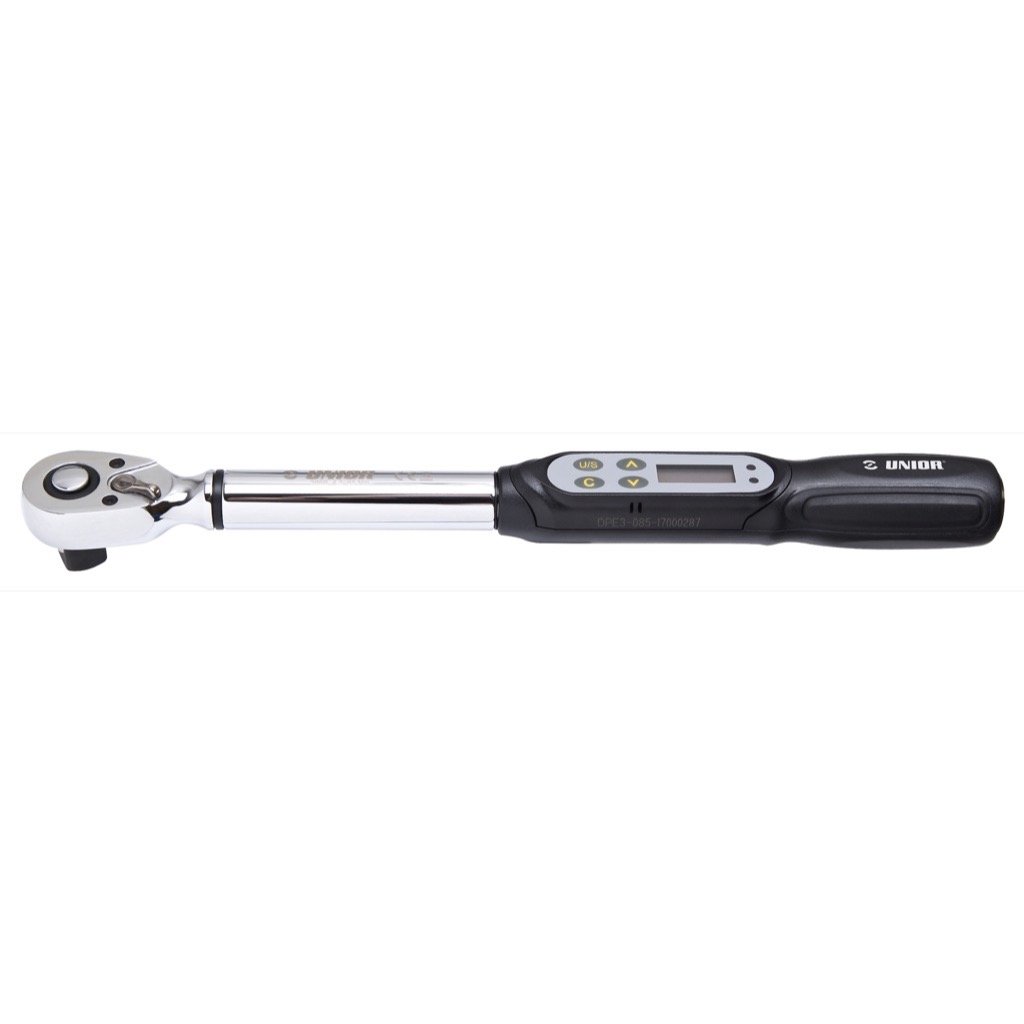
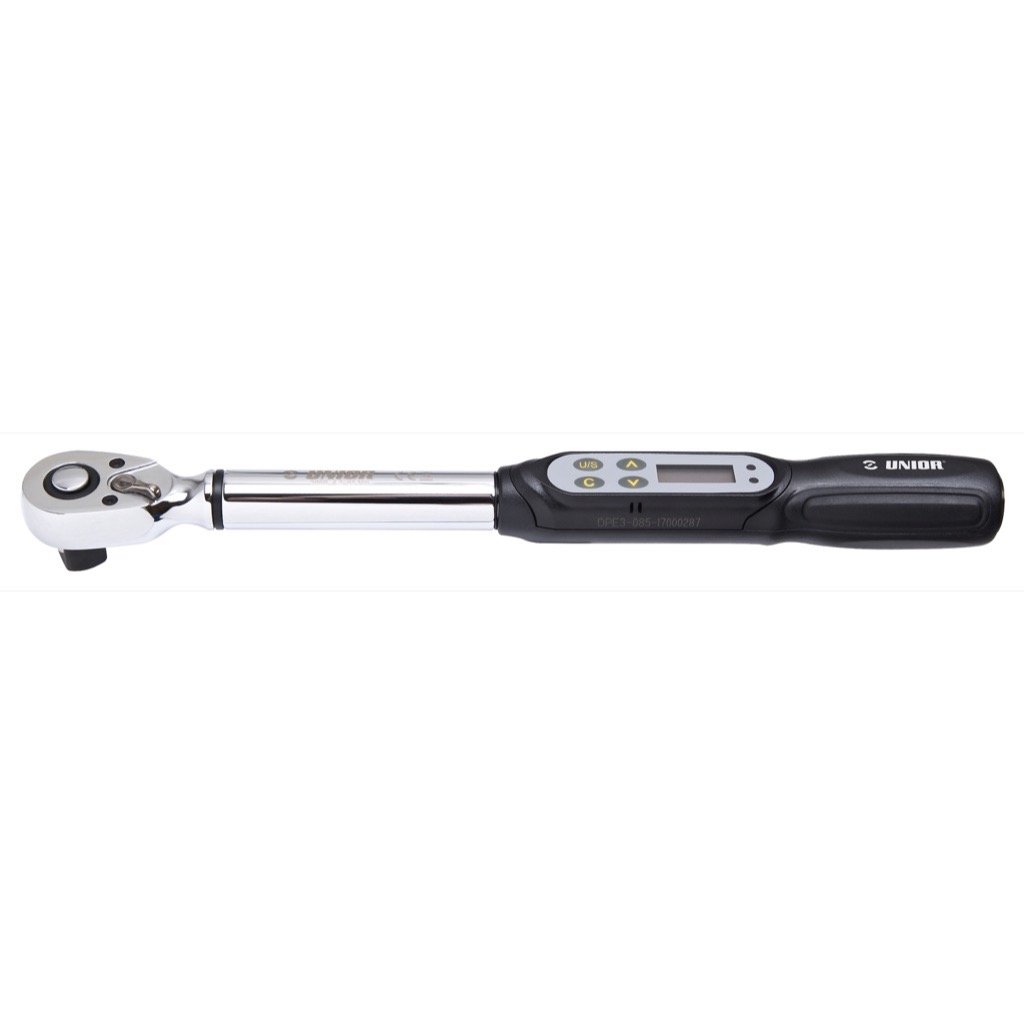
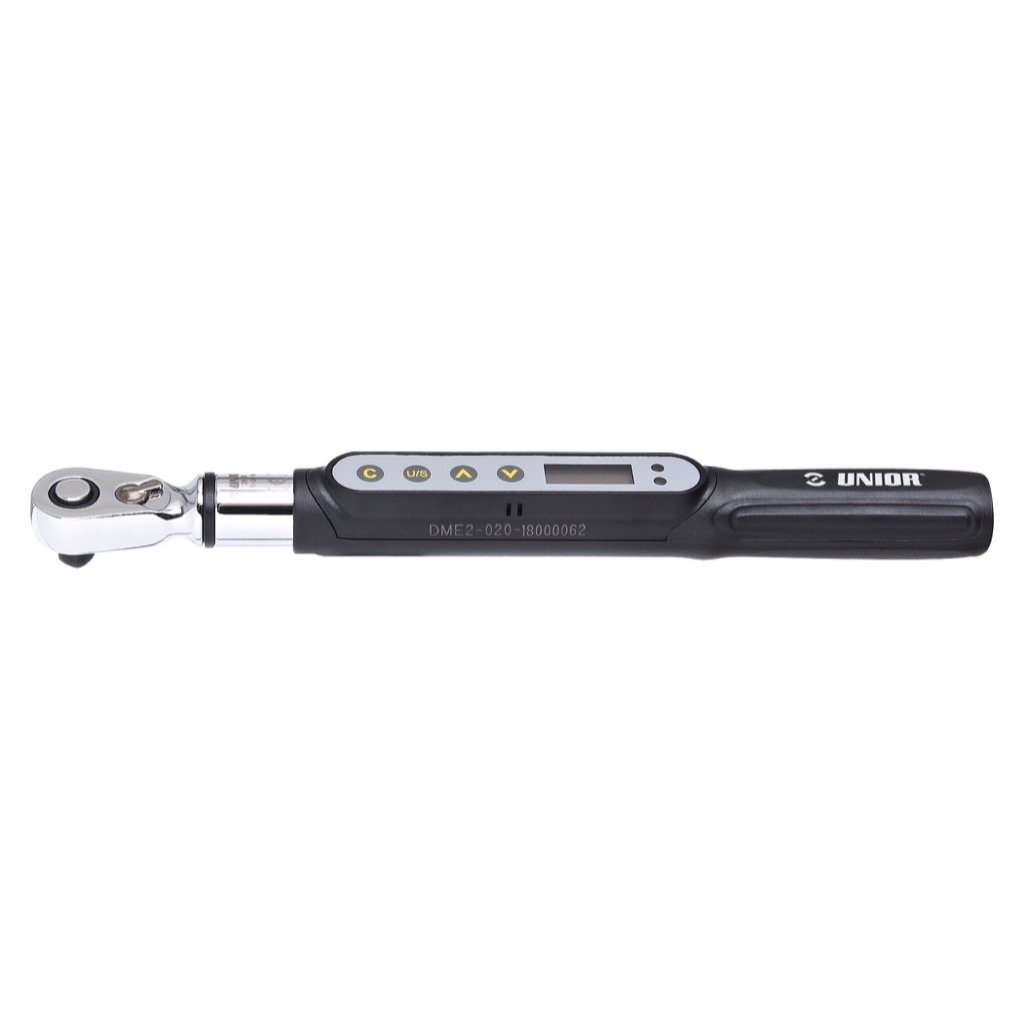
Electronic Torque Wrench 1 to 20Nm
Electronic Torque Wrench 1 to 20Nm
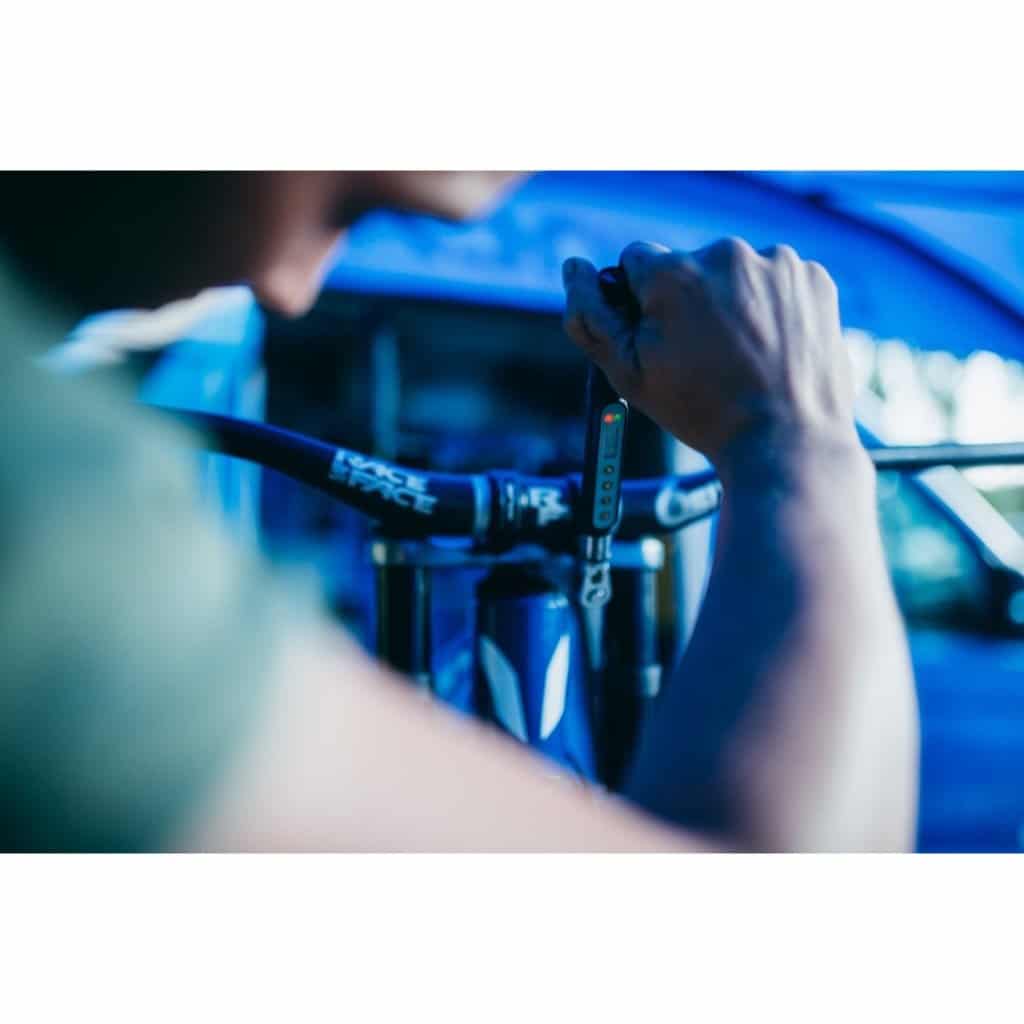
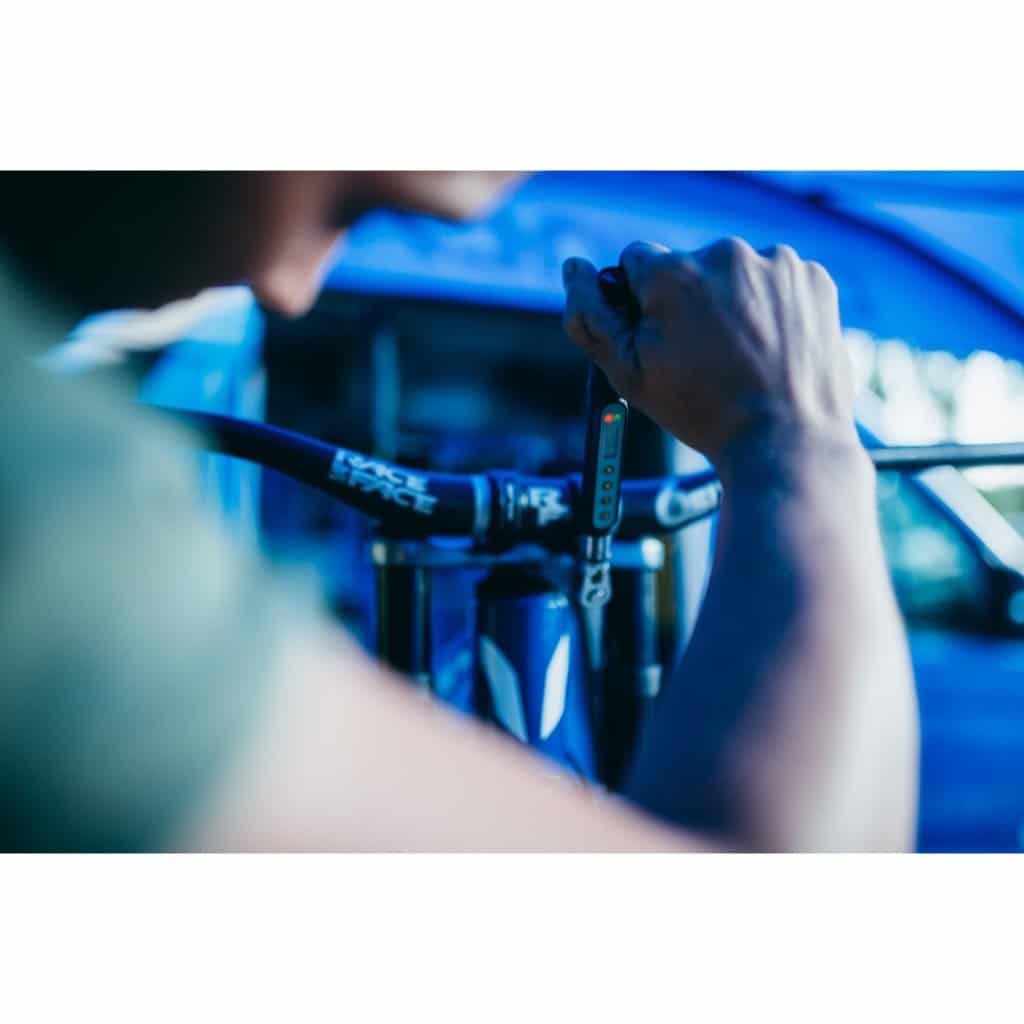
Most of the fasteners a home mechanic touches sit between 1 and 20 Nm. Stem bolts, brake-caliper mount bolts, fork foot bolts, seatpost clamps, derailleur hanger bolts, water-bottle bosses, every bolt on a cockpit. Get any one of these wrong and the failure mode is expensive; a carbon bar that cracks under a hard pull, a fork lower-leg casting that splits under an overtight foot bolt, a brake caliper bolt that backs out mid-descent because it was never torqued at all.
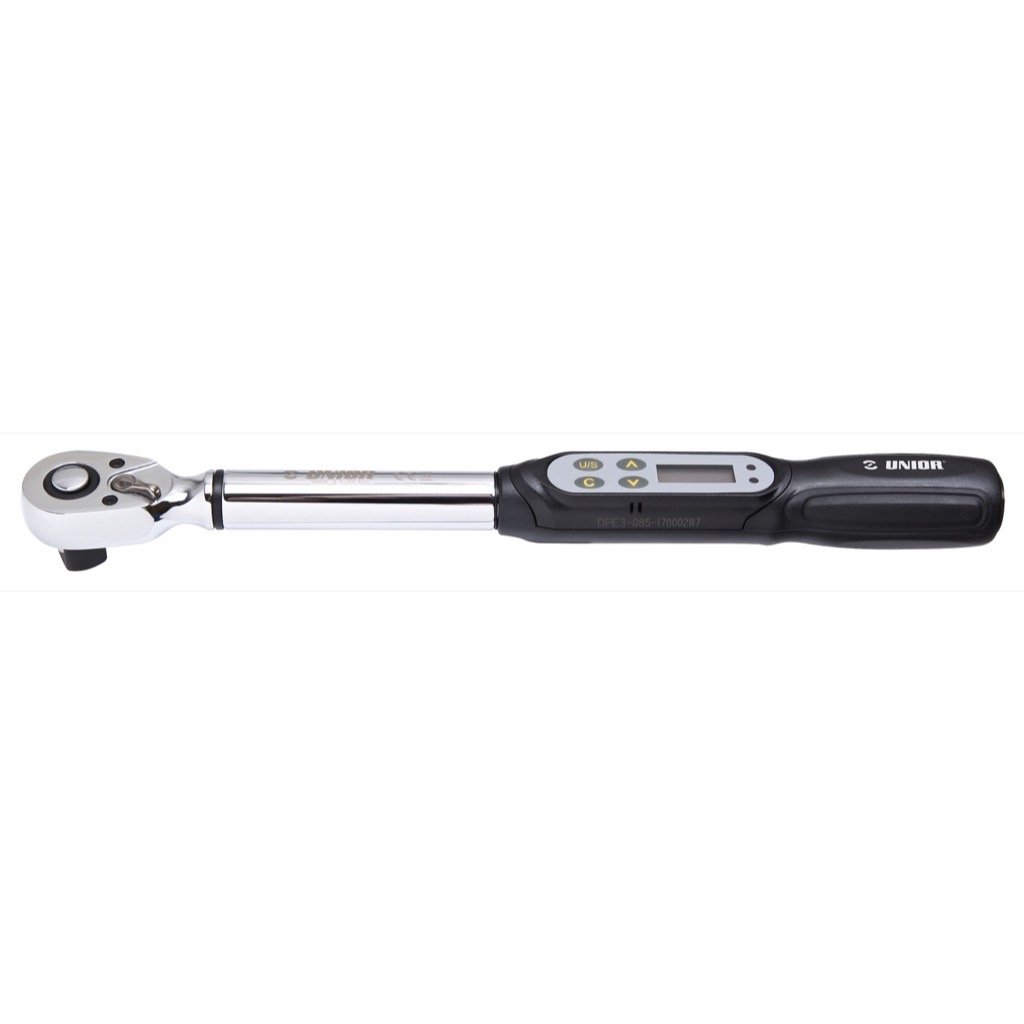
The 266B 1-20 Nm electronic torque wrench reads the value digitally, signals with an audible buzzer and dual LED indicators when the set torque is reached, and holds the peak reading for review. No estimating where the click is, no calibrating against a hand-feel torque memory.
What this wrench is for
- Stem-faceplate, headset top-cap, and bar clamp torques (typically 4-8 Nm range)
- Fork foot bolts on a lower-leg service (manufacturer-specified, usually 5-9 Nm)
- Brake caliper mount bolts (typically 6-9 Nm)
- Seatpost clamp bolts on aluminum and carbon frames (4-7 Nm)
- Derailleur hanger and rear-derailleur mounting torque (5-10 Nm)
- Disc rotor bolt torque on six-bolt rotors (typically 4-6 Nm)
In our shop the 1-20 Nm wrench lives in the cockpit drawer because that is where ninety percent of its work happens. For anything above 20 Nm; cassette lockrings, crank arms, BB cups, pedal threads; reach for the 4.2-85 Nm version.
Specs
- Range: 1 to 20 Nm
- Drive: 1/4" square
- Readout: electronic LCD with peak hold
- Feedback: audible buzzer plus two LED indicators at set torque
- Calibration tolerance: +/-3% clockwise, +/-4% counter-clockwise
- Article: 266B variant (1-20 Nm)
Built in Zreče, Slovenia
Unior has been forging hand tools in Zreče since 1919, and is the official technical partner of multiple World Tour and downhill teams. Electronic readout with buzzer-and-LED feedback at the set torque; the wrench gives you the value rather than asking you to interpret a click. Suspension foot bolts and brake-caliper bolts both sit in this range; both are fasteners where overtightening cracks a casting and undertightening loses the bolt to vibration.
Pro tip from our mechanics
Foot bolts on a fork service live in this torque range. Overtightening cracks the lower-leg casting; the electronic readout is the one we trust on the bench rather than a click-style wrench that has been bumped or dropped since its last calibration. Cycle the wrench against itself before a service to verify the readout.
Couldn't load pickup availability
Share
