


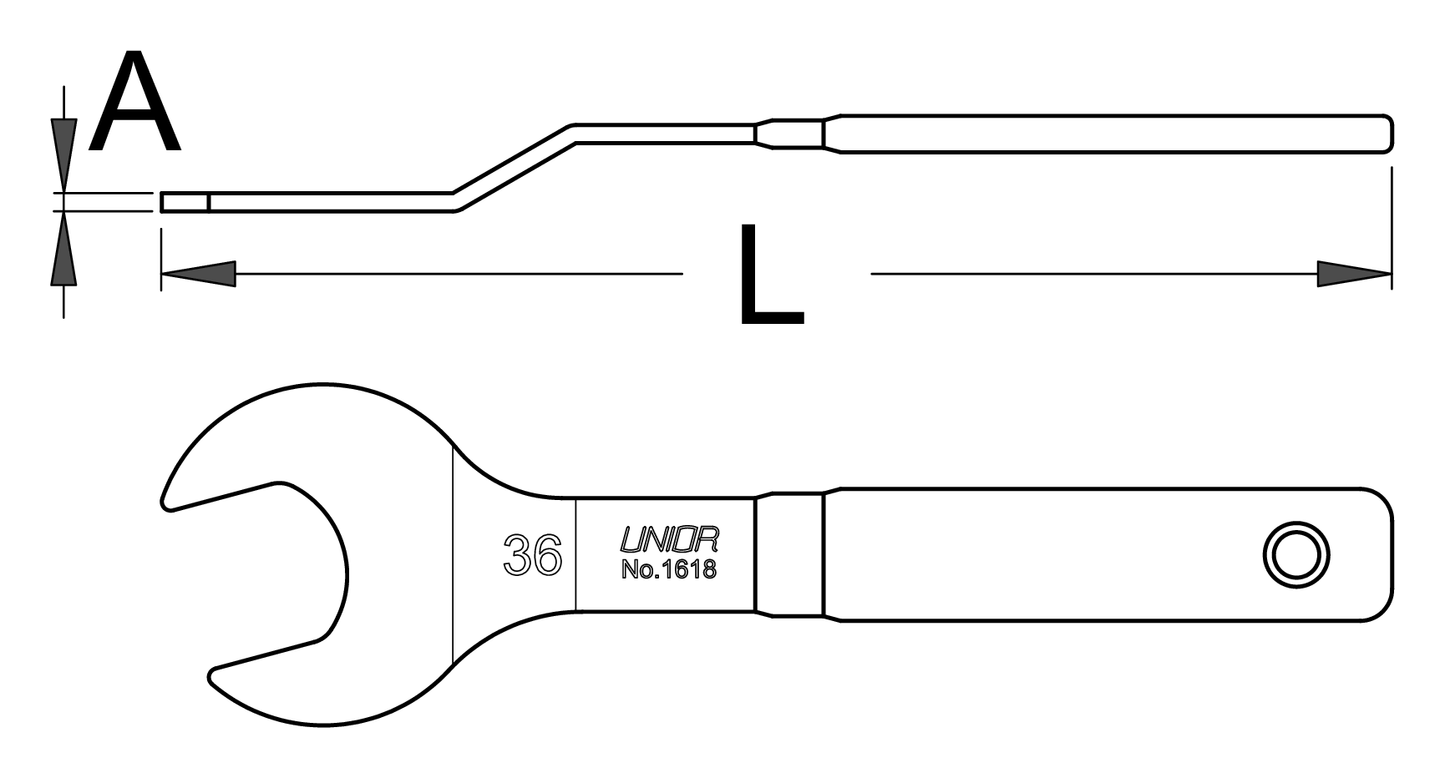
A 36 mm cone wrench with the handle bent out of plane, so it clears the second wrench holding the cone right below the locknut. Thin 4 mm jaw, 270 mm chrome-plated carbon-steel body, double-dipped grip. Made to pair with Unior's straight 1617/2DP cone wrench for threaded-headset service.
In stock
Couldn't load pickup availability
Free US shipping on orders $75+
Some exceptions apply — see shipping policy
Unior has made hand tools in Zreče, Slovenia since 1919 and sponsors professional road and mountain-bike race teams.
View full details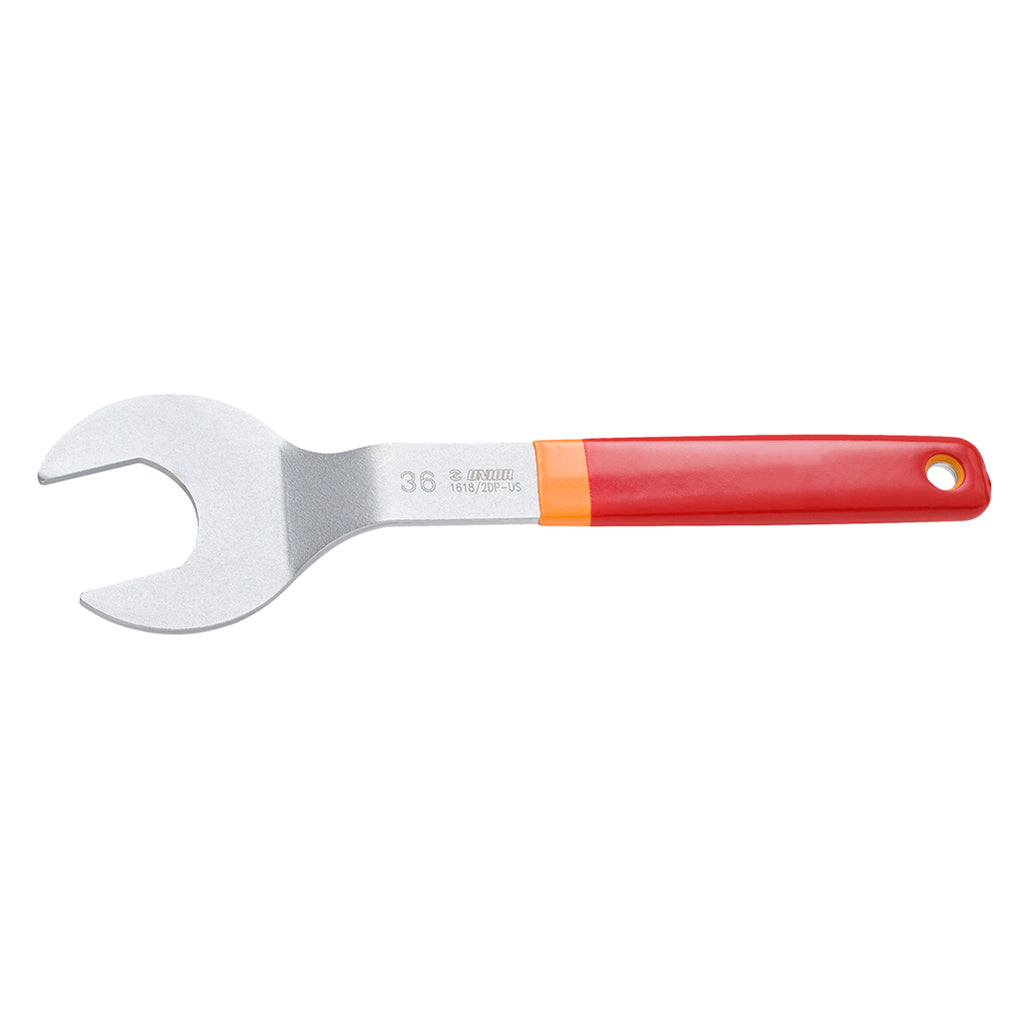
On this page
A threaded headset's locknut sits closer to its cone than almost any other cone-and-locknut pair on a bike. The locknut is the upper part of the threaded stack, the cone is directly underneath it, and the working gap is sometimes only a few millimeters wide. Two straight cone wrenches in that gap leave nowhere for your fingers to go, which makes the wrench harder to hold steady while the second wrench is being torqued. The 1618/2DP-US is the offset-cone-wrench answer to that geometry: same thin body and same flat-jaw engagement as a standard cone wrench, with an offset bend that puts the handle out of the way.
How it works
The wrench engages on the locknut flats (or the cone flats) the same way a standard cone wrench does, but the handle is bent out of plane to clear the adjacent fastener. The result: one wrench engages the cone, the offset wrench engages the locknut directly above it, and there's enough room between the two handles to grip both at full torque without your fingers fouling each other.
The offset is the geometry feature; the working faces are still the same thin-profile flat-jaw design that grips the locknut's flats without wandering or skipping.
Spec
- Size: 36 mm
- Material: heat-treated, chrome-plated carbon steel
- Body geometry: thin profile with handle offset — 270 mm long with a 4 mm-thick jaw, sized for threaded-headset locknut clearance
- Handle: double-dipped grip; comfortable under torque load
The 36 mm size is the workshop-common threaded-headset locknut flat, the size 1-1/8" threaded headsets standardized on; most 1" headsets take a 32 mm wrench instead, and a few call for 40 mm. For the cone in the pair (typically a smaller flat), pair the 1618 with a standard-geometry cone wrench from the 1617/2DP-US line.
When to use the offset
Threaded headset service is the primary case; Unior names Sun Tour headset nuts specifically. Some older cup-and-cone hub designs also put the locknut close enough to the cone that an offset wrench is the cleanest way to hold the cone steady; the offset is also useful on a few bottom-bracket lockring applications where two parallel fasteners are close enough together that a straight wrench's handle fouls the second tool.
Compatibility
The 1618/2DP-US fits 36 mm flats on threaded headset locknuts and on locknut applications elsewhere in the bike with the same flat-across-flats spec. It does not engage Centerlock disc-brake rotor lockrings (those use a splined cassette-tool pattern; see the Disc Brake Rotor Lockring Wrench) or cassette lockrings (which use the cassette-tool pattern as well).
Built in Zreče, Slovenia
Unior has been forging hand tools in Zreče since 1919, and sponsors professional road and mountain-bike race teams. The offset is one of those small geometry decisions that doesn't show up on the spec sheet but makes the difference between a wrench you reach for and one you fight with. The double-dipped handle and the chrome-plated carbon-steel body are the same construction as the rest of the cone-wrench line; the bend is what makes this one the right tool for the close-quarters threaded-headset job.
Pro tip from our mechanics
When the headset locknut is finger-stuck (not torqued, just held by the threads), the offset wrench gives you enough leverage to crack it loose by hand. We do that first before reaching for the second wrench, because if the locknut comes free on a one-handed pull there's no need to hold the cone steady at all. Two-wrench technique is for the final torque, not for the initial loosening. Where this lands in threaded-headset service: Bearing and headset service: a workshop guide →
 Tech Tips
Bearing and headset service: a workshop guide
Tech Tips
Bearing and headset service: a workshop guide
