


The pad shape behind most entry and mid-range Shimano hydraulic disc brakes of the past fifteen years: Alivio, Acera, Deore, the MT series, plus the Tektro and TRP calipers that licensed the same B-type geometry. Four compounds, one caliper's worth of pads per kit.
In stock
Couldn't load pickup availability
Forged in Zreče, Slovenia since 1919. Official technical partner of multiple World Tour and downhill teams.

On this page
If your bike runs an entry-level or mid-range Shimano hydraulic disc brake from the past fifteen years, the odds are very high that Sinter Model 002 is the pad. The Shimano B-type pad shape sits behind almost the whole Alivio / Acera / Deore / MT-series catalog plus a long list of Tektro and TRP calipers that licensed the same pad geometry. One Sinter model number replaces the original-equipment pad across a broad range of urban, trekking, and commuter bikes that came with hydraulic brakes from the factory.
What's in the kit
One caliper's worth of pads (2 pads, left and right) for the Shimano B-type shape. The kit ships with bedding-in instructions; the spring and pin are part of the pad assembly. If you're replacing both front and rear pads, order two kits.
Fits
B-type pad shape, covering the Shimano mid-range and a deep Tektro/TRP compatibility list:
- Shimano Alivio BR-MT200
- Shimano Deore BR-C601
- Shimano MT series BR-MT400, BR-MT500
- Shimano Trekking BR-T615, BR-T675
- Shimano MTB legacy series BR-M355, M375, M395, M415, M416, M445, M446, M447, M465, M475, M485, M486, M495, M505, M506, M515, M525, M575
- Tektro: Auriga, Dorado, Draco, Gemini, HDC 300, Mota, Orion
- TRP: Hylex, Spyre, Dash Sport, HY/RD
The bracket of bikes this covers is wide: hybrid commuters with BR-MT200, mid-2000s Deore M535 hardtails, 2020-vintage Cube and Kona builds with BR-MT500, and a long catalog of Trek/Specialized/Giant city bikes shipped with Tektro Auriga or TRP Spyre calipers.
Compound and feel
The Sinter organic compound is a quiet pad that bites predictably off the lever and is kind to the rotor surface. For the entry-level and mid-range Shimano calipers that Model 002 covers, the original Shimano pad shipped from the factory was an organic resin compound too; the Sinter replacement is the same compound family with better modulation and a longer wet-weather working envelope than most of the OE pads that came stock on these brake systems.
Choosing your compound
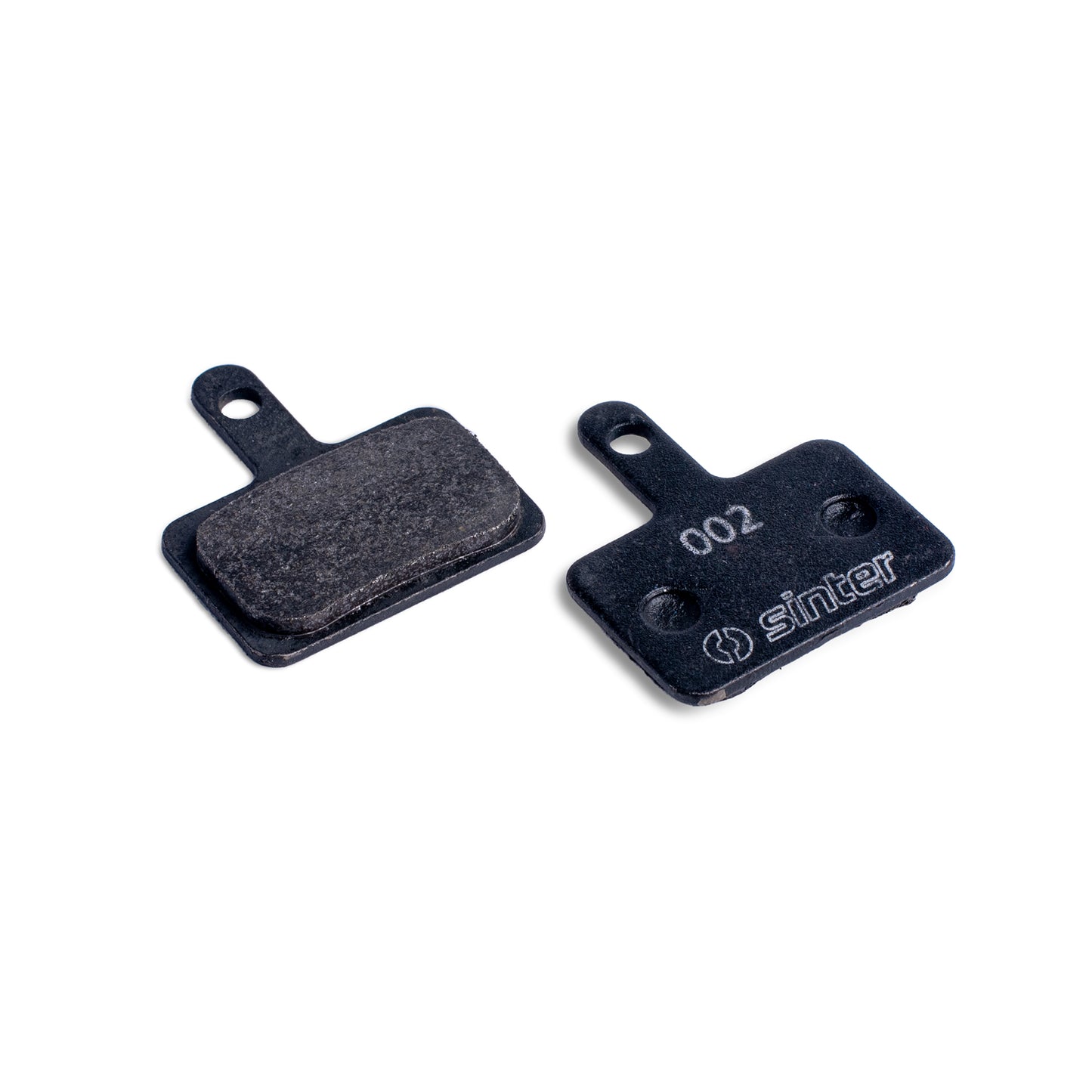
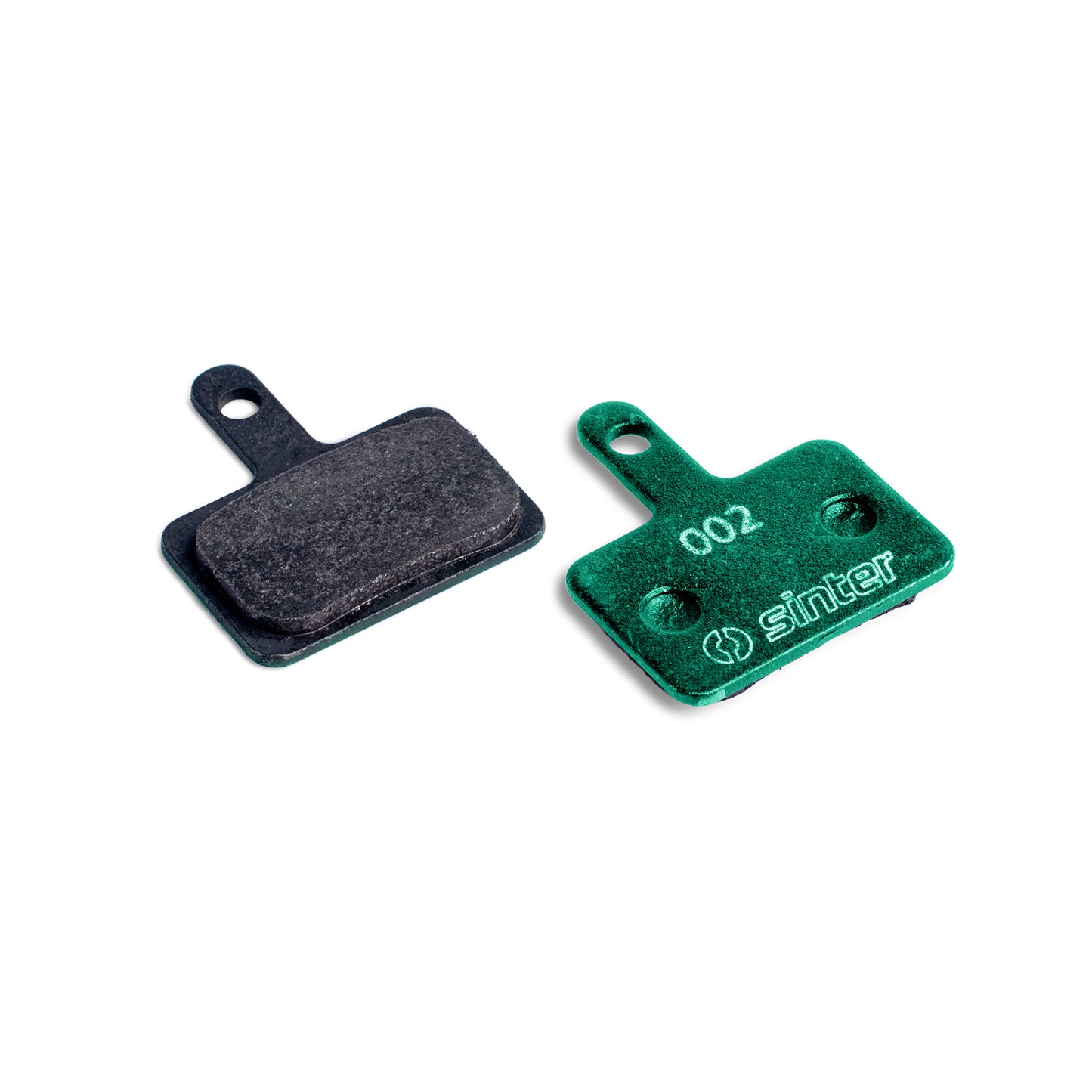
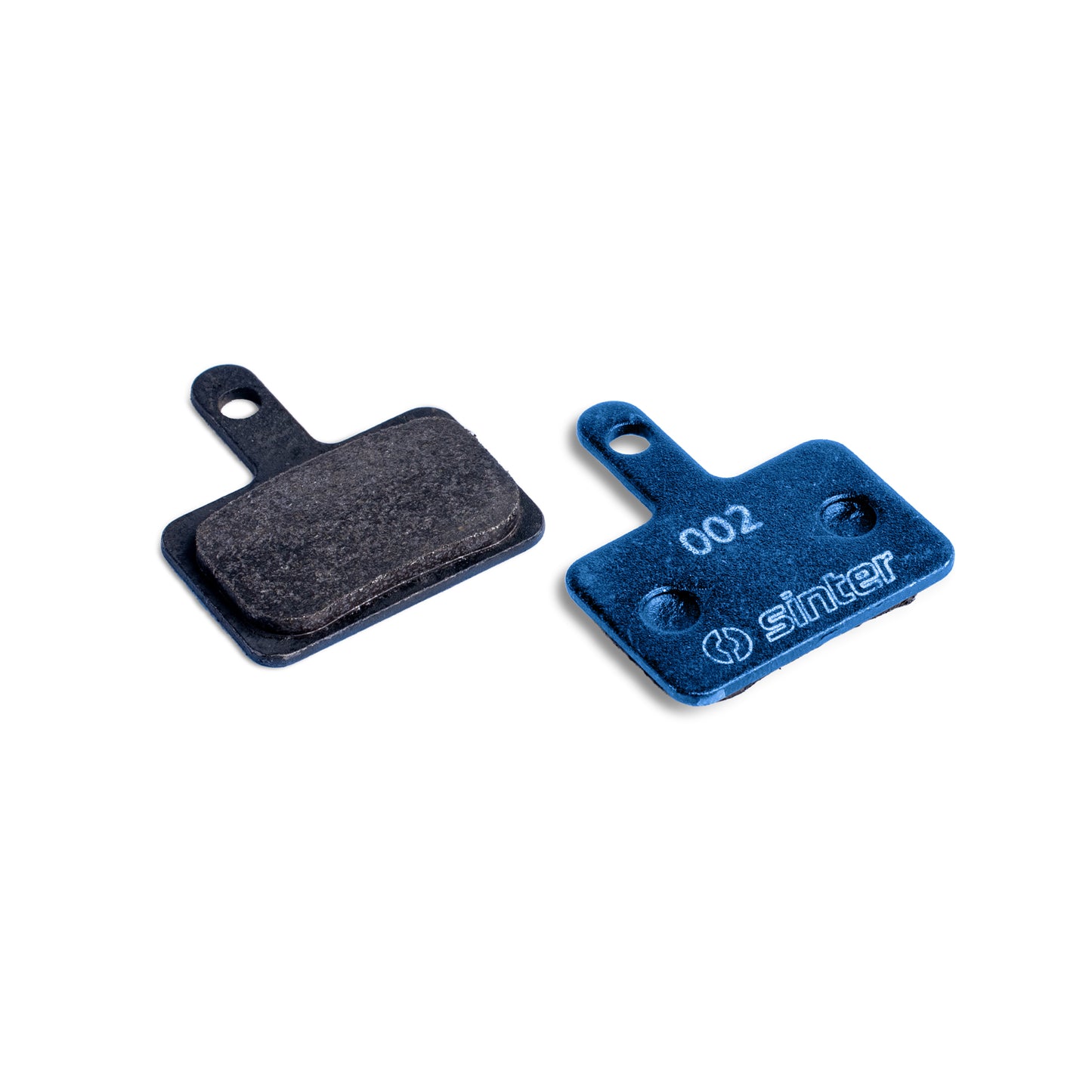
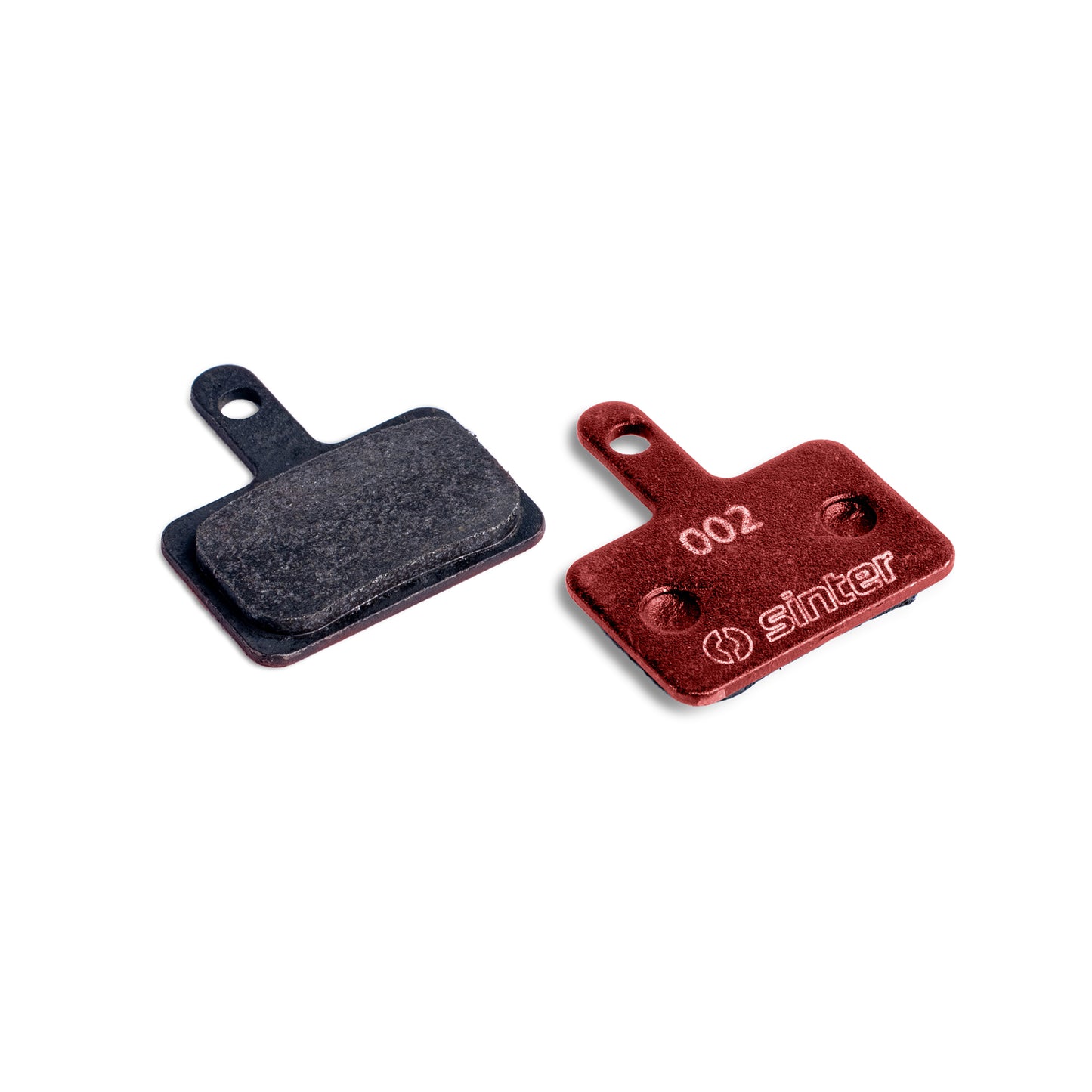
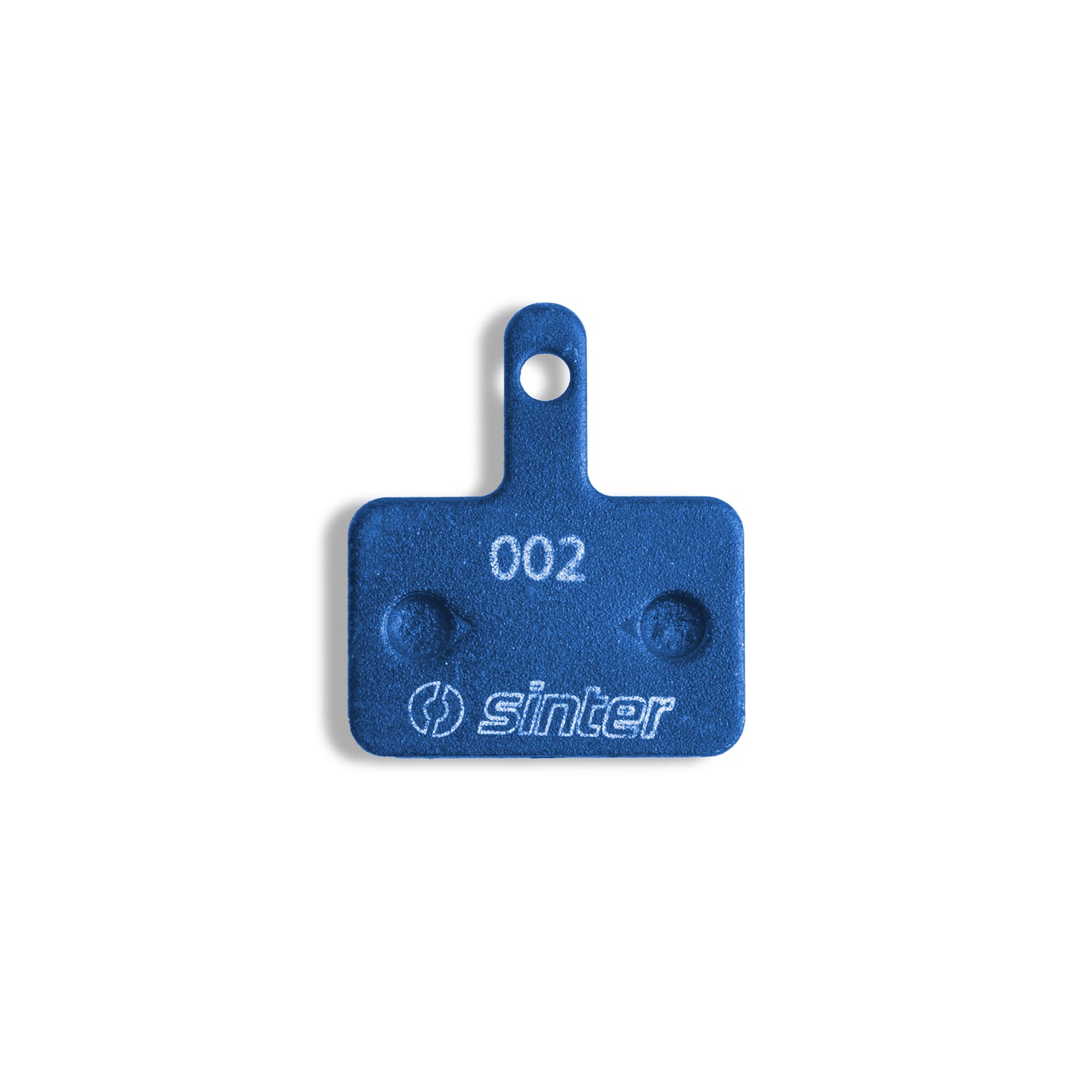
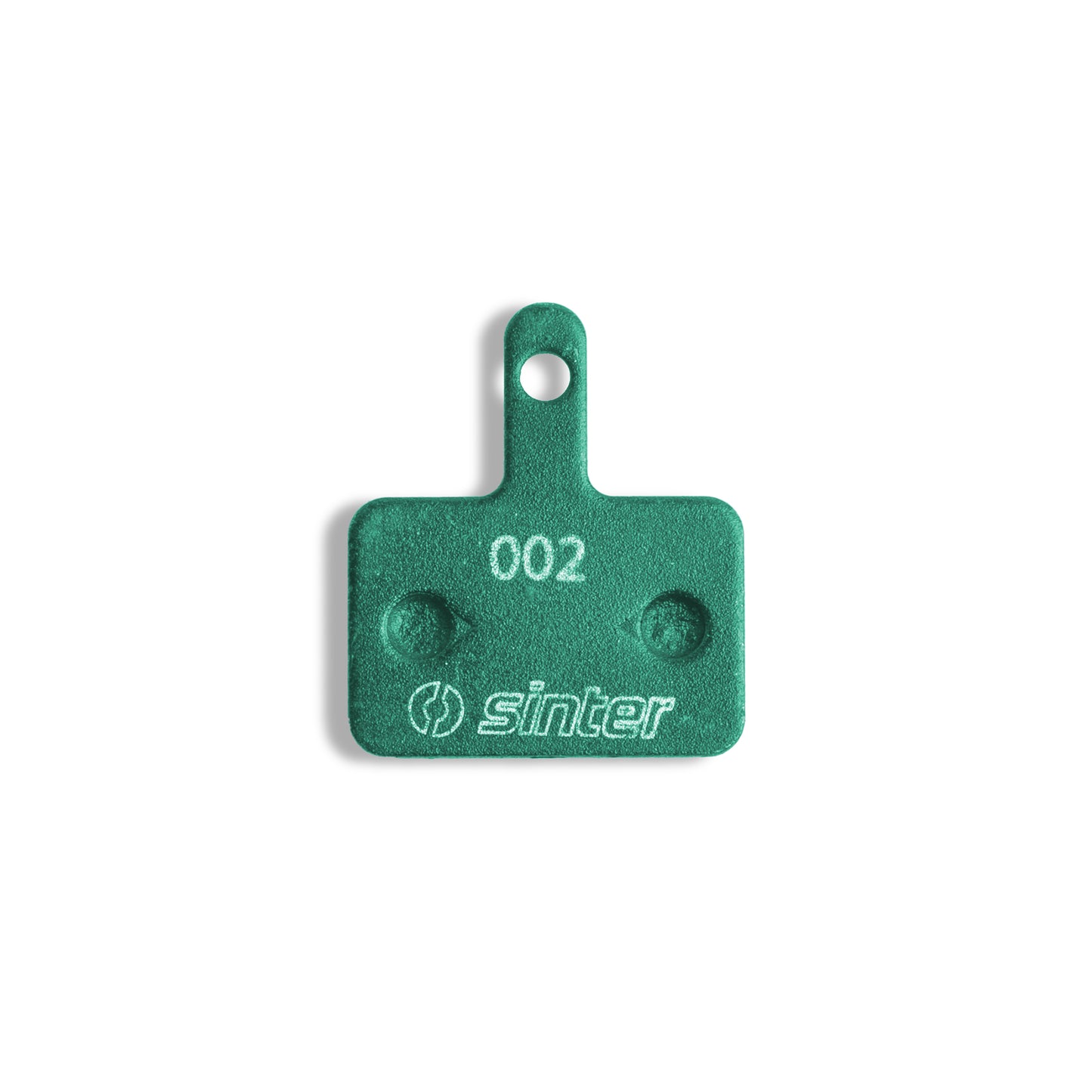
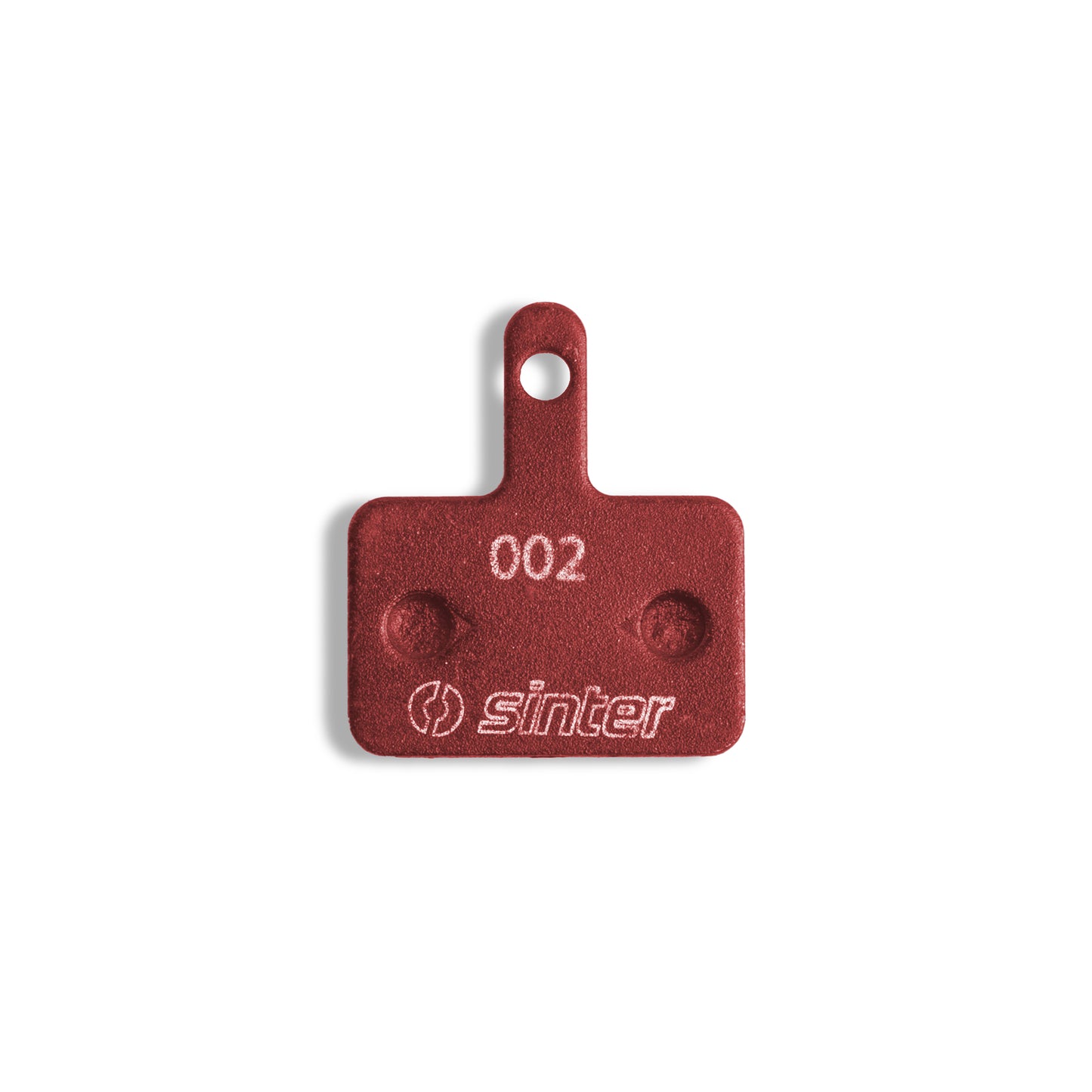
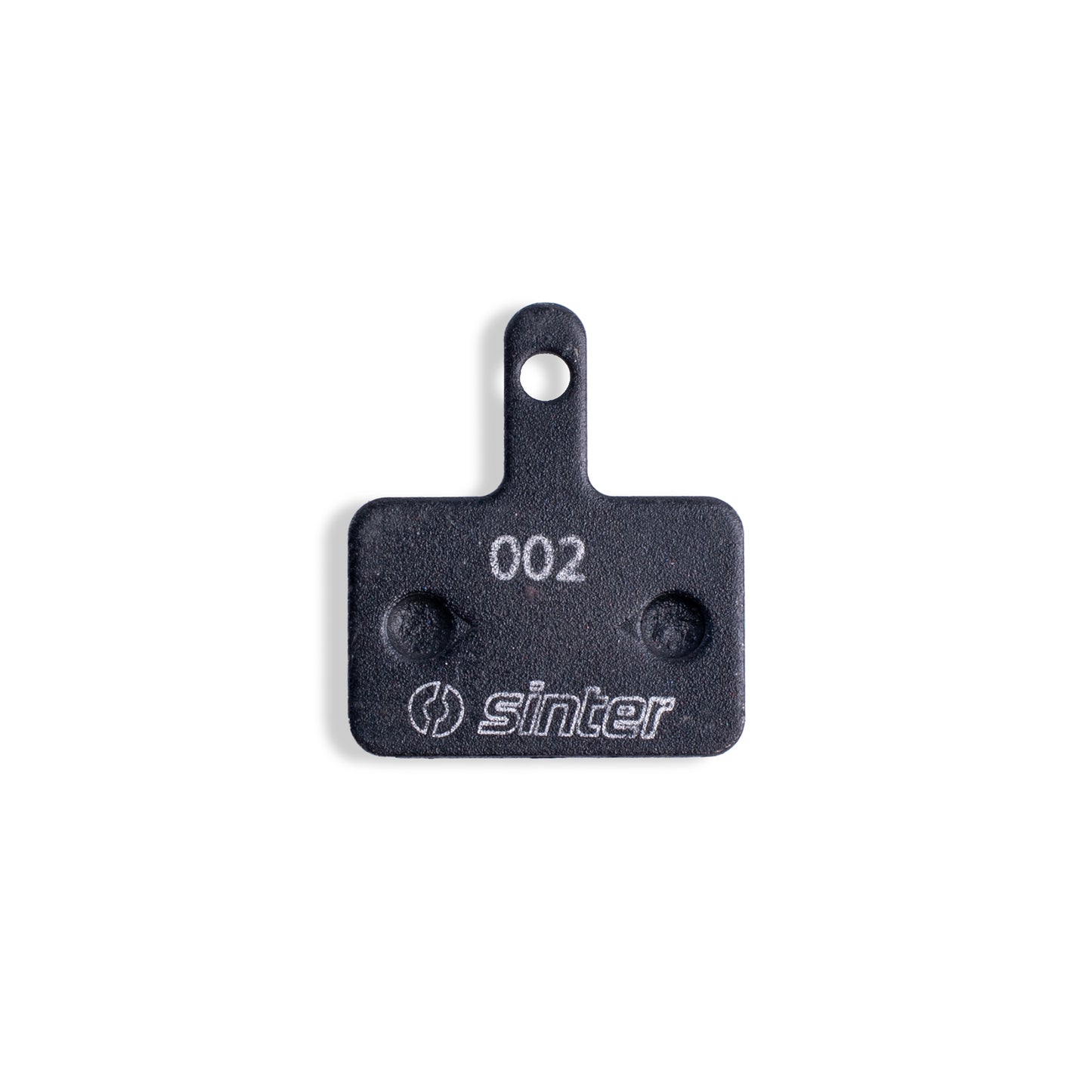
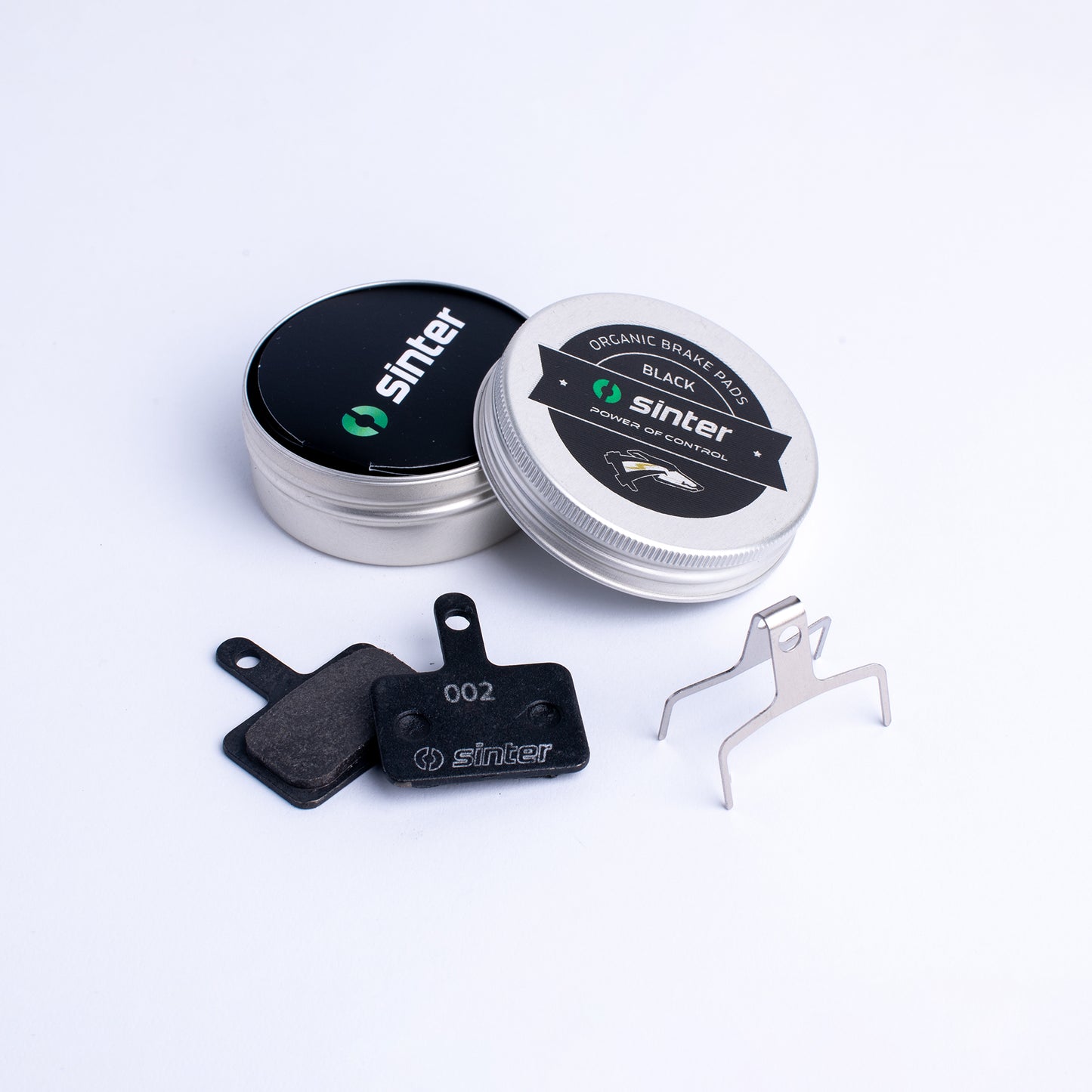
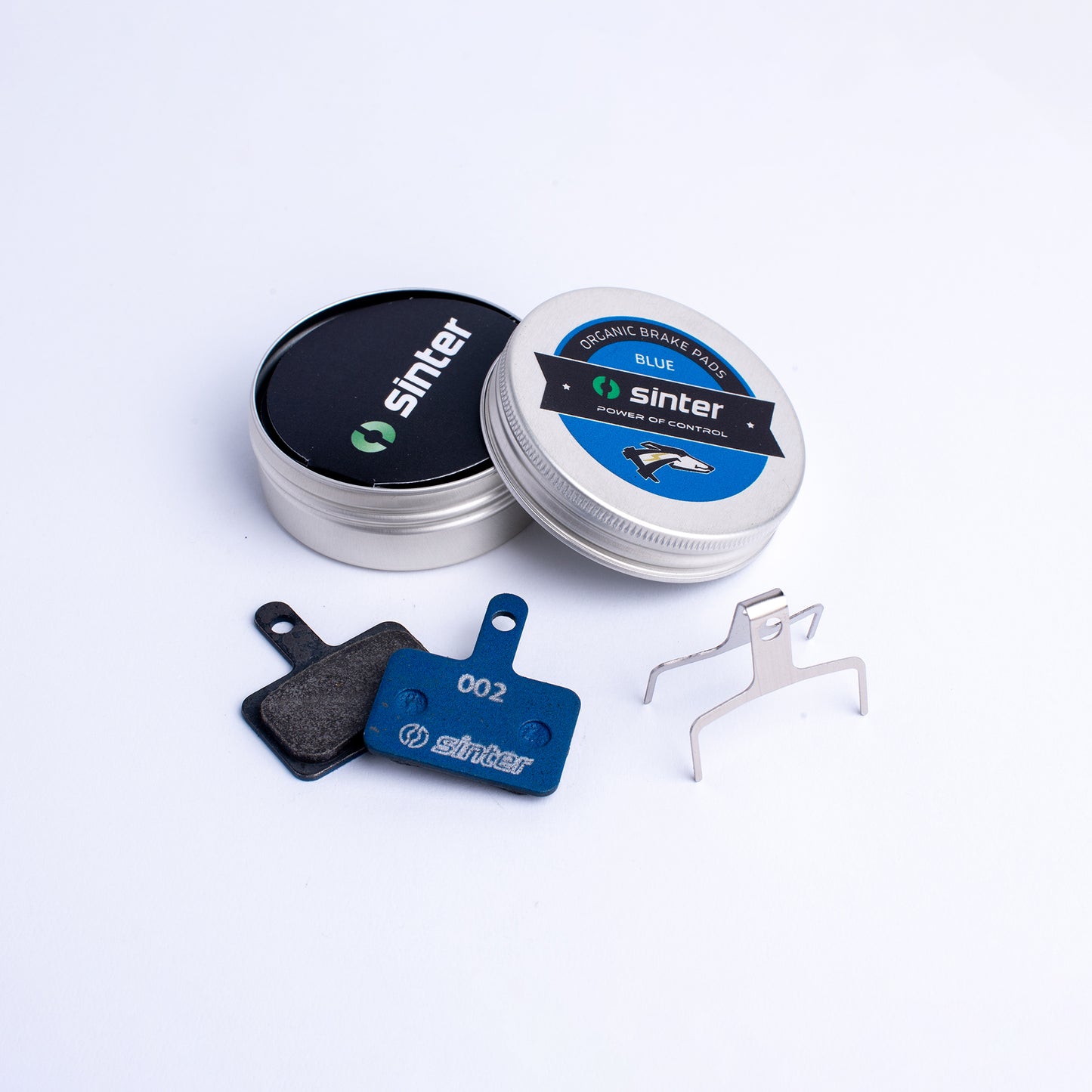
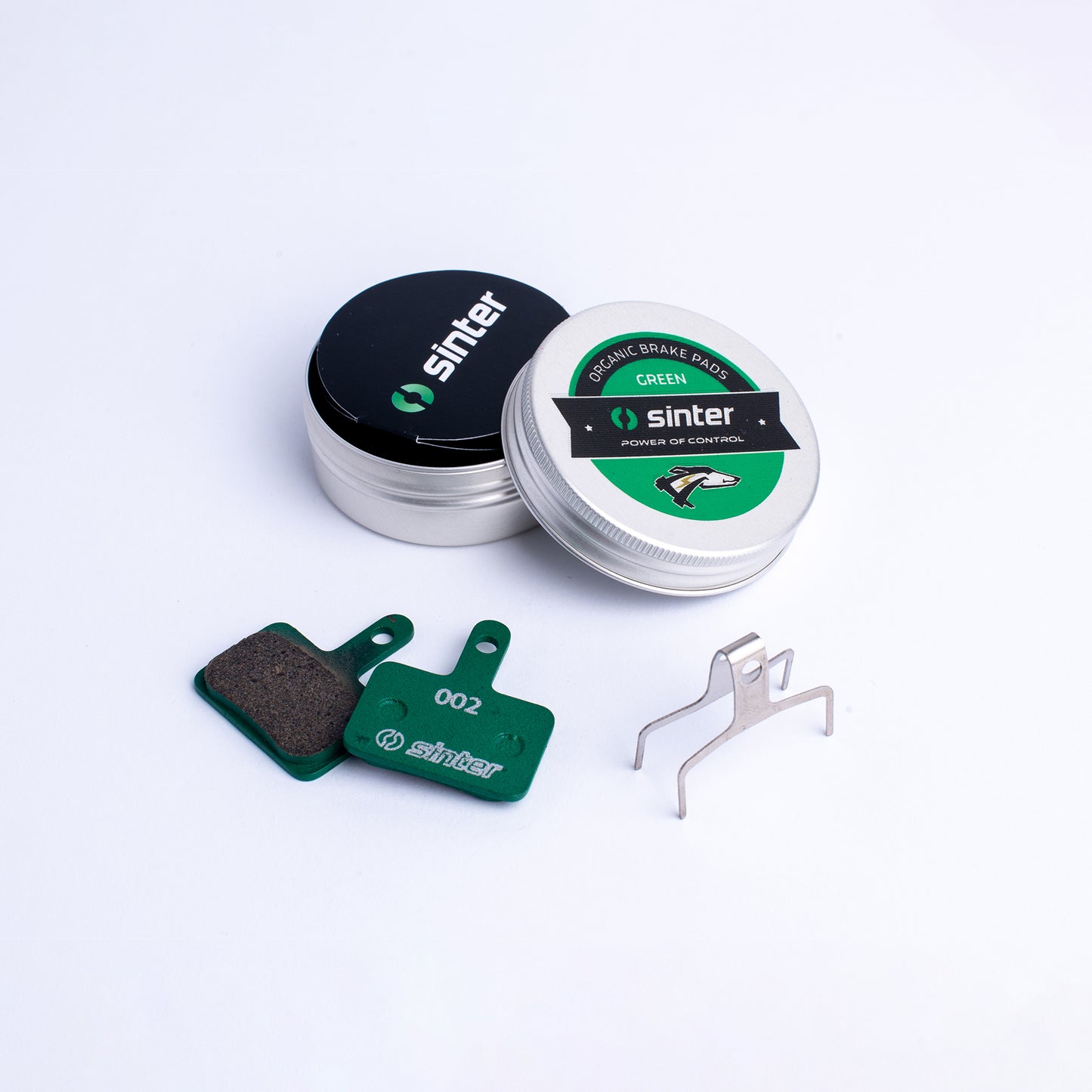
Despite the name, every Sinter compound is organic — not a sintered-metal pad. Organic pads run cooler at the caliper, give more lever feel and modulation, stay quiet, and are gentler on your rotors. The color of the backing plate tells you the compound.
Red s514
The all-round upgrade from OEM. Consistent performance, smooth modulation and lever feel, excellent durability.
Black s550
Great-value organic compound with ceramic particles — a soft, controlled bite and strong resistance to wear.
Green s2032
Sinter's race compound. A state-of-the-art material for braking aggressively while keeping ultimate power and control across temperatures.
Blue s530
For e-bikes, DH and Enduro. Consistent power with high modulation, lever comfort and slow wear across all temperatures.
Our pick for this brake
Also in the Sinter range: the Cargo pad, built for cargo bikes and heavy daily city loads.
Specs
- Compound: organic (ceramic-loaded, resin-bound)
- Backing plate: steel
- Pad shape: Shimano B-type
- Pads per package: 2 (one caliper)
Includes: 2 pads (left and right), bedding-in instructions. Spring and pin are part of the pad assembly on the B-type fitment.
Sinter, Ljubljana since 1969
Sinter has been making friction materials in Ljubljana since 1969, and developed the first disc brake pads in the former Yugoslavia in 1972. Their bicycle line uses the same organic ceramic-loaded compound that the company supplies at scale to motorcycle OEMs like Aprilia and KTM. Unior has been forging hand tools in Zreče since 1919, and is the official technical partner of multiple World Tour and downhill teams. Euro Toolworks is the importer behind both brands in North America. The Model 002 is the high-volume pad in this catalog, the one that does the most servicing work because the Shimano B-type pocket is in more bikes than any other current Shimano pad shape.
Pro tip from our mechanics
A B-type pad swap is usually the easiest hydraulic-brake service on the bench: pop the cotter pin, pull the old pads, slide the new pads in, replace the pin. The friction-side considerations (compound choice, fitment confirmation, rotor surface condition) are the part that determines whether the rebuilt brake stops cleanly or feels under-bedded for the first month.
Which compound suits your riding and which Sinter model fits your brake is covered in How to choose Sinter brake pads →.
FAQ
Which brakes does the Sinter Model 002 fit? This pad suits Shimano Deore, Alivio, and Acera calipers of the B type. Fitment is driven by the pad shape rather than the model name, so the reliable move is to pull your current pads and match the backing-plate outline, the tab, and the retaining-pin hole, or read the model code stamped on the old pad. Shimano has used several distinct pad profiles over the years, so this step matters. If you have any doubt, send a photo of your worn pad and we'll confirm the correct shape.
These are called Sinter but the listing says organic. Which is it? They are organic. Despite the name, Sinter only makes organic brake pads, not sintered-metal. Compared with a sintered-metal pad, an organic compound runs cooler at the caliper, is much quieter, gives you more lever feedback and control, and is gentler on the rotor with less wear and vibration.
Do I need to reset the caliper before fitting new pads? Yes. As the old pads wore down, the caliper pistons advanced to take up the gap, so a fresh, thicker set will not slide in over the rotor. Before fitting Model 002, push the pistons back into the caliper to spread them fully, then drop the new pads in and reinstall the retaining pin.
How do I bed in the new pads? After fitting, bed them in before any hard riding. Accelerate to a moderate speed on flat ground and brake firmly to nearly a stop without locking the wheel, then repeat that ten to twenty times. This transfers an even layer of pad material onto the rotor, which is what gives you full bite and quiet braking. Bedding-in instructions are included in the kit.
 Tech Tips
Disc Brake Pad Bedding In Procedure
Tech Tips
Disc Brake Pad Bedding In Procedure
From the press
The Sinter pads demonstrated the most consistent performance with the least fade, maintaining effective braking under high heat.
The Sinter pads – which are organic, by the way – improved deceleration on all models, but to very different degrees.
