
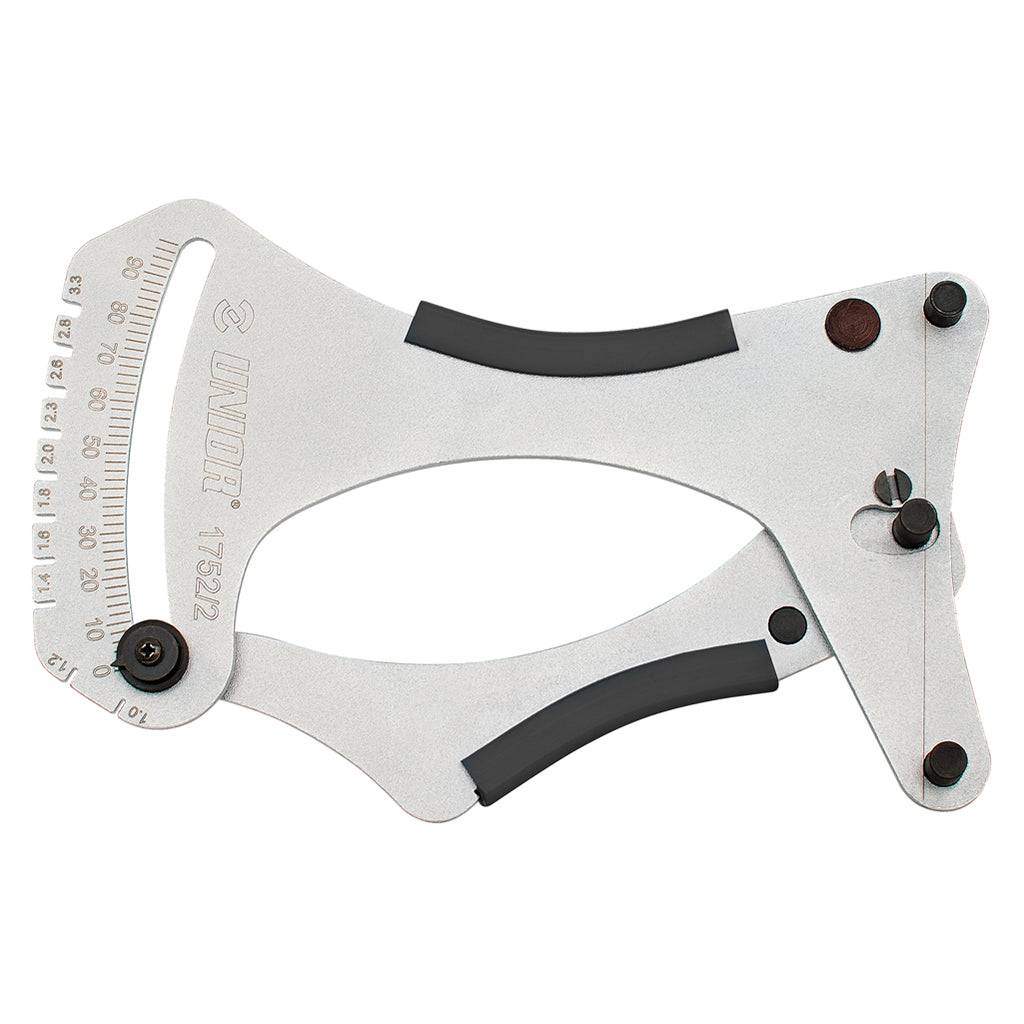


Analog spoke tension meter that arrives calibrated and ready to use: press the handle, seat the spoke between the two pins, and read the dial. The included printed table converts readings to kilogram-force for round spokes from 1.40 to 2.30 mm and bladed profiles, and a 1.0–3.3 mm thickness gauge is built into the body.
Out of stock
Couldn't load pickup availability
Free US shipping on orders $75+
Some exceptions apply — see shipping policy
Unior has made hand tools in Zreče, Slovenia since 1919 and sponsors professional road and mountain-bike race teams.


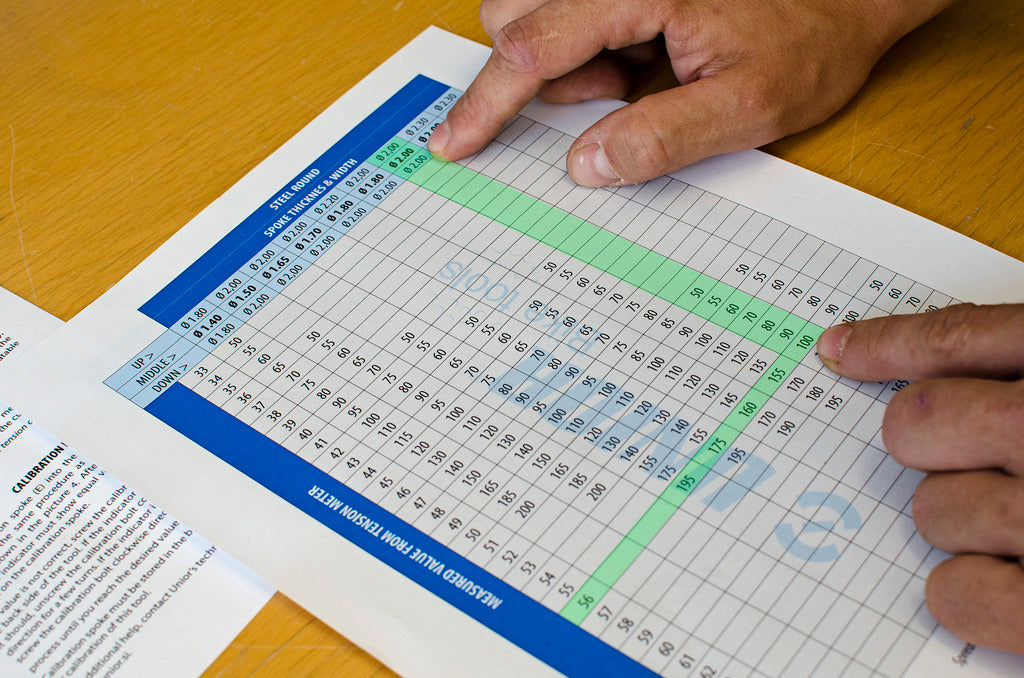
The 1752/2 is Unior's proven tension meter, the one our mechanics built with for years before the Spoke Tension Meter 2.0 replaced it. It's still in production because the gauge is still right: press the handle, position the spoke between the two pins, release, read the value on the dial, cross-reference the printed spoke-information table for kilogram-force.
The tool ships ready to use in a protected carrying case. A calibration spoke marked with its own reference value is included, so the meter can be checked on the bench in your own shop: measure the calibration spoke like a normal spoke, and if the dial doesn't match the marked value, turn the calibration bolt on the back of the tool until it does.
A built-in spoke-diameter gauge on the body of the tool helps identify which line in the conversion table to read. Insert any spoke in one of the upper openings, read the thickness directly, then use that thickness as the index into the printed table that ships with the meter.
The 1752/2 versus the 2.0: the 1752/2 presses the spoke against fixed pins, while the 2.0 added bearings at the spoke contact points to improve accuracy and repeatability. For shops doing high-volume building this matters; for the home mechanic building one or two wheels a season, the difference is academic. The 1752/2 is the gauge that taught a generation of bike mechanics that tension balance is a measurable thing rather than a feel.
Compatibility
- Spokes: round and bladed steel spokes, butted profiles included; the conversion table lists end and middle diameters separately.
- Sizes: round spokes 1.40–2.30 mm and bladed profiles from 0.9 × 1.8 to 1.3 × 2.8 mm per the included conversion table; the on-tool thickness gauge reads 1.0–3.3 mm.
- Calibration spoke included for on-bench calibration.
- Conversion table included for KGF lookup.
Specs
- Factory-calibrated and ready out of the box.
- Two-pin spoke seat with side spacers to keep the spoke parallel.
- Built-in spoke-diameter gauge.
- Protected carrying case for travel and storage. Tool measures 205 × 130 × 34 mm and weighs 637 g.
Built in Zreče, Slovenia
Unior has been forging hand tools in Zreče since 1919, and sponsors professional road and mountain-bike race teams. The 1752/2 has been the tension meter of choice in many of those team workshops for years; the 2.0 is the redesign that came after the 1752/2 had taught us what a tension meter needs to do day in and day out. Either gauge will give you accurate per-spoke readings; the 2.0 is the upgrade for shops that need bearing-grade repeatability, the 1752/2 is the proven design for everyone else.
Pro tip from our mechanics
Lay the printed conversion table flat next to the wheel during the tension pass. Reading the dial, then looking up the value on the table, then writing it down is a three-step rhythm; trying to do it from memory adds a fourth step (mental math) that's where errors creep in. We keep the table in a clear plastic sleeve on the bench, and the per-spoke values get written directly on the sleeve with a wax pencil. Wipe clean between builds; nothing to print, nothing to lose. The rest of the truing workflow is in How to true a bike wheel →
FAQ
Which spokes will the 1752/2 measure? The included v2 conversion table covers round steel spokes with middle diameters from 1.40 to 2.30 mm, butted profiles included (end and middle diameters are listed separately), plus seven bladed profiles from 0.9 × 1.8 mm to 1.3 × 2.8 mm. The thickness gauge on top of the body reads spoke diameters from 1.0 to 3.3 mm.
How do I turn the dial reading into spoke tension? Press the handle fully, seat the spoke between the two pins against the side spacers, release the pressure gently, and read the value on the 0–90 scale. Look that value up in the printed conversion table, or in the Unior Wheel Tension App, against your spoke's size to get tension in kilograms-force; 1 kgf is roughly 10 newtons. Unior recommends measuring at room temperature.
How is the 1752/2 calibrated? Each meter ships with its own calibration spoke marked with a reference value. Measure it like a normal spoke; if the dial doesn't match the marked value, turn the calibration bolt on the back of the tool, counter-clockwise if it reads low or clockwise if it reads high, and re-check until it matches. Keep the calibration spoke in the original box and use it only for this tool.
What's the difference between the 1752/2 and the Spoke Tension Meter 2.0? The 2.0 (1752/6) added bearings at the spoke contact points to improve accuracy and repeatability, a black body, and a QR link to the tension app. The 1752/2 presses the spoke against fixed pins and uses the same conversion-table system. It measures 205 × 130 × 34 mm, weighs 637 g, and ships with the printed table and usage instructions.
 Tech Tips
How to true a bike wheel
Tech Tips
How to true a bike wheel
