


A reinforced-plastic driver that seats your fork's dust seal square, using the fork's own bushing as a guide so it goes in true, not cocked — without nicking the seal or the lower-leg housing. Pick the size that matches your stanchion diameter; eight sizes cover 30 to 40 mm forks.
In stock
Couldn't load pickup availability
Free US shipping on orders $75+
Some exceptions apply — see shipping policy
Unior has made hand tools in Zreče, Slovenia since 1919 and sponsors professional road and mountain-bike race teams.



On this page
A suspension fork's dust seal — the wiper that keeps grit off the stanchion and oil inside the lower leg — has to sit perfectly square in its bore. Push it in by hand or tap it with the wrong tool and it goes in cocked: it binds the stanchion, weeps oil past the lip, and can chew its own edge on the counterbore. The 1702 seal driver seats the seal straight, using the fork's own bushing to keep everything true.
Sizing and compatibility
Choose the driver that matches your fork's stanchion diameter. The 1702 comes in eight sizes — 30, 32, 34, 35, 36, 37, 38 and 40 mm — and each one is cut to a single stanchion size, so it fits any fork that runs that stanchion. That includes Fox and RockShox forks, along with most other modern suspension forks in the 30–40 mm range. It seats both flangeless and flanged dust seals, so it works with the newer flangeless designs that older drivers struggle to push in cleanly. The stanchion size is laser-etched into the body rather than printed, so it stays readable after years on the bench. If you're not sure where the seal fits in a service, our guide to servicing your fork's lower legs walks through the whole job.
What it's made of
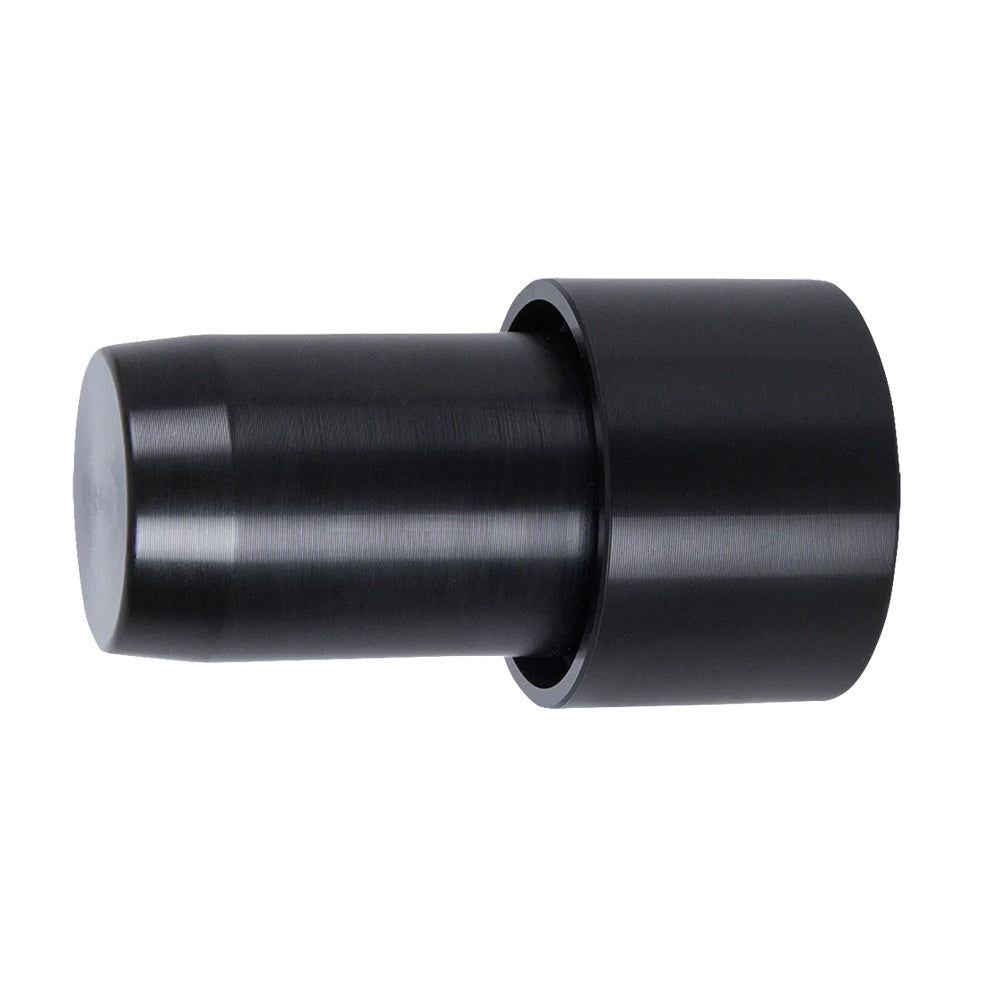
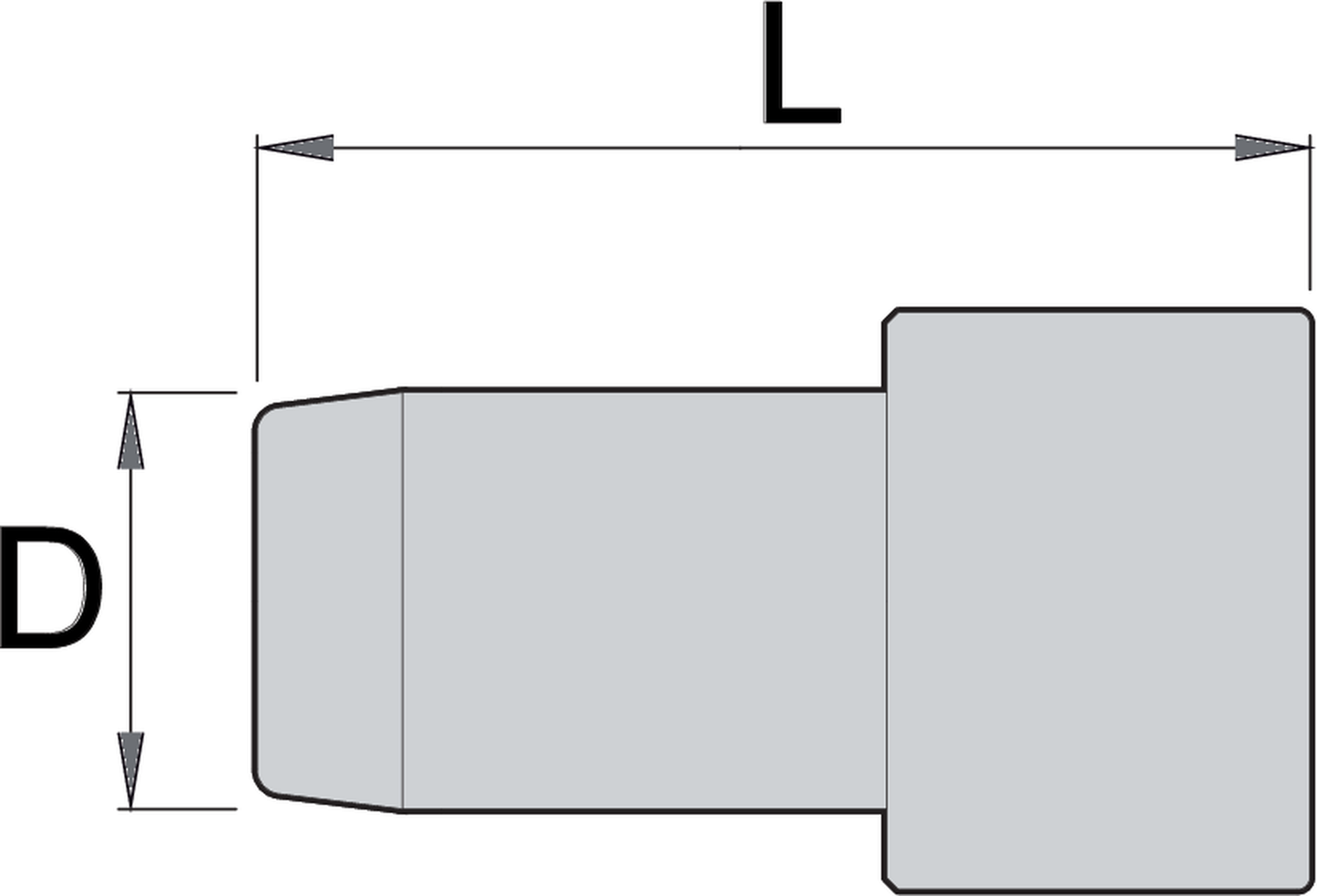
The 1702 is moulded from reinforced plastic (composite), not metal — and that is deliberate. A plastic driver will not damage the seal it is pushing or the aluminium lower-leg housing it registers against, where a steel socket or screwdriver can nick either one. Every size shares the same 87 mm length and the same two-diameter, through-bored shape: a chamfered nose that the seal slides onto, stepping up to an oversized flat top you strike.
How to use it
Slide the new dust seal onto the driver's chamfered nose, then set the driver into the top of the lower leg. The fork's bushing guides the driver so the seal enters square, not cocked. Tap the oversized flat top with a soft (plastic or rubber) mallet, working around it evenly, until the seal sits flush with the top of the lower leg — and no further. There is no built-in depth stop, so drive the seal home but stop at flush rather than sinking it too deep. A driver cut to your stanchion size does this cleanly, where an improvised socket or screwdriver tends to cock the seal or nick its lip.
Built by Unior in Zreče, Slovenia
The 1702 is manufactured by Unior d.d. in Zreče, Slovenia. Buying a single size? Pair it with the Suspension Service Set (1704), which covers the rest of a lower-leg service — top-cap sockets, a strap wrench, and the pliers a bushing swap needs.
FAQ
Which size do I need? Order the driver that matches your fork's stanchion diameter — the number stamped on the stanchion or listed in the fork's service spec. The 1702 comes in 30, 32, 34, 35, 36, 37, 38 and 40 mm, and each driver fits only that one stanchion size. These are stanchion diameters, not seal inner-diameters, so match the stanchion and the seal that fits it will seat correctly. If you run more than one fork, note that a 34 mm driver will not fit a 36 mm fork — buy the size for each.
Does it work with flangeless seals, or only flanged? Both. The 1702 is the updated design that seats flangeless and flanged dust seals equally well. Flangeless seals are common on newer forks and are the ones older, flange-only drivers struggle to push in square — the 1702 handles either style.
What is it made of, and will it damage my fork? It is moulded from reinforced plastic (composite) rather than metal, and that is deliberate. A plastic driver will not nick the new dust seal it is pushing or mark the aluminium lower-leg housing it registers against, the way a steel socket or a screwdriver can. It also uses the fork's own bushing as a guide so the seal enters square instead of cocked. Tap it home with a soft mallet and stop when the seal sits flush with the lower leg.
Should I buy one size or the whole set? Buy the single size that matches your fork's stanchion. If you service more than one fork, or you are building out a full lower-leg toolkit, the Suspension Service Set (1704) is the companion buy — it carries the rest of the tools a fork service leans on, from top-cap sockets to a strap wrench and bushing pliers, alongside the seal driver you have picked here.
Size guide
Size is the fork stanchion diameter in millimetres — pick the driver that matches your fork. Every size is the same reinforced-plastic tool, a constant 87 mm long; weights are the bare-tool spec and the size you've selected is highlighted. (The 38 mm weight is withheld — Unior's published figure is a known data error.)
| Size | Weight |
|---|---|
| 30 | 92 g (3.2 oz) |
| 32 | 102 g (3.6 oz) |
| 34 | 114 g (4.0 oz) |
| 35 | 119 g (4.2 oz) |
| 36 | 125 g (4.4 oz) |
| 37 | 132 g (4.7 oz) |
| 38 | — |
| 40 | 151 g (5.3 oz) |
 Tech Tips
How to service your suspension fork's lower legs
Tech Tips
How to service your suspension fork's lower legs
