


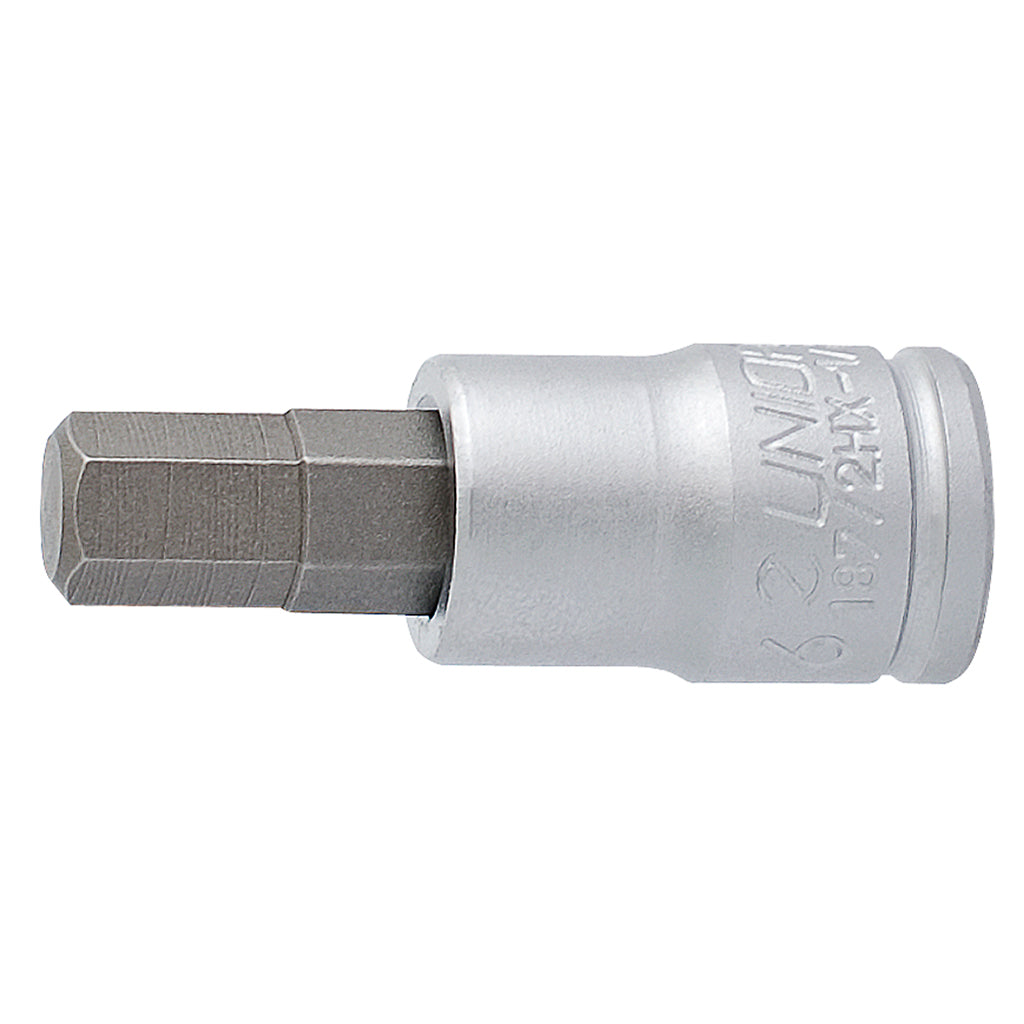
Single 1/4"-drive hex bit socket in your choice of 2.5, 3, 4, 5 or 6 mm — the sizes behind stem, seatpost, derailleur and cleat bolts. Chrome-vanadium socket with a hardened carbon-steel bit, made to DIN 7422, 32 mm overall. Fits any 1/4" ratchet or torque wrench.
In stock
Couldn't load pickup availability
Free US shipping on orders $75+
Some exceptions apply — see shipping policy
Unior has made hand tools in Zreče, Slovenia since 1919 and sponsors professional road and mountain-bike race teams.

On this page
Hex bits drive the internal-hex fasteners that dominate modern bikes: stem bolts, derailleur bolts, seatpost binders, brake-lever clamp bolts, cleat bolts on most clipless pedals, and dozens of accessory positions. The 1/4-drive format mounts to any 1/4-drive ratchet, T-handle, or torque wrench, which makes the same bit work across cycle-counting on a ratchet and final torquing on a calibrated wrench.
The 187/2HX series gives you a single bit per size in 2.5, 3, 4, 5, and 6 mm. These are the sizes that cover almost everything in modern bike service.
Sizes available
Each bit is sold individually — pick your size:
- 2.5 mm; small accessory fasteners, brake-pad retaining bolts
- 3 mm; small clamp bolts, some derailleur limit screws
- 4 mm; derailleur bolts, brake-caliper mounting hardware
- 5 mm; stem bolts, seatpost binders, crank pinch bolts
- 6 mm; pedal axle hex (on some pedals), seat-bag clamps, larger fasteners
The 4 and 5 mm see the most cycle counts in a typical bike shop. Buying spares of just those two is a habit worth forming.
Why bit quality matters more than socket quality
A bit transfers torque through a small contact patch at the tip. A worn or off-spec bit cams out and rounds the fastener recess; once a recess is rounded, the only options are screw-grabbing pliers or extraction. The DIN 7422 standard specifies tip dimensions that fit cleanly into hex recesses without slop; bits that meet the spec stay in the recess under torque.
The 187/2HX bit is premium plus carbon steel, entirely hardened and tempered, so the tip holds its shape against the recess instead of rounding. The socket end is chrome-vanadium steel and pairs to any 1/4-drive ratchet.
Pairing with the torque wrench
These bits are the natural pairing for the 2-24 Nm Slipper Torque Wrench, which covers the bike-shop torque range for hex-driven fasteners. Stem bolts run 5–7 Nm; derailleur bolts run 4–6 Nm; rotor bolts run 2–4 Nm on Shimano and 6.2 Nm on SRAM but use Torx, not hex. The 1/4-drive bit format means you can use the same bit cycling on a regular ratchet and final-torqued on the torque wrench, instead of swapping tools between rough and final assembly.
Specs
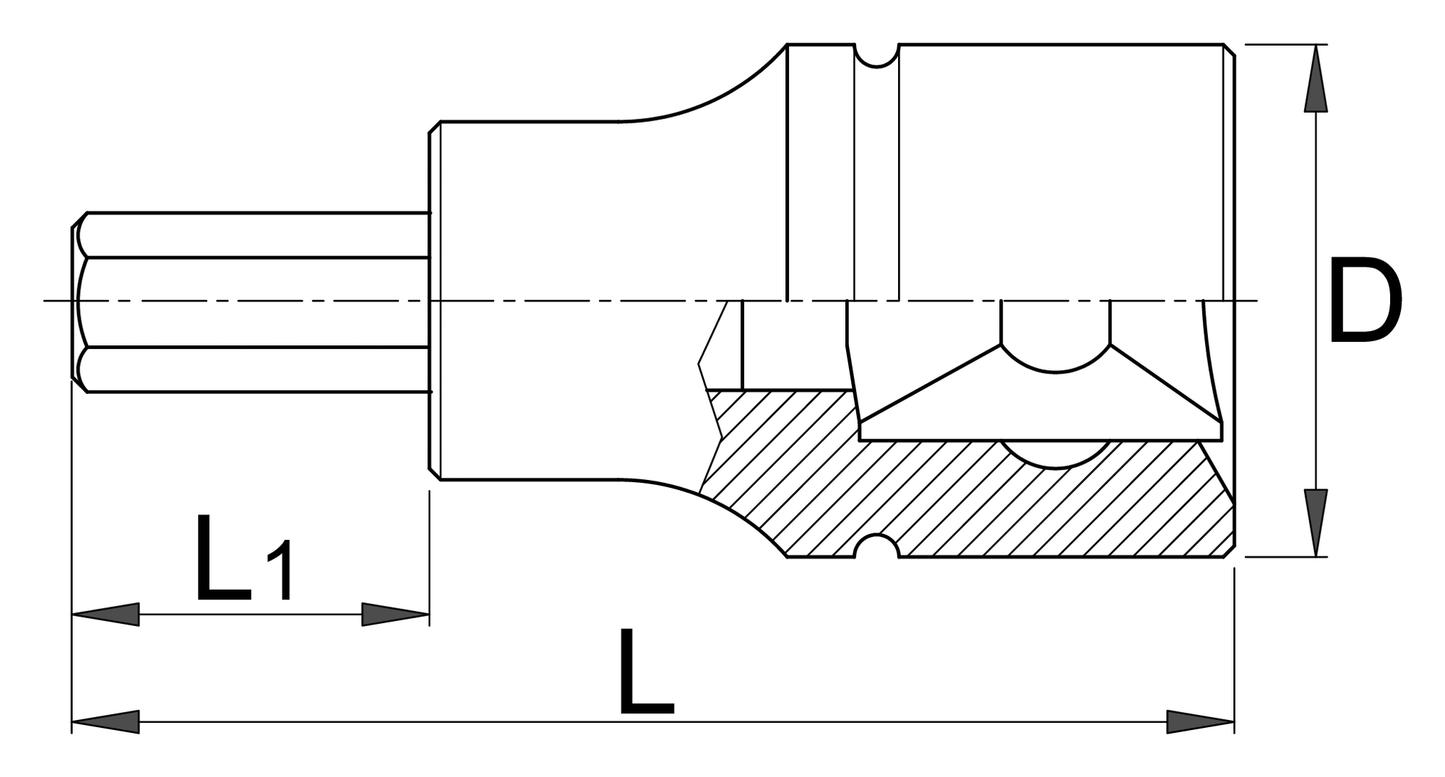
- Drive size: 1/4 inch square; 32 mm overall length, 12 mm body diameter
- Bit: premium plus carbon steel, hardened and tempered
- Socket body: chrome-vanadium steel, hardened and tempered
- Dimensional standard: DIN 7422
- Sizes available: 2.5, 3, 4, 5, 6 mm hex, each sold individually
Made in Slovenia, since 1919
Unior has been forging hand tools in Zreče since 1919, and sponsors professional road and mountain-bike race teams. The chrome-vanadium socket and carbon-steel bit are a metallurgy split chosen for the way load travels through the tool: the socket sees torsional stress at the drive square, while the bit sees concentrated bearing stress at the tip. Using one alloy for both would compromise one or the other; using each alloy where it earns its place is what makes the bit stay sharp on the seven-hundredth stem-bolt cycle.
Pro tip from our mechanics
If you cycle a lot of 4 and 5 mm fasteners, keep a spare set of those two bits in a parts bin. Bits eventually wear, and a fresh tip is the difference between a clean cycle and a starting-to-cam-out fastener. For the broader bit and socket framework: Sockets and bits for bike work →.
FAQ
Are these hex bits sold as a set or individually? Individually. Each variant is one bit socket — pick 2.5, 3, 4, 5 or 6 mm from the size selector. Every size is the same 32 mm long, 12 mm diameter socket body, so you can buy only the sizes you actually wear out.
Can I use these bits in a drill or impact driver? No. Unior rates the 187/2HX for hand use only — not for pneumatic, electric or cordless tools. Drive it with a 1/4" ratchet, T-handle or torque wrench.
What are the bit and socket made of? The bit is premium plus carbon steel and the socket body is premium flex chrome vanadium steel, entirely hardened and tempered. The hex profile is made to the DIN 7422 standard, which is what keeps the tip seated in the fastener recess under torque.
Will it fit my 1/4" torque wrench? Yes — the drive end is a standard 1/4" square, so it mounts any 1/4"-drive ratchet or torque wrench. At 32 mm overall and 15–18 g it stays compact enough for low-torque work; Unior's own service manual lists the 187/2HX (size 5) in its crank and bottom-bracket tool list.
Size guide
Size is the hex recess of the fastener you're driving — 2.5–6 mm covers stem, seatpost, derailleur and cleat bolts. Every size is the same DIN 7422 bit socket on a 1/4" drive, 32 mm overall; weight is the bare-tool spec, and the size you have selected is highlighted.
| Size | Overall length | Weight |
|---|---|---|
| 2.5mm | 32 mm | 15 g (0.5 oz) |
| 3mm | 32 mm | 18 g (0.6 oz) |
| 4mm | 32 mm | 18 g (0.6 oz) |
| 5mm | 32 mm | 18 g (0.6 oz) |
| 6mm | 32 mm | 18 g (0.6 oz) |
 Tech Tips
Hex and Torx wrenches: how to pick the right tool for the job
Tech Tips
Hex and Torx wrenches: how to pick the right tool for the job
