SKU: P/N: 617592
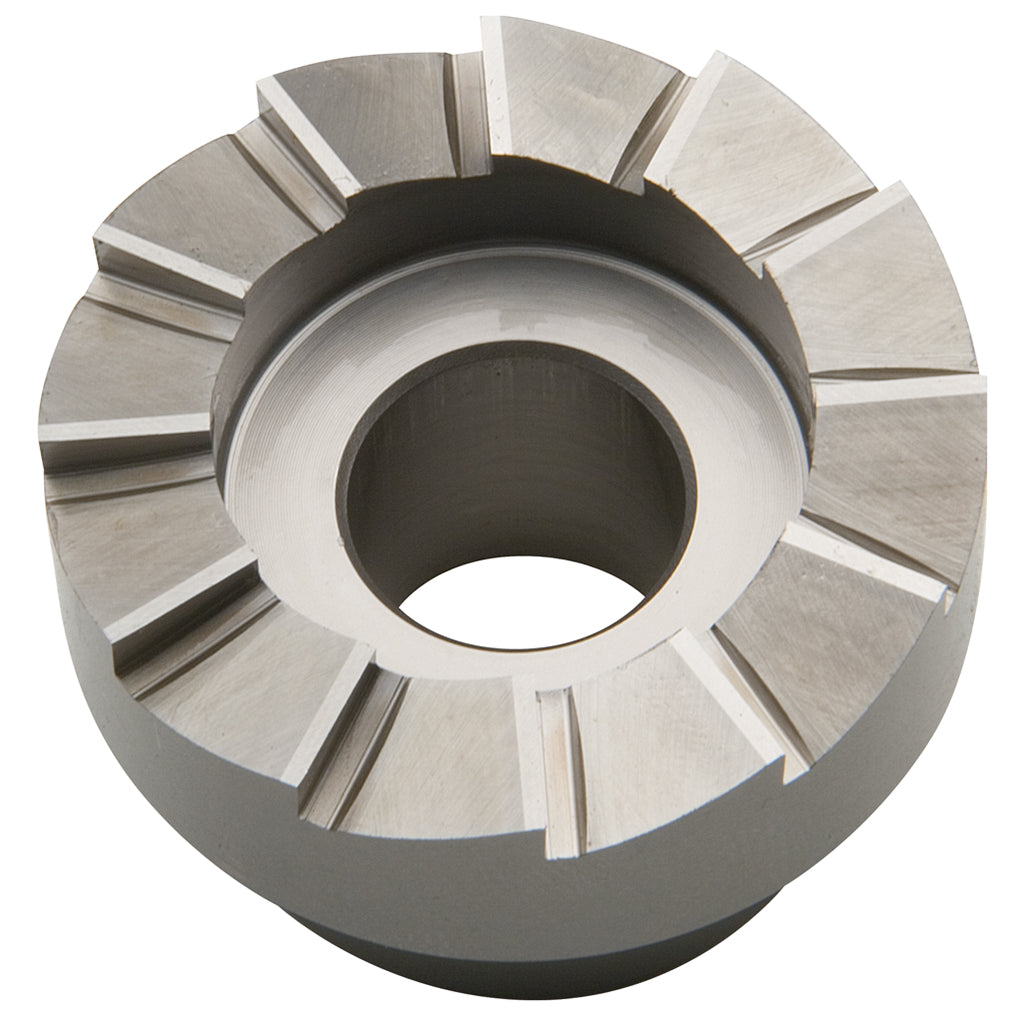
Bottom Bracket Facing Cutter
Bottom Bracket Facing Cutter
The 1699.1 BB facing cutter is the working head of the 1699 facing tool. The cutter is what trims the face of the BB shell back to square; the frame, guide, and handle exist to hold this piece coaxial and feed it forward in a controlled way. Like any cutting tool, the 1699.1 is serviceable, replaceable, and the part of the assembly most likely to need refreshing first.
What this piece does
The 1699.1 is a hardened tool-steel rotating cutter that mounts onto the 1699 facing tool frame and cuts a fine pass off each outer face of the BB shell. The cut is light by design; the goal is to bring the face flat, parallel to its opposite, and perpendicular to the bore, not to remove visible material. A correctly-set 1699 will produce a uniform metal ring around each face on the first pass, with the original anodize or paint visible nowhere on the cut surface.
A workshop running the 1699 system already owns this cutter as part of the bundle. The 1699.1 is the spare / replacement, ordered when the cutter starts producing chatter marks on the face, when the edge has worn enough that the cut is uneven, or when a kit comes back from a heavy production season and a cutter swap is the obvious refresh.
Compatibility
- Mounts on the Frame for 1699 Bottom Bracket Facer 1699.2/4
- Part of the Bottom Bracket Facing Tool 1699 bundle
- Works with both BSA and Italian facing operations (the cutter geometry is shell-standard agnostic; the guide is the piece that changes)
Specs
- Material: hardened tool steel
- Function: shell-face cutting head for the 1699 BB facing tool
- Drive: receives torque from the 1699.2/4 frame via the modular handle
- Made in Slovenia by Unior
Includes: One 1699.1 facing cutter. Frame, guide, handle sold separately.
Made in Slovenia, since 1919
Unior has been forging hand tools in Zreče since 1919, and is the official technical partner of multiple World Tour and downhill teams. The cutter's edge is the surface that determines what every BB cup the shell will ever accept clamps against. A soft cutter that rounds off in service produces stepped faces; a hardened cutter holding its edge produces faces that bearings spin true on. The 1699.1 is built to the edge spec, which is the only spec the next ten thousand crank revolutions care about.
Pro tip from our mechanics
Cutter retirement is something to do on a calendar, not on a feel. Most shops can run a 1699.1 through a season of normal use before the edge needs swapping; on a production bench facing fresh shells daily, the cycle is shorter. The clear retirement signal is the chip pattern: as long as the cutter produces continuous metal curls, the edge is sharp; when chips break into shorter pieces under the same feed pressure, the edge is rounding.
Cutting fluid extends cutter life dramatically. A dry cutter on an aluminum shell can blunt in a single facing operation; the same cutter with cutting oil applied before each pass holds its edge for hundreds of shells. Treat the fluid as part of the operation, not a nice-to-have.
The chip-pattern diagnostic and feed-control discipline that gets the most out of a 1699.1 are covered in the BB-shell pillar: Frame prep: threaded bottom bracket shells →
Couldn't load pickup availability
Share