


Dead-blow hammer that won't bounce off the part: the head is packed with steel balls and granulate that soak up the strike, so the whole blow lands where you aim it when seating headset cups or cartridge bearings. Non-marring polyurethane faces, lacquered metal housing, tubular handle with plastic grip. 45 mm face, 315 mm long, 866 g.
In stock
Couldn't load pickup availability
Free US shipping on orders $75+
Some exceptions apply — see shipping policy
Unior has made hand tools in Zreče, Slovenia since 1919 and sponsors professional road and mountain-bike race teams.
View full details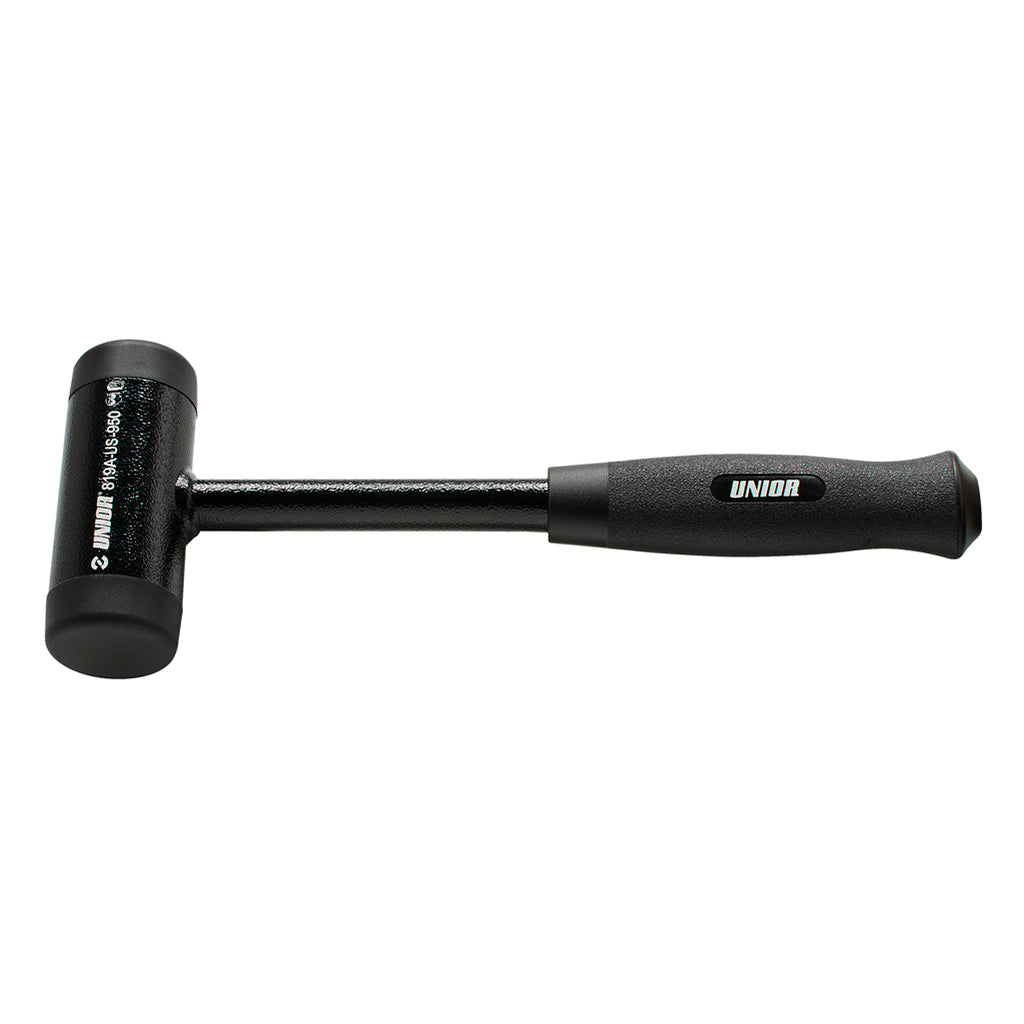
On this page
A dead-blow hammer is the bike-shop default for any strike against a finished component. The polyurethane faces won't mar surfaces; the steel balls and granulate inside the head absorb the impact and kill the rebound, so the strike energy goes into the workpiece and stays there. No bounce. No second strike where you didn't plan one. 866 grams of energy delivered in one direction.
At 866 g with a 45 mm face, it's sized for component work: enough mass to seat a cup, enough control for a dust cap.
What it does well
Two separate engineering decisions make the dead-blow what it is:
- The polyurethane faces are what touch the part. Hard enough to deliver real energy to the workpiece, soft enough to not mar a finished bike component. A direct strike against a brake-rotor surface, a fork dropout, or an alloy crank arm won't leave a witness mark.
- The shot-filled head is what kills the rebound. A normal hammer bounces off its strike; energy returns to the head and back to your hand. A dead-blow's internal mass of steel balls and granulate converts the rebound into a damped thud. The workpiece feels the full strike; the hammer doesn't bounce; your wrist takes less shock loading.
The combined result is a hammer you can use against a precision part without worrying about a second uncontrolled impact, and without worrying about marring the finish.
Where it earns its space in the bike shop
- Seating a headset cup the last fraction of a millimeter after the press has done the bulk.
- Persuading a stuck quick-release skewer through the dropout when penetrating oil isn't enough.
- Setting a bearing into a seat after the press is removed.
- Tapping a stuck cassette body off the freehub with the wheel held vertically.
- Final-seating a dust cover or spacer on hubs or pedals.
When the locksmith hammer is the better tool
For strikes against other tools (a pin punch, a chisel, a punch driver) the steel-faced locksmith hammer 812 delivers more energy. The dead-blow is for striking the component directly; the locksmith hammer is for striking the tool that strikes the component. They're a pair, not a redundancy.
Specs
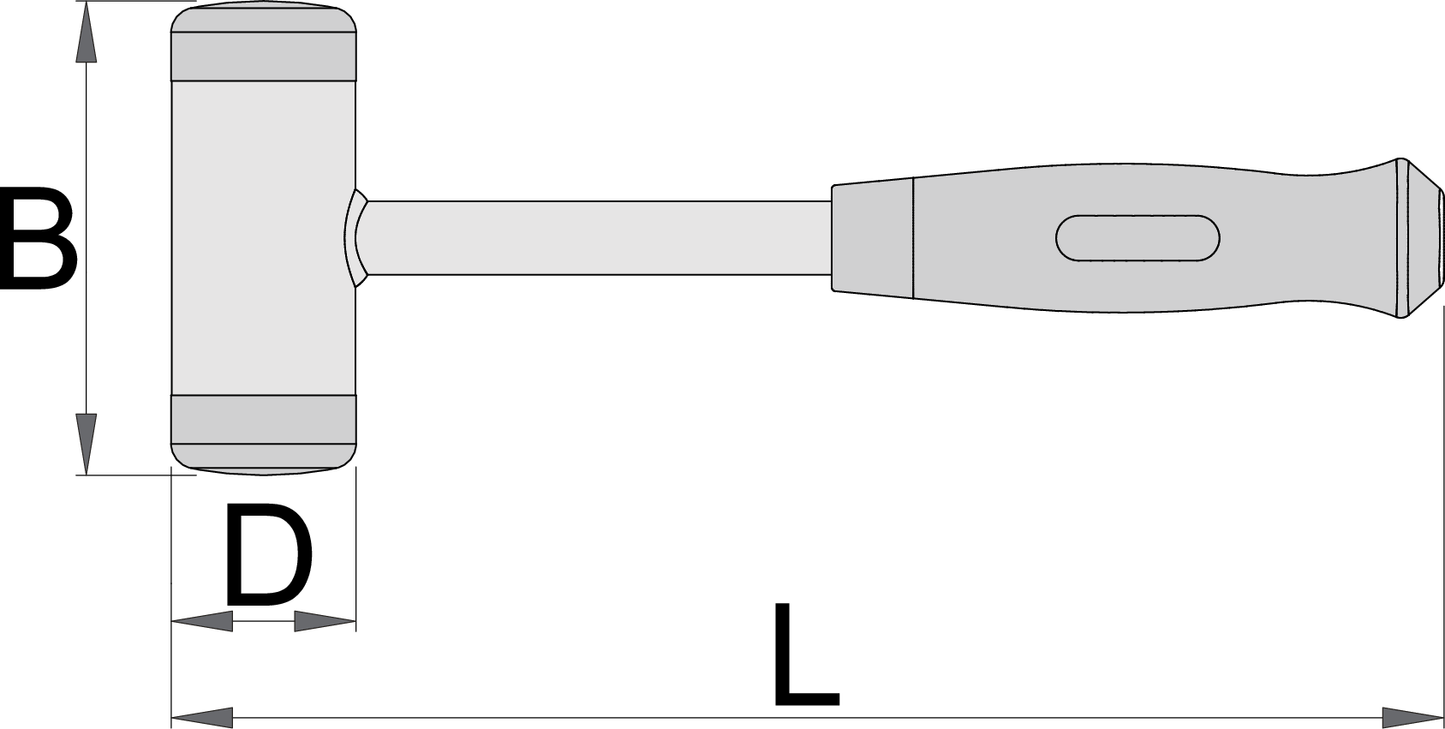
- Weight: 866 g; length: 315 mm; face diameter: 45 mm; head width: 116 mm
- Construction: lacquered metal housing, tubular metal handle with plastic grip; non-replaceable polyurethane faces
- Fill: steel balls and granulate, non-rebounding
- Use: direct strikes against finished bike components
Made in Slovenia, since 1919
Unior has been forging hand tools in Zreče since 1919, and sponsors professional road and mountain-bike race teams. The lacquered metal housing and tubular metal handle are the durability choice for a tool that lives in a workshop where solvents, chain lube, and acidic cleaners are part of the daily environment. A wooden-handle hammer needs a re-set every few years as the wood absorbs and releases moisture; the metal-and-plastic handle doesn't; same tool, twenty years later, same fit and finish.
Pro tip from our mechanics
If you only own one hammer, make it this one. It's the safe-default that won't mar a customer's bike, and the weight is right for almost every bike-shop strike that doesn't involve a chisel or punch. For the framework on which hammer fits which job: Hammers and striking tools in the bike shop →.
FAQ
What are the dimensions and weight of the 819A-US dead blow hammer? From Unior's official 819A-US datasheet: 45 mm face diameter, 315 mm overall length, 116 mm head width, and 866 g total weight. It's the single size Unior offers in the US catalog.
Why doesn't a dead blow hammer bounce back? The head is filled with steel balls and granulate. On impact the loose fill absorbs the strike energy instead of returning it, so the hammer doesn't rebound off the part, more of the blow lands where you aimed it, and less vibration reaches your hand.
Can I strike punches, chisels, or sharp edges with it? No. Unior's guidance is to keep the 819A off sharp objects — a strike on a sharp edge damages the polyurethane faces, and the faces are not replaceable. Use a steel-faced hammer such as the locksmith hammer 812 for punch and chisel work, and wear eye protection and gloves when striking.
Does the 819A come in a larger size? Unior's EU catalog lists a second, larger size — 55 mm face and 1250 g (code 628815). The US catalog carries one size: the 45 mm face, 866 g hammer sold here as the 819A-US.
 Tech Tips
Bearing and headset service: a workshop guide
Tech Tips
Bearing and headset service: a workshop guide
