


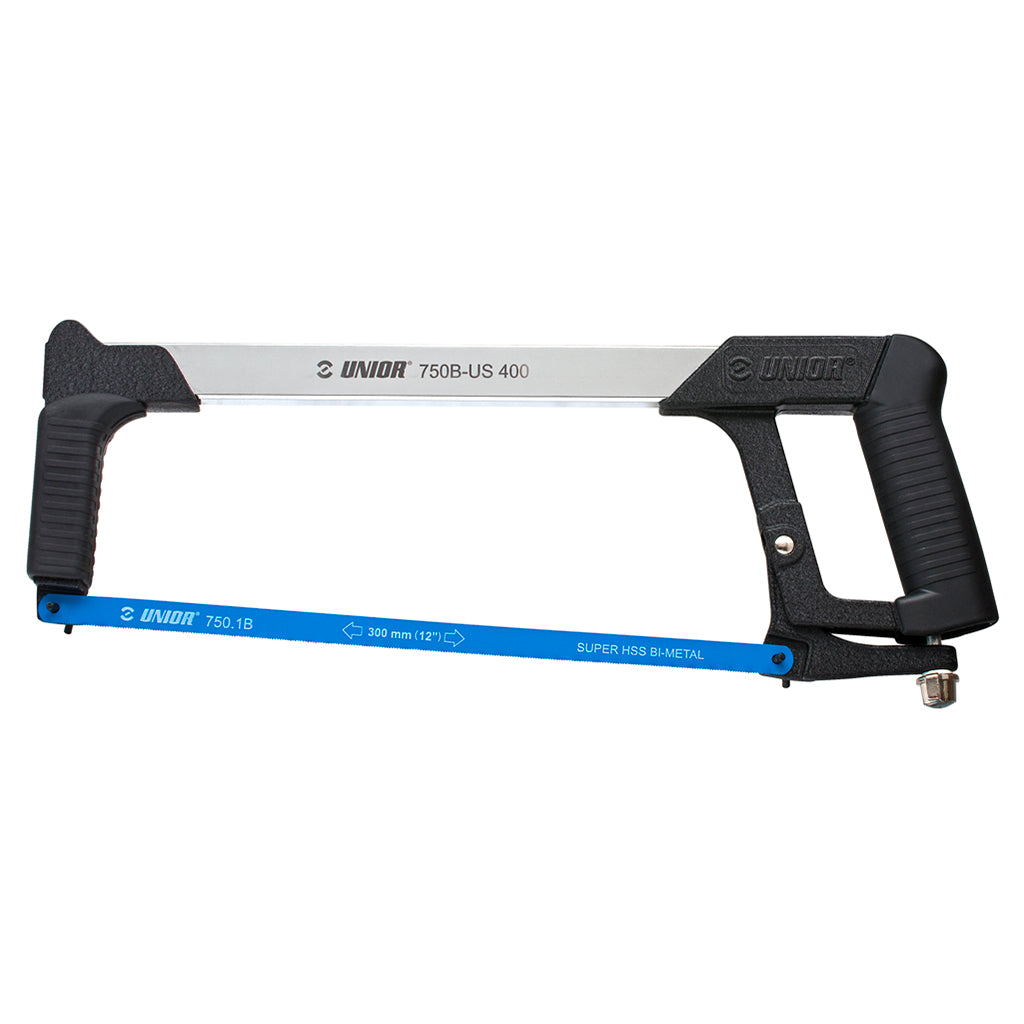
Shop hacksaw for steerer tubes, seatposts, handlebars, and protruding bolts. Chrome-plated frame, lacquered ergonomic handle, and two blade mounting positions; takes any standard 300 mm (12-inch) blade and ships with a 24 TPI HSS bi-metal blade fitted. Swap to ceramic blades for carbon; 400 mm overall, 698 g.
In stock
Couldn't load pickup availability
Free US shipping on orders $75+
Some exceptions apply — see shipping policy
Unior has made hand tools in Zreče, Slovenia since 1919 and sponsors professional road and mountain-bike race teams.

On this page
A working bike shop uses a hacksaw more often than most mechanics expect. Steerer tubes get cut to length on every fork install. Seatposts get trimmed for riders whose frame is at the upper bound of their fit. Handlebars get shortened for racers. TT-bar extensions get cut to match a fitter's spec. Bolts that protrude past the part they're threaded into get shortened. None of these jobs have a quick alternative.
The 750B Hacksaw is the saw that handles all of them. The frame is chrome-plated steel, sized for a standard 12" / 300 mm blade, and tensioned hard enough that the blade tracks straight under load. The blade tension is the detail that separates a hacksaw that cuts a square edge from one that wanders. A flexing frame curves the cut; a stiff frame holds the blade on its line.
The saw ships with a 24-TPI metal-cutting blade installed. That's the right starter blade for steel steerers, aluminum seatposts, brass cable-end caps, and most of the metal cuts a shop does. For carbon-fiber cuts (carbon steerers, carbon seatposts, carbon handlebars), switch to our ceramic-style abrasive blades; the metal blade leaves a frayed edge on carbon, the ceramic blade abrades a smooth one.
What makes a shop hacksaw different
Two details. First, blade tension. The 750B's tensioning mechanism takes the blade to high tension without flexing the frame. Cheap hacksaws use a wing-nut tensioner that loses tension during the cut; the 750B holds tension through a long cut. Second, blade alignment. The pins on both ends of the frame hold the blade in plane with the frame body, so the blade can't twist during the cut and leave a non-square edge.
The handle is shaped for both hand positions: pistol-grip for power on the push, palm-on for control during a slow finishing cut.
Blade options
- 24-TPI high-speed steel blade; for steel, aluminum, and brass cuts
- Ceramic-style abrasive blade; for carbon fiber
Both blades fit the same 750B frame.
Specs
- Chrome-plated steel frame with lacquered handle
- 12" / 300 mm standard hacksaw blade compatibility
- Tensioning mechanism for high blade tension; two blade mounting positions
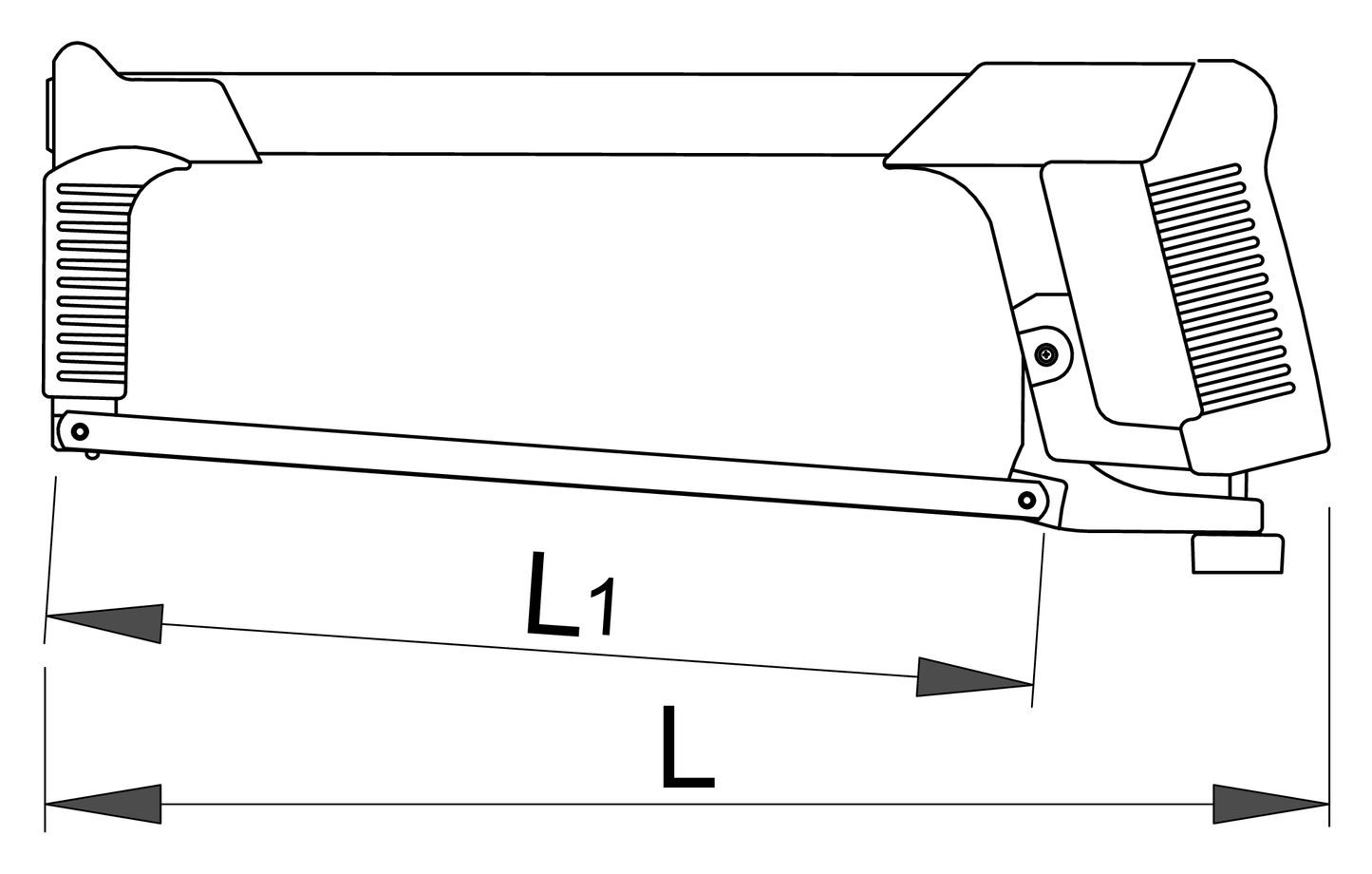
- Article number: 750B — overall length 400 mm, weight 698 g
Built in Zreče, Slovenia
Unior has been forging hand tools in Zreče since 1919, and sponsors professional road and mountain-bike race teams. The 750B is the workshop-grade hacksaw in Unior's hand-tool catalog, sized and tensioned for the precision cuts a bike shop needs. The same frame design is used in the broader Unior industrial catalog for general-purpose metal cutting; the bicycle workshop selection is the same tool at the same quality.
Pro tip from our mechanics
The single best tip for a clean hacksaw cut: clamp the workpiece firmly in the vise so the cut line is just above the jaws, and let the saw's weight do the work. Forcing the saw down speeds up nothing and makes the cut wander. Our workshop hand tools guide covers cutting and the rest of the workshop hand-tool layer in detail: Workshop hand tools every bike shop needs →
FAQ
What blade does the 750B come with? It ships with a 300 mm (12-inch) HSS bi-metal metal-cutting blade already fitted — the same 24 TPI blade sold as the 750.1B two-pack spare. Any standard 300 mm (12-inch) hacksaw blade fits the frame.
Can the 750B cut carbon fiber parts? Yes, with the right blade fitted. Unior lists the 750.1CAR ceramic blade set as the 750B's carbon-cutting spare — fit one before cutting carbon steerers, seatposts, or handlebars, and keep the HSS metal blade for steel and aluminum.
How tight should the blade be tensioned? Unior's own guidance: the blade is tensioned enough when it does not bend during the cut. If you see the blade flex mid-cut, stop and take the tensioner tighter before continuing.
How big is the 750B hacksaw? 400 mm overall with the 300 mm (12-inch) blade fitted, and 698 g on the scale. The frame is chrome-plated, the handle is lacquered, and the blade mounts in two positions.
 Tech Tips
How to set up a professional bike workshop
Tech Tips
How to set up a professional bike workshop
