


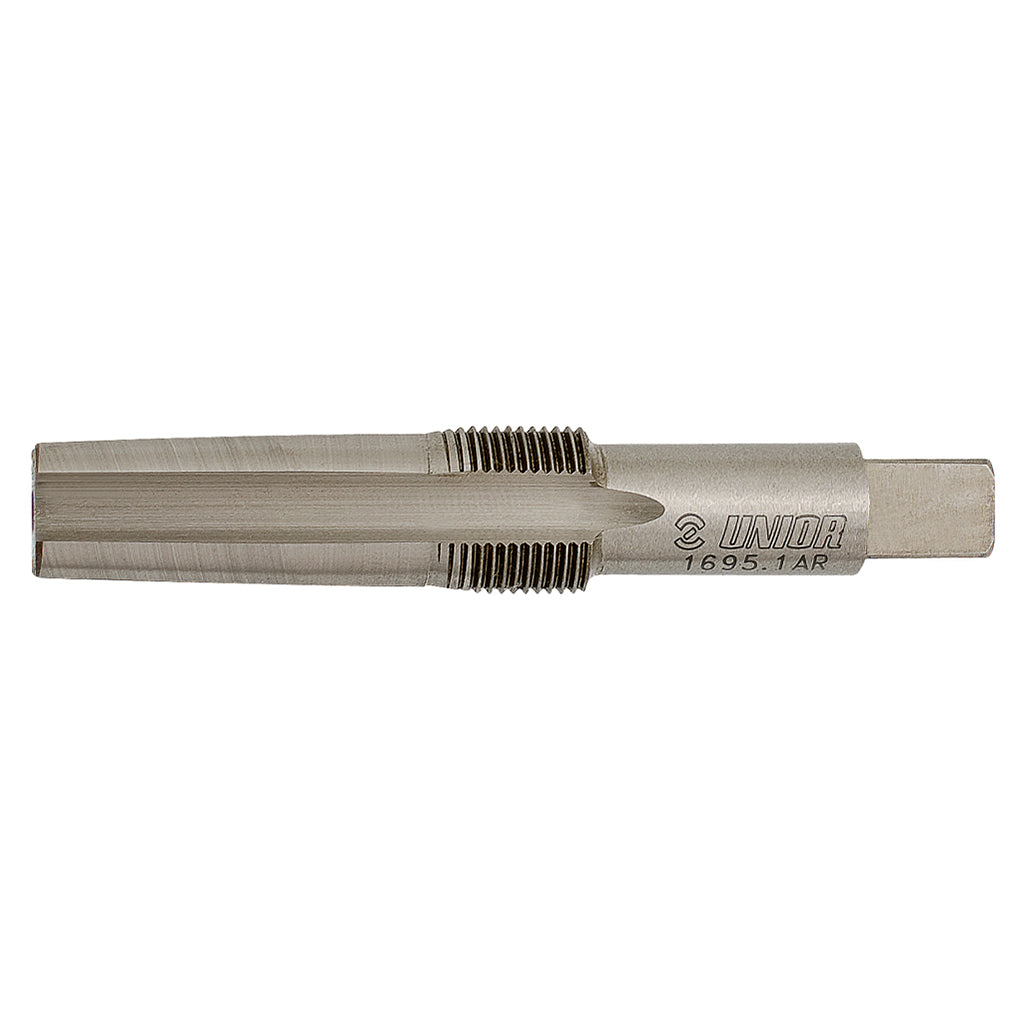
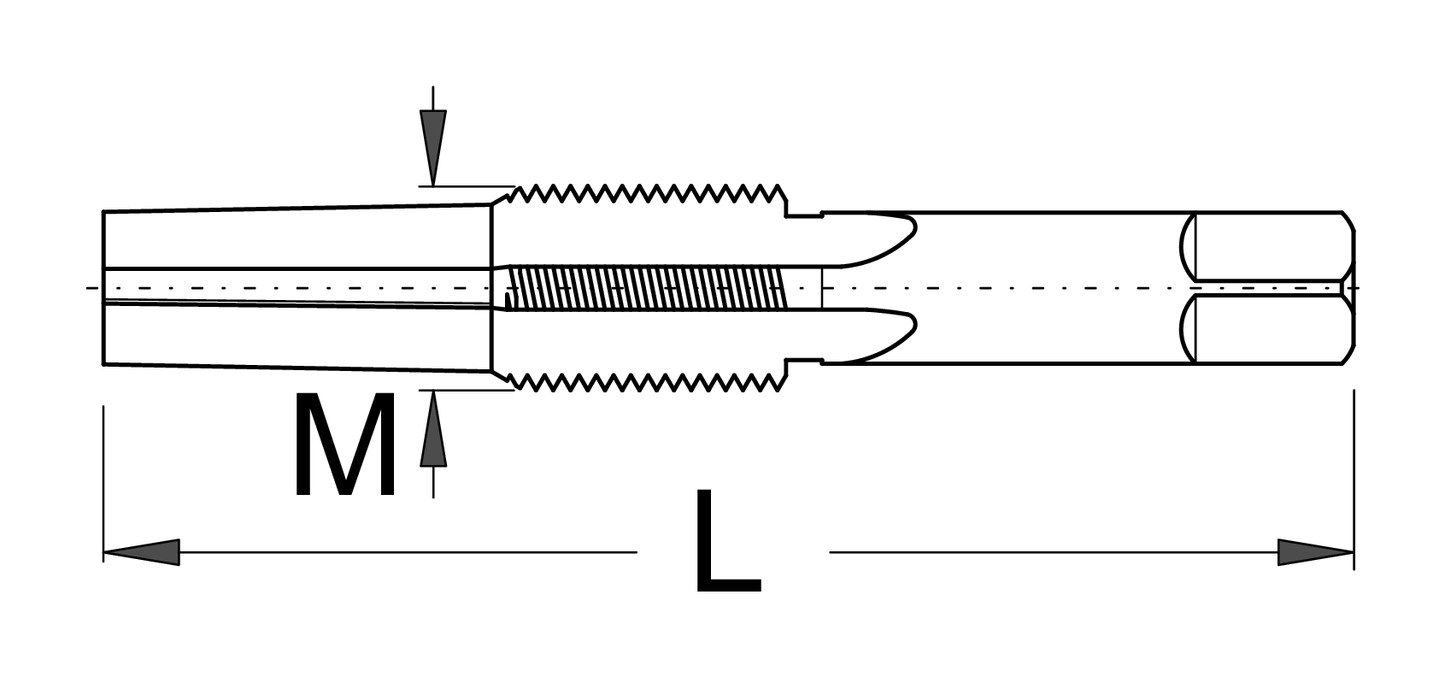
A reamer and a tap on one shank. The front section cuts a stripped right-hand pedal thread out of the crank arm; the trailing section cuts the 5/8" × 24 seat for the 1695.3A thread insert, which returns the arm to a standard 9/16" pedal thread. Hardened premium flex plus carbon steel, 85.5 mm long, 80 g.
In stock
Couldn't load pickup availability
Free US shipping on orders $75+
Some exceptions apply — see shipping policy
Unior has made hand tools in Zreče, Slovenia since 1919 and sponsors professional road and mountain-bike race teams.

On this page
The right-hand pedal thread on a crank arm fails in two common ways. The customer cross-threads the pedal at first install, cutting new (wrong) angle threads through the existing pattern. Or years of road dirt and corrosion in the thread eventually destroy the engagement surface. Either way, chasing the existing thread won't recover it. The Right Pedal Reaming Tap 1695.1AR is the tool that does.
The 1695.1AR cuts the failed right-hand thread away, enlarges the hole to a precise oversize diameter, and cuts a new thread pattern sized for the Right Pedal Thread Insert 1695.3A. "Right" matters; the right pedal threads in the standard clockwise direction, and the tap geometry is sized to match.
The reaming workflow
Pair the 1695.1AR with the Handle for Pedal Taps 1695/4BI for leverage and alignment. The handle's square-drive socket holds the tap square to the crank face during the cut, which matters because the first turn establishes the new thread's angle relative to the pedal axis. An off-axis first turn means an off-axis thread, which means a pedal that threads in but doesn't seat square against the crank.
The reaming section of the tool removes the failed thread material. The trailing thread-cutting section cuts the new thread profile. The result is a precision-sized, freshly cut hole ready for the thread insert. Thread the Right Pedal Thread Insert in with strong thread locker, let it cure, and the crank takes a standard pedal again.
Crank Saver Kit context
The 1695.1AR is one of four components of the full pedal-thread rescue system. The others: the 1695.1AL left reaming tap, the handle, and the thread inserts. The complete kit (Crank Saver) ships as a single package; the individual parts are useful for a shop that's lost one component or stocks specific sizes.
When to choose a reaming tap vs. a chase tap
Chase the thread (with the Pedal Tap Set 1695.1) when the existing thread is intact but dirty, slightly corroded, or paint-blocked. Ream the thread (with the 1695.1AR) when the existing thread is stripped, cross-cut, or torn out and won't hold a pedal under load. The distinction matters: use the chase tap on a thread that needs reaming, and the chase won't fix it. Use the reaming tap on a thread that just needs chasing, and you're cutting good metal away unnecessarily.
Specs
- Right-hand reaming and thread-cutting tap
- Cuts a 5/8" × 24 TPI oversize seat thread; the finished insert restores the standard 9/16" × 20 pedal thread
- Square-shank engagement, compatible with 1695/4BI Handle for Pedal Taps
- Pair with Right Pedal Thread Insert 1695.3A
- Article number: 1695.1AR. Length 85.5 mm, weight 80 g, premium flex plus carbon steel, hardened
Built in Zreče, Slovenia
Unior has been forging hand tools in Zreče since 1919, and sponsors professional road and mountain-bike race teams. The 1695 system is a Unior-specific design; the reaming-and-thread-insert pairing was developed for the cycling repair trade, not adapted from a general-machinery thread-repair kit. The threads on the insert match the cut profile of the reaming tap; substituting a Heli-Coil-style generic insert won't work because the thread profile doesn't fit.
Pro tip from our mechanics
The mechanic-economics on pedal-thread rescue are simple. A crank-arm replacement is $80–$300 depending on the build. The Crank Saver service is the cost of two tap turns plus an insert. The shop that does the rescue keeps the customer's bike running for a fraction of the replacement cost. Our workshop hand tools guide walks through the full pedal-thread workflow: Workshop hand tools every bike shop needs →
FAQ
Do I need the right tap or the left one? The 1695.1AR is for the right (drive-side) crank arm, which uses a standard clockwise pedal thread. The left arm is reverse-threaded and takes the 1695.1AL instead. The taps are not interchangeable; the cutting geometry is handed. If you are rescuing both arms, or stocking a shop bench, you want both taps plus the matching left and right inserts.
What thread does this tap actually cut? A 5/8" × 24 TPI oversize thread. That is deliberately larger than the 9/16" × 20 pedal standard: the tap clears out the failed thread and cuts a new seat sized for the 1695.3A thread insert, and it is the insert that returns the arm to a standard 9/16" × 20 pedal thread. The tap on its own does not restore the original thread, so plan on the insert as part of the job.
How do I drive the tap, and does alignment matter? The shank ends in a square drive that pairs with the Handle for Pedal Taps 1695/4BI. Alignment matters most on the first turn: the reaming section should sit square to the crank face before you load it, because the angle you start at is the angle the new thread follows. Cut slowly with cutting fluid and back off periodically to clear chips.
My pedal threads are just dirty, not stripped. Is this the wrong tool? Yes. A thread that is intact but fouled by dirt, corrosion or paint only needs chasing with the standard Pedal Tap Set 1695.1, which cleans the existing 9/16" × 20 thread without removing sound metal. Reach for the 1695.1AR only when the thread is stripped, cross-threaded or torn out and will no longer hold a pedal under load.
 Tech Tips
How to remove a crankset (and pick the right tool)
Tech Tips
How to remove a crankset (and pick the right tool)
