


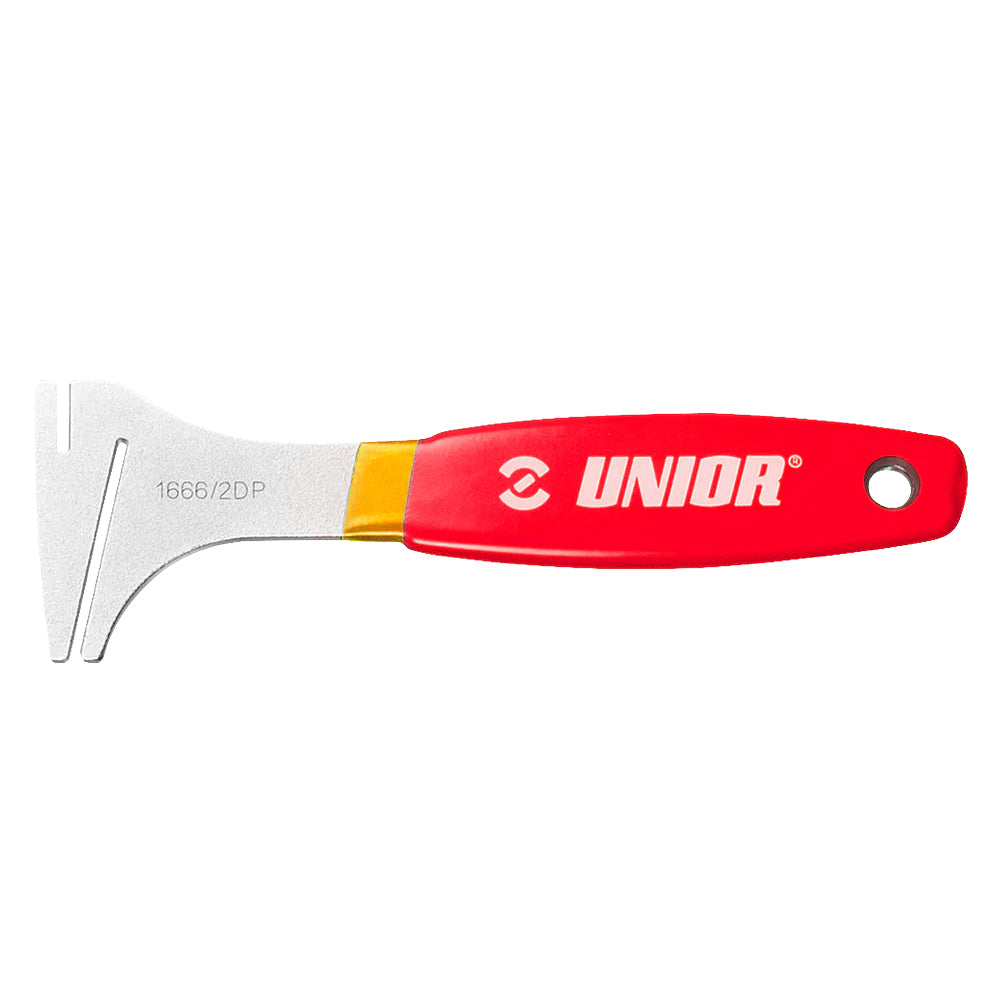
Slot the 1666/2DP over a bent disc rotor and lever the wobble out with the wheel still on the bike. Two slot depths put leverage close to the hub or out at the rim, and the 4 mm body reaches into tight caliper gaps. Premium flex plus carbon steel, 183 mm, 177 g.
Out of stock
Couldn't load pickup availability
Free US shipping on orders $75+
Some exceptions apply — see shipping policy
Unior has made hand tools in Zreče, Slovenia since 1919 and sponsors professional road and mountain-bike race teams.

On this page
The Rotor Truing Fork 1666/2DP is the original Unior fork: two slot depths, one tool, the most common rotor-truing job done quickly. A rotor that's caught a knee, a tip-over in the garage, or a hot brake-and-cool-quench cycle wobbles in the caliper at every revolution and rubs the pads at the high point. The fork is what takes the wobble out without removing the wheel from the bike.
The two depths position the tool's leverage near the hub or near the outer edge of the rotor. Pick the depth that matches where the bend sits, slot the fork over the rotor at the high point, and apply a small bend perpendicular to the disc face. Recheck the pad clearance and repeat in smaller increments until the rub clears. The 4 mm tool body slides into the gap between the rotor and the caliper body that some bikes leave tight, where a thicker tool simply won't seat.
This is the simpler sibling of the Rotor Truing Fork 2.0. The 2.0 adds multiple notches at different angles for shops doing higher truing volume. The 1666/2DP covers the common case: a localized wobble on a rotor otherwise within service spec. With two depths, there's no choice to make about which notch to grab.
Specs
- Function: rotor truing fork for disc-brake rotors
- Two slot depths for hub-side and edge-side leverage
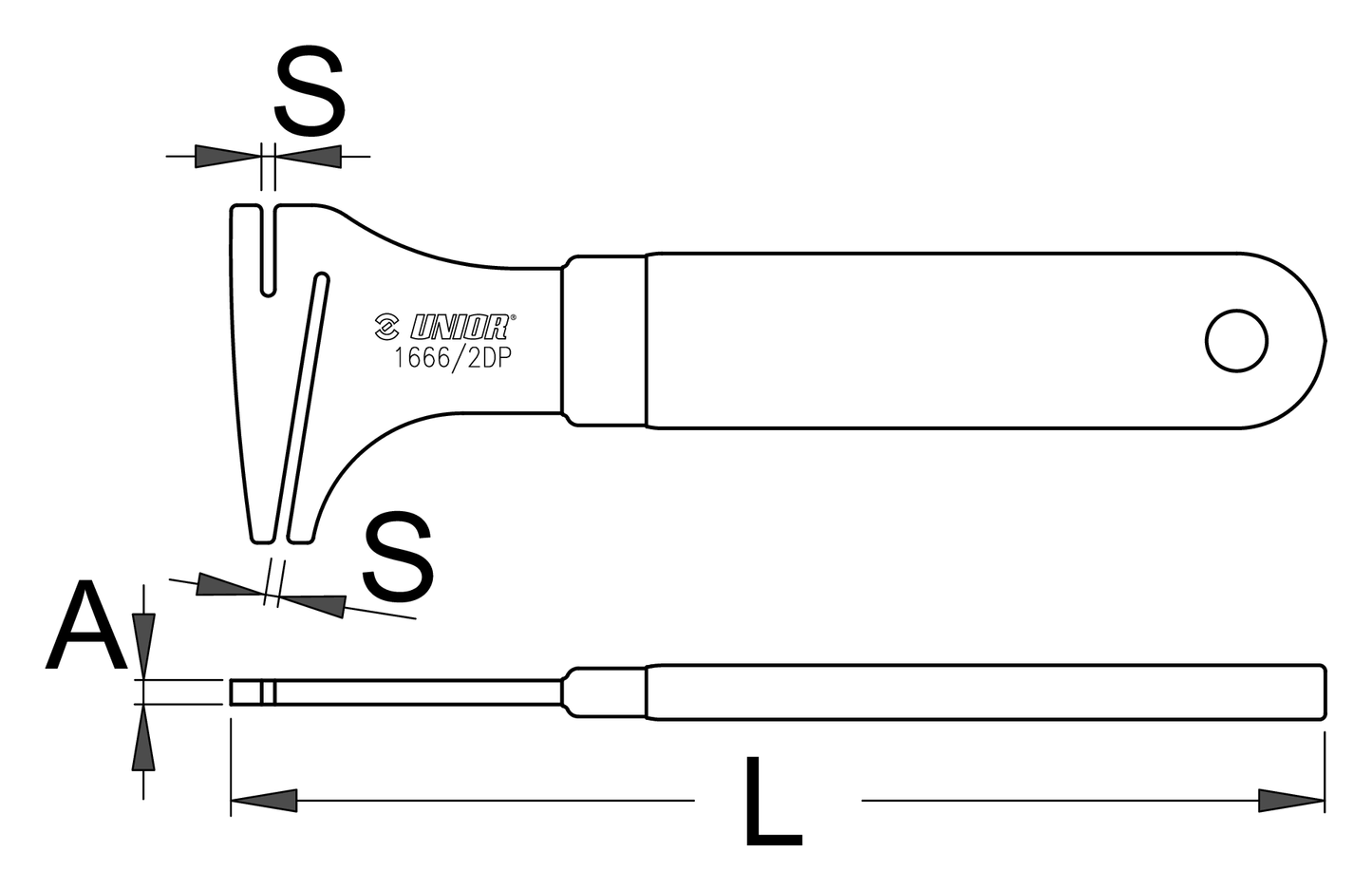
- Slot width: 2.2 mm — the maximum rotor thickness the fork accepts
- 4 mm tool body for tight rotor-to-caliper gaps; 183 mm overall, 177 g
- Trivalent chrome plated per ISO 1456:2009
- Article number: 1666/2DP-US
When truing is the right call
Truing has a job and a not-a-job. The job is a localized warp on a rotor still above the manufacturer's wear limit (Shimano's spec is 1.5 mm; check the stamping or service sheet for your rotor). The not-a-job is a rotor that's heat-discoloured across multiple spots, a rotor bent and re-trued past what the metal can take, or a rotor below the wear limit. Those are replacement, not truing. Forking a tired rotor risks a fatigue crack at the next big braking input.
Built in Zreče, Slovenia
Unior has been forging hand tools in Zreče since 1919, and sponsors professional road and mountain-bike race teams. The 1666/2DP is the truing-fork shape that's been on workshop walls in Europe for years before the 2.0 came along. It's the staple version: small enough to live on a hook above the bench, simple enough that there's no decision to make when a rotor rolls in needing a quick correction.
Pro tip from our mechanics
Before reaching for the fork, settle whether truing is even the right move. Disc brake rub is usually caused by one of four things, and only two of them respond to a truing fork. Caliper alignment and stuck pistons account for more rub calls than rotor warp in our experience; checking those first saves a lot of fork-work that didn't need to happen. Our disc-brake-rub guide walks the diagnostic order so you don't reach for the truing fork on a problem the truing fork can't fix: Fix disc brake rub →
FAQ
Will the 1666/2DP fix my rubbing disc brake? Only when the rub comes from a bent rotor. Caliper misalignment and sticky pistons cause more rub than rotor warp, so align the caliper and check the pistons first. If a wobble at one spot on the rotor remains, that is the job this fork is made for.
How do I straighten a rotor with the truing fork? Spin the wheel and find the spot where the rotor rubs the pads. Slot the fork over the rotor there, using the slot depth that places its leverage at the bend — nearer the hub or nearer the outer edge — and lever gently against the wobble. Re-check clearance and repeat in small moves until the rub clears. The wheel stays on the bike.
Will it fit my rotor and caliper? The two slots are 2.2 mm wide, which covers standard disc rotors; a rotor thicker than 2.2 mm will not seat. The flat body is 4 mm thick, so it reaches into the narrow gap between rotor and caliper that stops bulkier tools.
When should I replace the rotor instead of truing it? Replace it when the rotor is worn below the minimum thickness stamped on it, shows heat discoloration in several places, or has been bent and re-trued repeatedly. Truing is for a localized bend on a rotor that is otherwise within its service spec.
 Tech Tips
Fix Disc Brake Rub
Tech Tips
Fix Disc Brake Rub
