

Brake Tools
-
2-in-1 Disc Brake Tool
Regular price $19.99 USDRegular priceUnit price per -
Rotor Wear Indicator
Regular price $14.99 USDRegular priceUnit price per -
Flare Nut Wrench
Regular price $13.99 USDRegular priceUnit price per -
Disc Brake Piston Spreader
Regular price $19.99 USDRegular priceUnit price per -
8/10mm Flare Nut Wrench
Regular price $9.99 USDRegular priceUnit price per -
 Sold out
Rotor Truing Fork
Regular price $21.99 USDRegular priceUnit price per -
7x8mm Open End Combination Wrench
Regular price $5.99 USDRegular priceUnit price per -
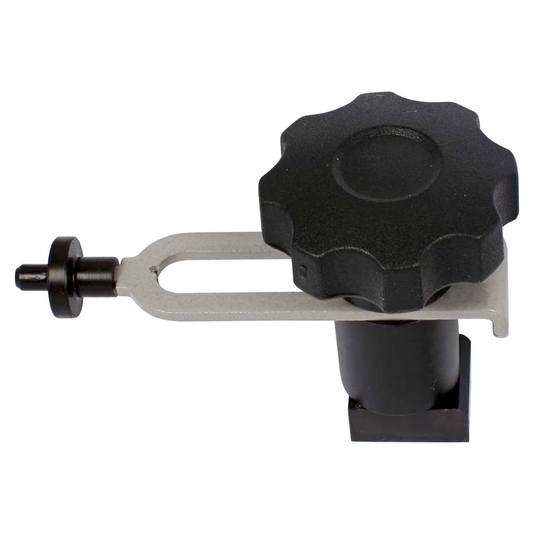
Rotor Truing Fork 2.0
Regular price $25.99 USDRegular priceUnit price per -
Rotor Truing Gauge
Regular price $29.99 USDRegular priceUnit price per -
Disc brake rotor lockring wrench
Regular price $29.99 USDRegular priceUnit price per -
 Sold out
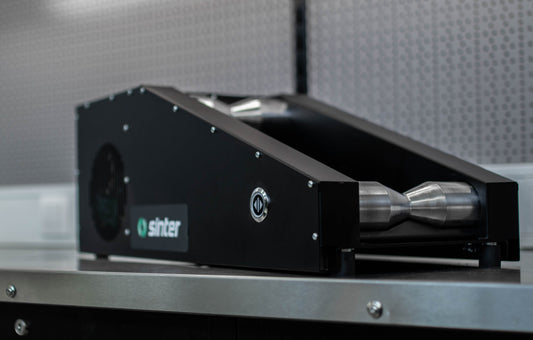
Sinter Smart Bedding Machine
Regular price $2,750.00 USDRegular priceUnit price per






Frequently asked questions
Which brake tools do I actually need for hydraulic disc service?
For a full hydraulic bleed you reach for three fitting tools plus a piston spreader. An open-end wrench fits the bleed screw at the caliper, a flare nut wrench fits the compression nut on the line so the slot clears the hose, and a piston spreader backs the pistons fully before new pads go in. Add a rotor truing fork and a rotor wear indicator and you cover the rest of disc service.
What is the difference between a piston spreader and the 2-in-1 disc brake tool?
The Disc Brake Piston Spreader is a single-purpose tapered tool that backs the caliper pistons fully apart to clear fresh pads or a fresh rotor, and its full-thickness body suits bench work. The 2-in-1 Disc Brake Tool combines a piston-spread end with a rotor-truing slot in one body that rides in a jersey pocket. Pick the spreader for the workshop; pick the 2-in-1 for field service.
Which flare nut wrench size do I need for a brake bleed?
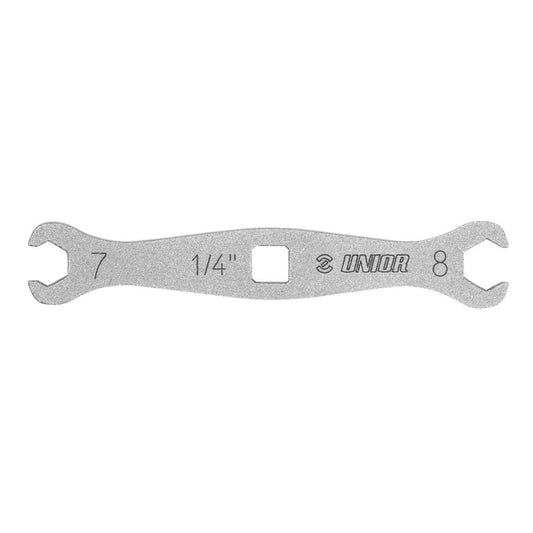
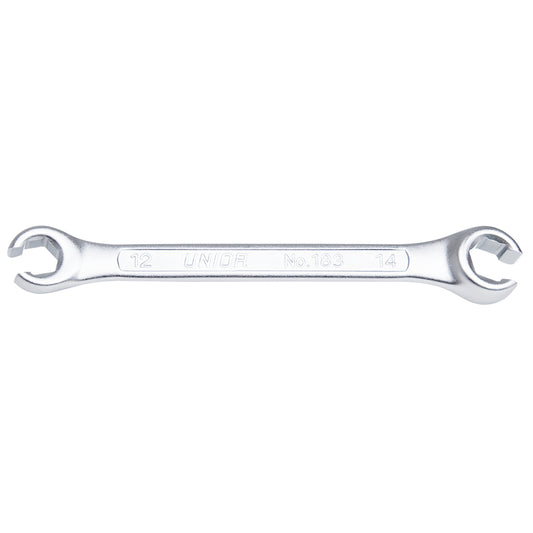
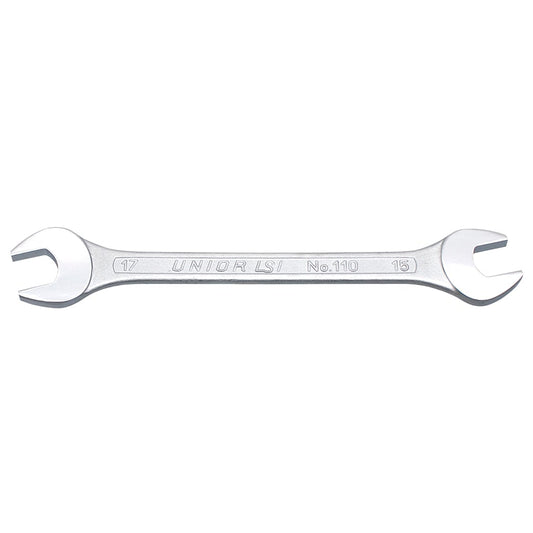
It depends on the fitting. The 7/8 mm flare nut wrench (1760/2) suits most road and integrated hydraulic compression nuts and adds a 1/4 inch torque drive for a torque-spec finish, while the 8/10 mm wrench (183/2) covers the larger-diameter lines common on MTB and some current road systems. For the bleed screw itself, the 7x8 mm open-end (110/1) covers both common Shimano sizes.
Will a Unior rotor truing fork fit my disc rotor?
It depends on rotor thickness. The Rotor Truing Fork 2.0 (1666-6) accepts rotors up to 2.4 mm thick, and the original 1666/2DP has 2.2 mm slots. SRAM's 1.85 and 2.0 mm rotors fit both, Hope's 2.3 mm rotors (180 mm and larger) fit only the 2.0, and Magura's 2.5 mm MDR-S fits neither. Both forks true the disc without removing the wheel or caliper. The 2.0 adds laser-cut, heat-treated tool steel with multiple notch angles for higher-volume rotor work.
Should I true my rotor or replace it?
True it when the disc is straight on thickness but rubs from a localized wobble. Because hydraulic pads sit only about 0.25 mm from the rotor at rest, even a 0.5 mm wobble guarantees rub, so a truing fork often fixes the noise. Replace it instead when a rotor wear indicator shows the disc has worn to its minimum service thickness: 1.5 mm on Shimano rotors, and other makers publish their own figure. Truing a worn-thin rotor will not save it.
How is a Centerlock rotor removed compared to a 6-bolt rotor?
A 6-bolt (ISO) rotor uses six T25 Torx bolts in a hexagonal pattern, so a Torx driver handles it. A Centerlock rotor uses a single splined lockring at the hub that takes a cassette-tool-pattern wrench, such as the Disc Brake Rotor Lockring Wrench, rather than Torx bolts. The two mounts are not interchangeable without an adapter, so check the hub before ordering.