
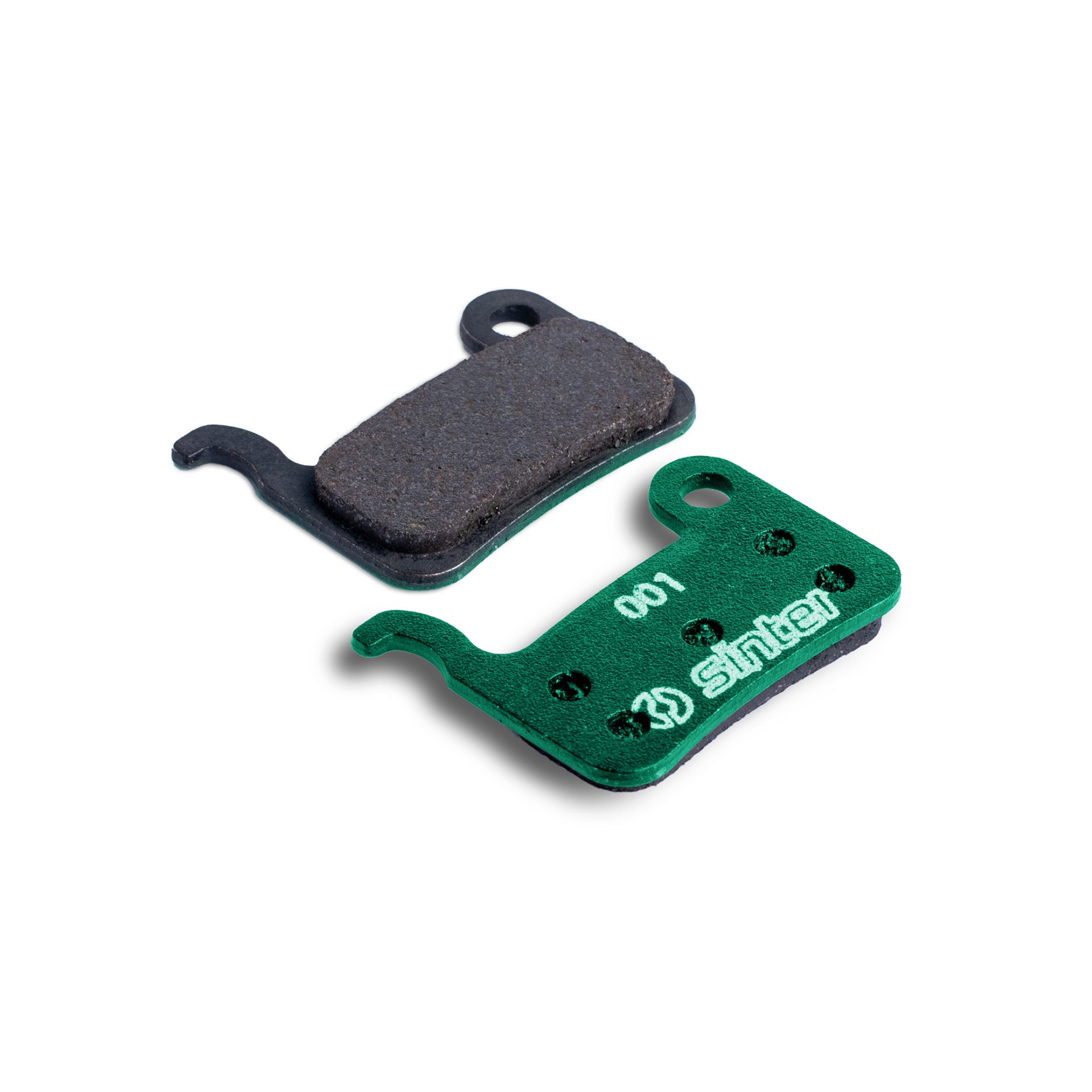
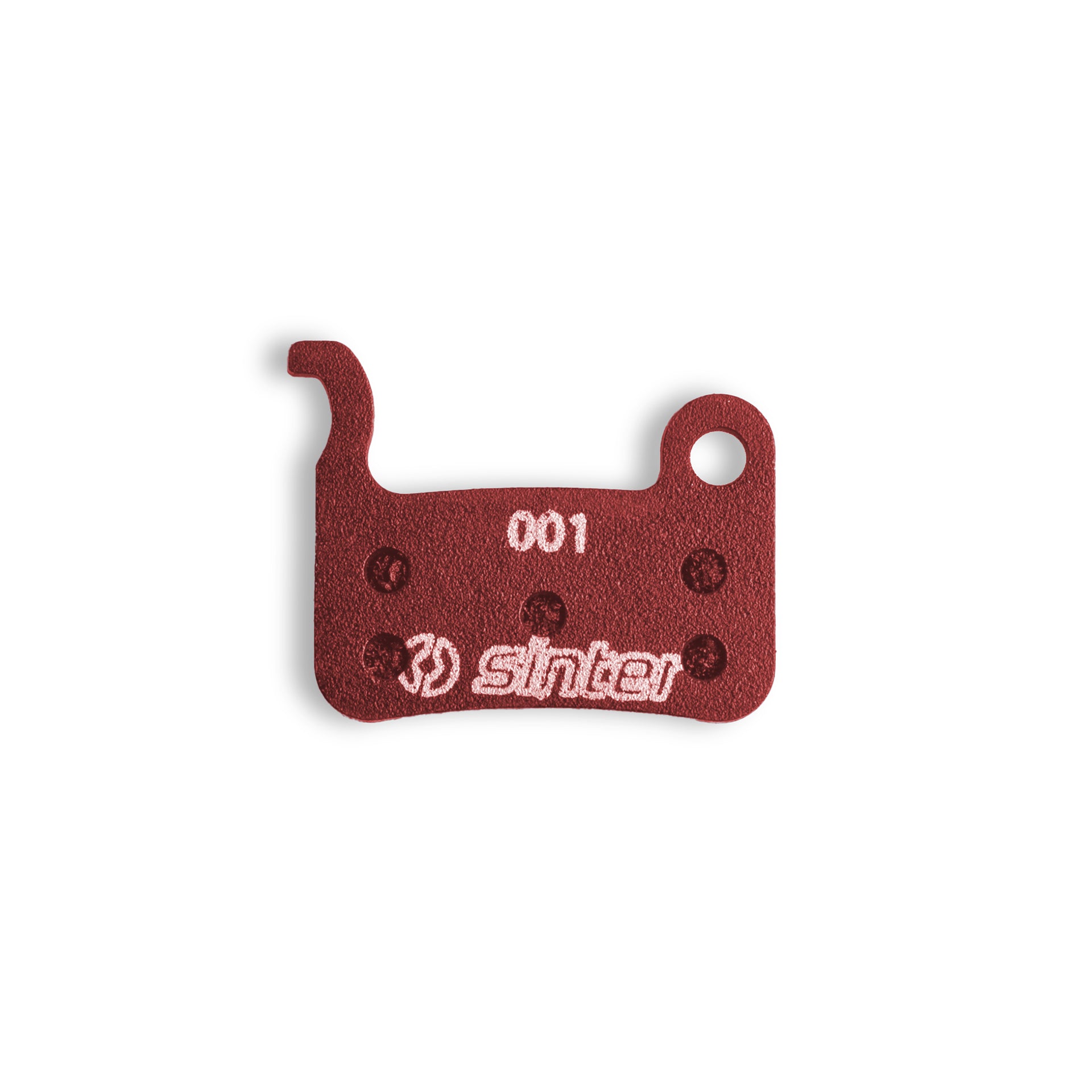
Sinter organic replacement pads for older Shimano A/M type calipers from the XTR, Deore and LX era. They bring back clean bite off the lever, soft modulation under hard braking, and quiet running, while staying gentler on your rotors than sintered metal. All four compounds are stocked, so pick the color below to match how you ride.
In stock
Couldn't load pickup availability
Forged in Zreče, Slovenia since 1919. Official technical partner of multiple World Tour and downhill teams.



On this page
A Shimano A-type pad shape covers a wider span of Shimano calipers than most riders realize, and Sinter's Model 001 is the organic-compound replacement that fits the whole span. If you're running an XTR M970, an XTR M960, an XT M770, an SLX M660, or any of the older Deore, Alfine, Saint M800, or HONE M600 calipers, this is the pad shape Shimano cut into the back of the caliper body. One Sinter model number; a long compatibility list.
What's in the kit
One caliper's worth of pads (2 pads, left and right), plus the spring and pin that hold them in place on a Shimano caliper, and Sinter's bedding-in instructions. Sized for a single caliper swap; order two if you're servicing front and rear together.
Fits
A-type pad shape, covering this Shimano range:
- XTR M970, M960, M950 series (BR-M975, BR-M966, BR-M965)
- Deore XT M770 (BR-M775), M760 (BR-M765)
- SLX M660 (BR-M665)
- Deore M595 (BR-M595), M530 (BR-M535)
- Deore LX M580 (BR-M585), T660 trekking (BR-T665)
- Alfine S500 (BR-S501, BR-S500)
- Saint M800 (BR-M800)
- Hone M600 (BR-M601)
- Other Shimano legacy calipers: BR-M596, BR-M545, BR-R505, BR-T605, BR-M776
If your Shimano caliper has the A-type pocket and isn't on this list, Sinter's fitment tables are exhaustive at the series-and-generation level for the brakes they support; check yours against the table before ordering.
Compound and feel
Sinter only makes organic brake pads, and the Model 001 is the organic-compound replacement for this Shimano shape. The friction matrix is kevlar, ceramic, clay minerals, and carbon bound in resin, which translates into a pad that bites cleanly off the lever, modulates softly under heavy braking, and runs quiet in dry weather. For the legacy Shimano XTR / XT / SLX MTB calipers this pad covers, that organic-compound feel is what most original-equipment Shimano pads delivered when the brake was new; the Sinter pad brings that feel back at the bench.
Choosing your compound
Despite the name, every Sinter compound is organic — not a sintered-metal pad. Organic pads run cooler at the caliper, give more lever feel and modulation, stay quiet, and are gentler on your rotors. The color of the backing plate tells you the compound.
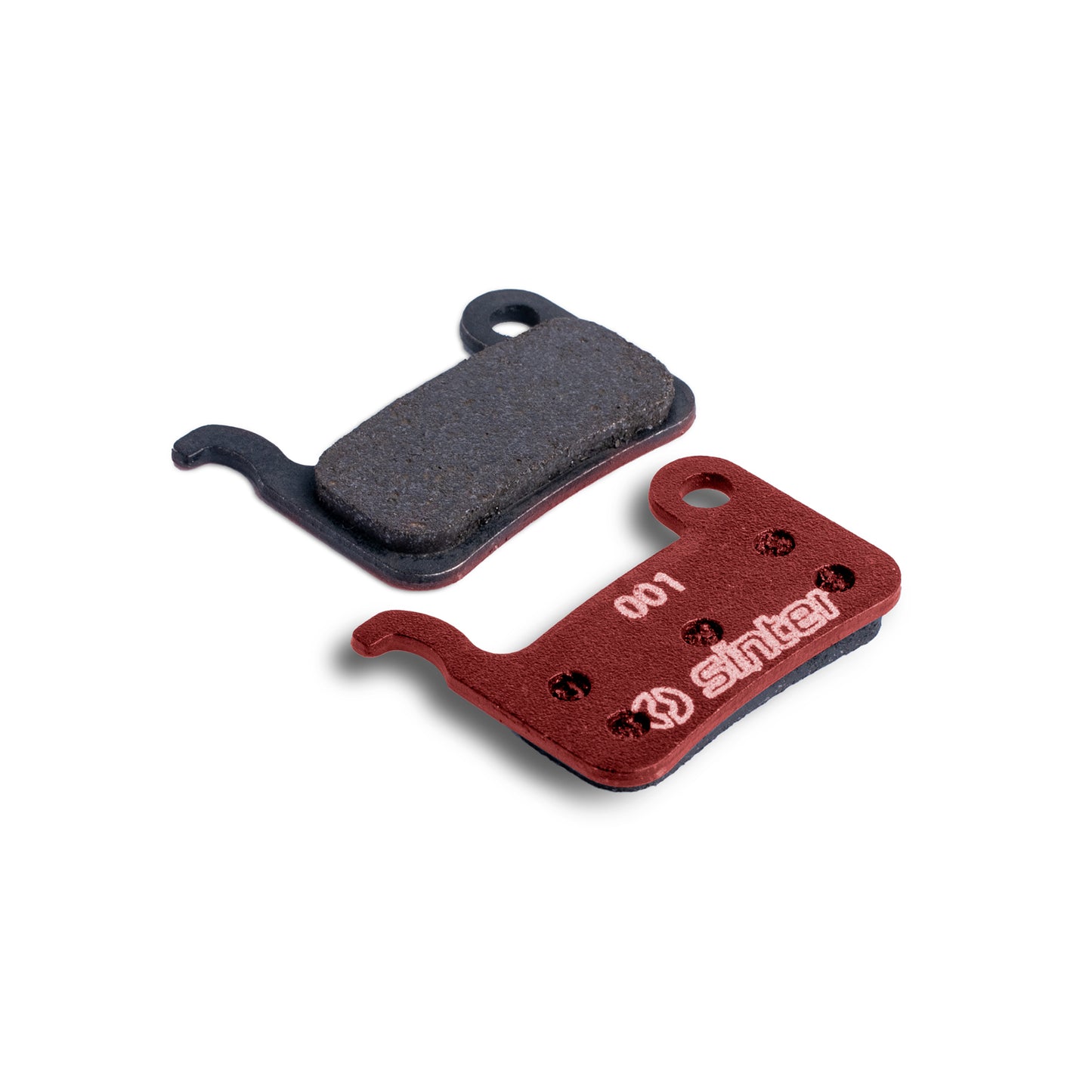
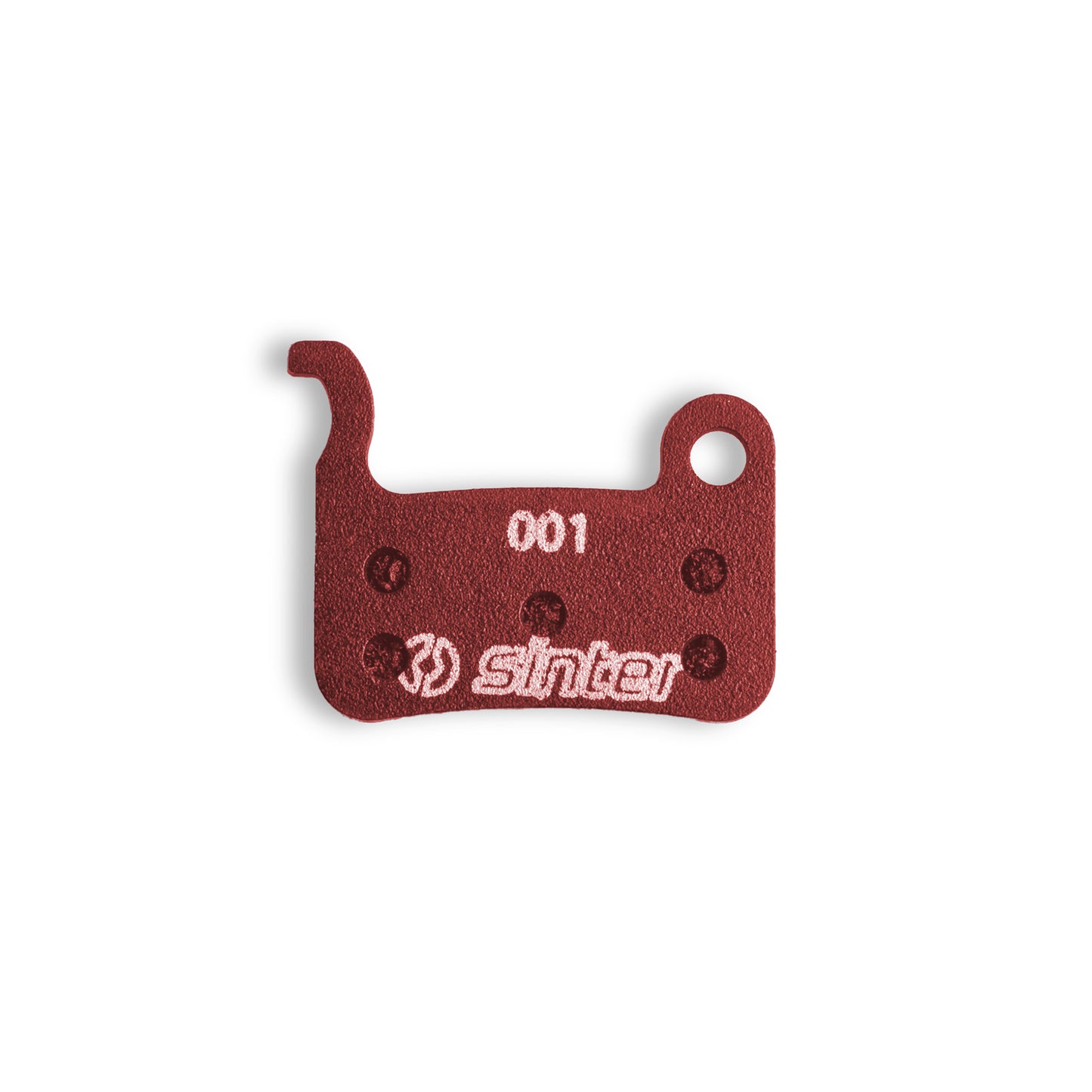
Red s514
The all-round upgrade from OEM. Consistent performance, smooth modulation and lever feel, excellent durability.
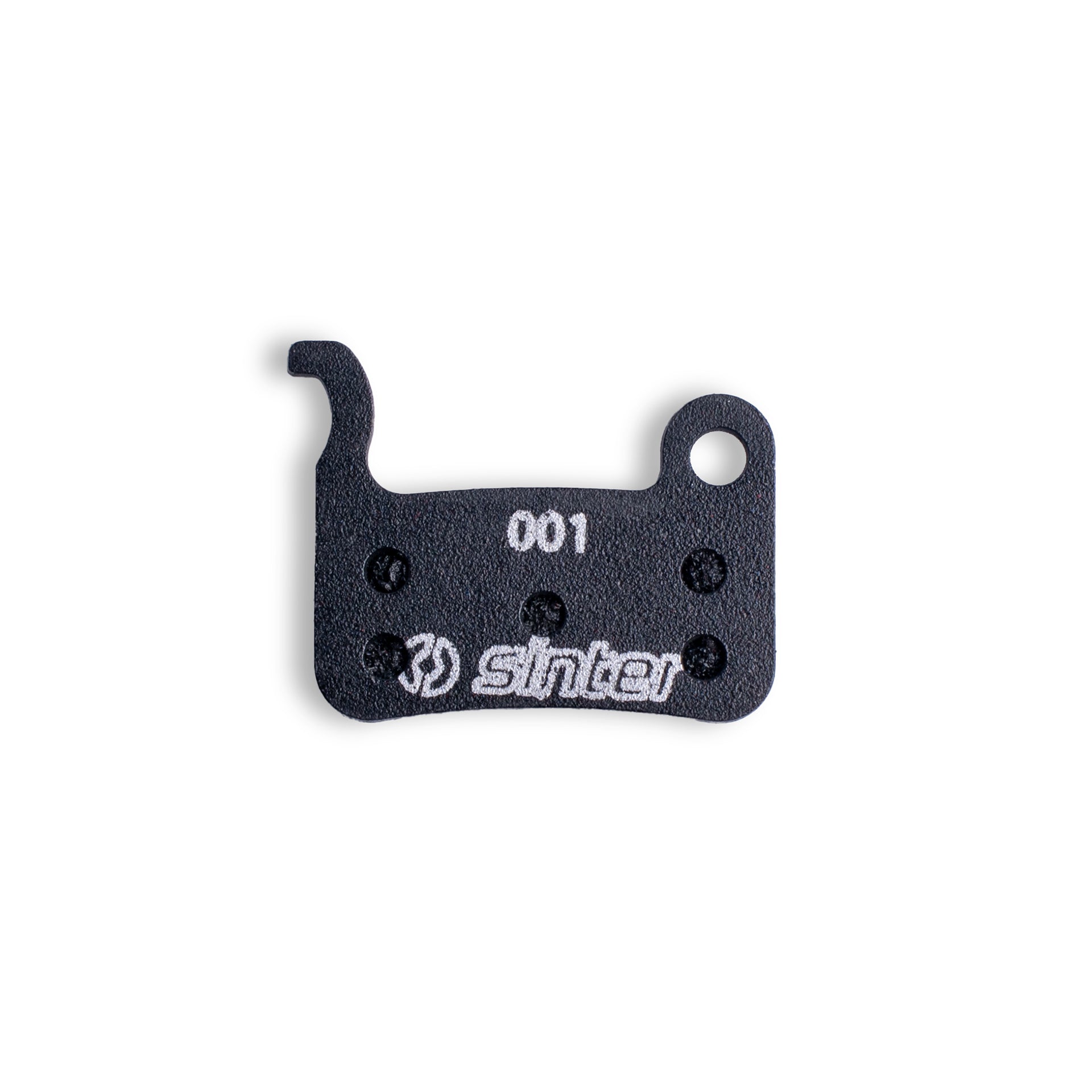
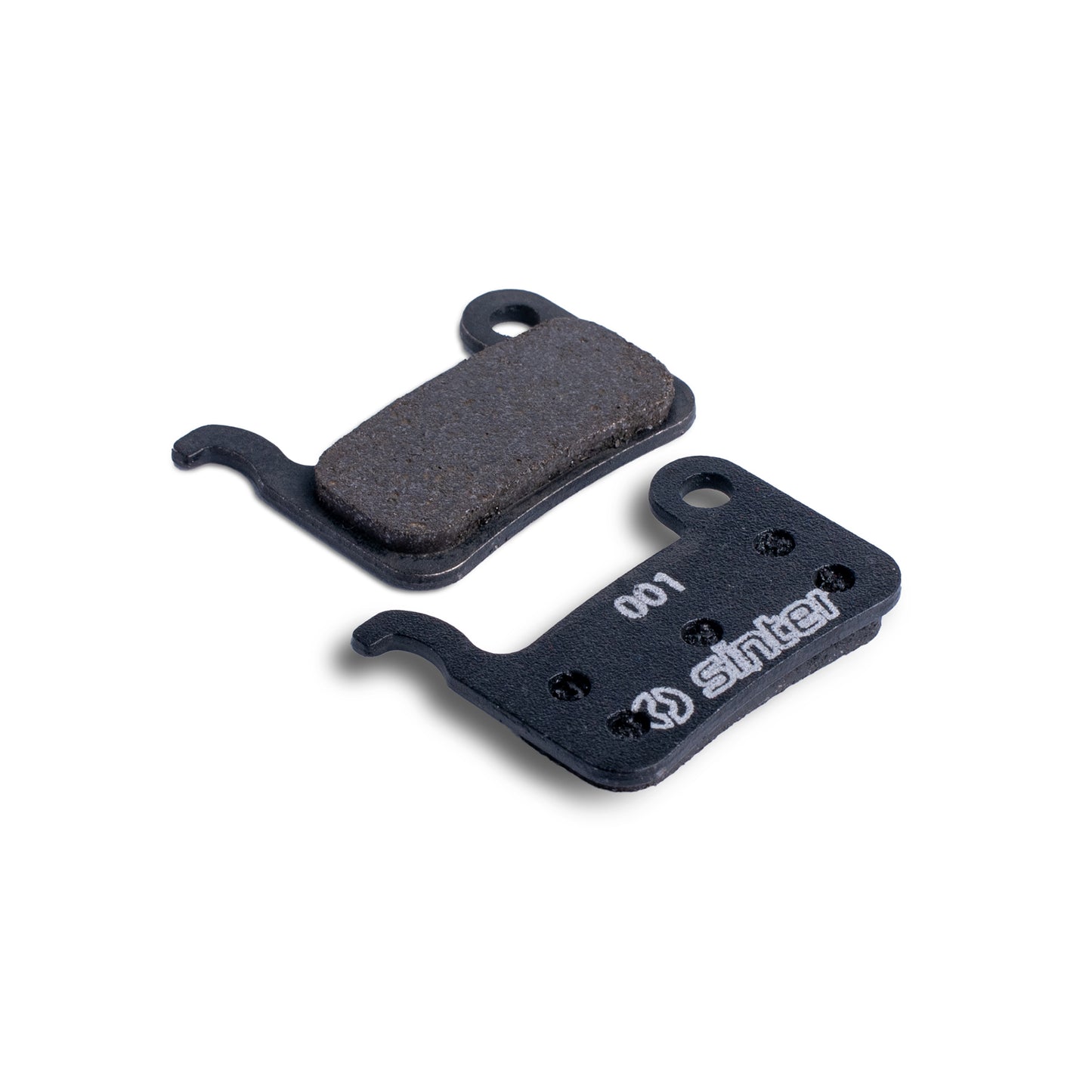
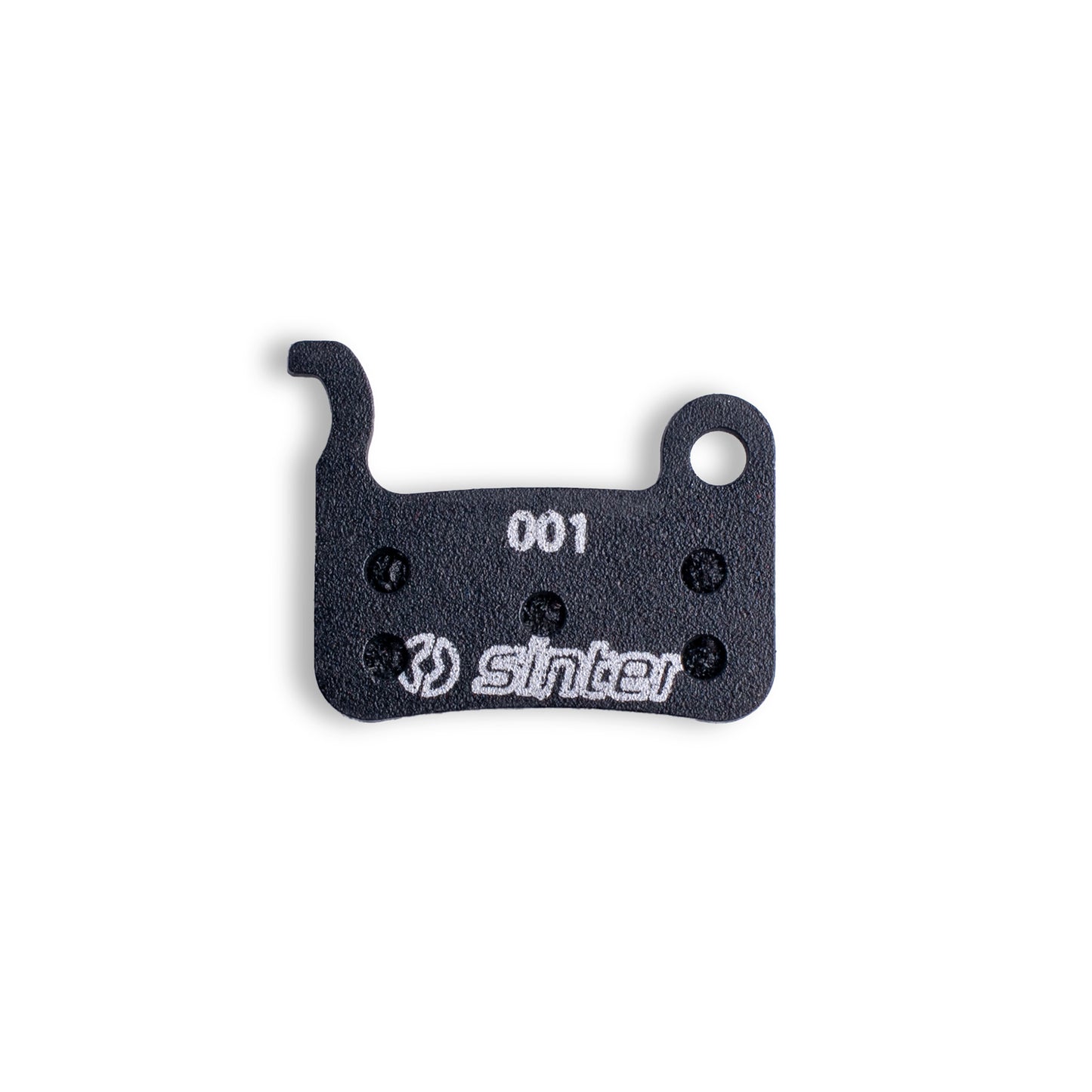
Black s550
Great-value organic compound with ceramic particles — a soft, controlled bite and strong resistance to wear.
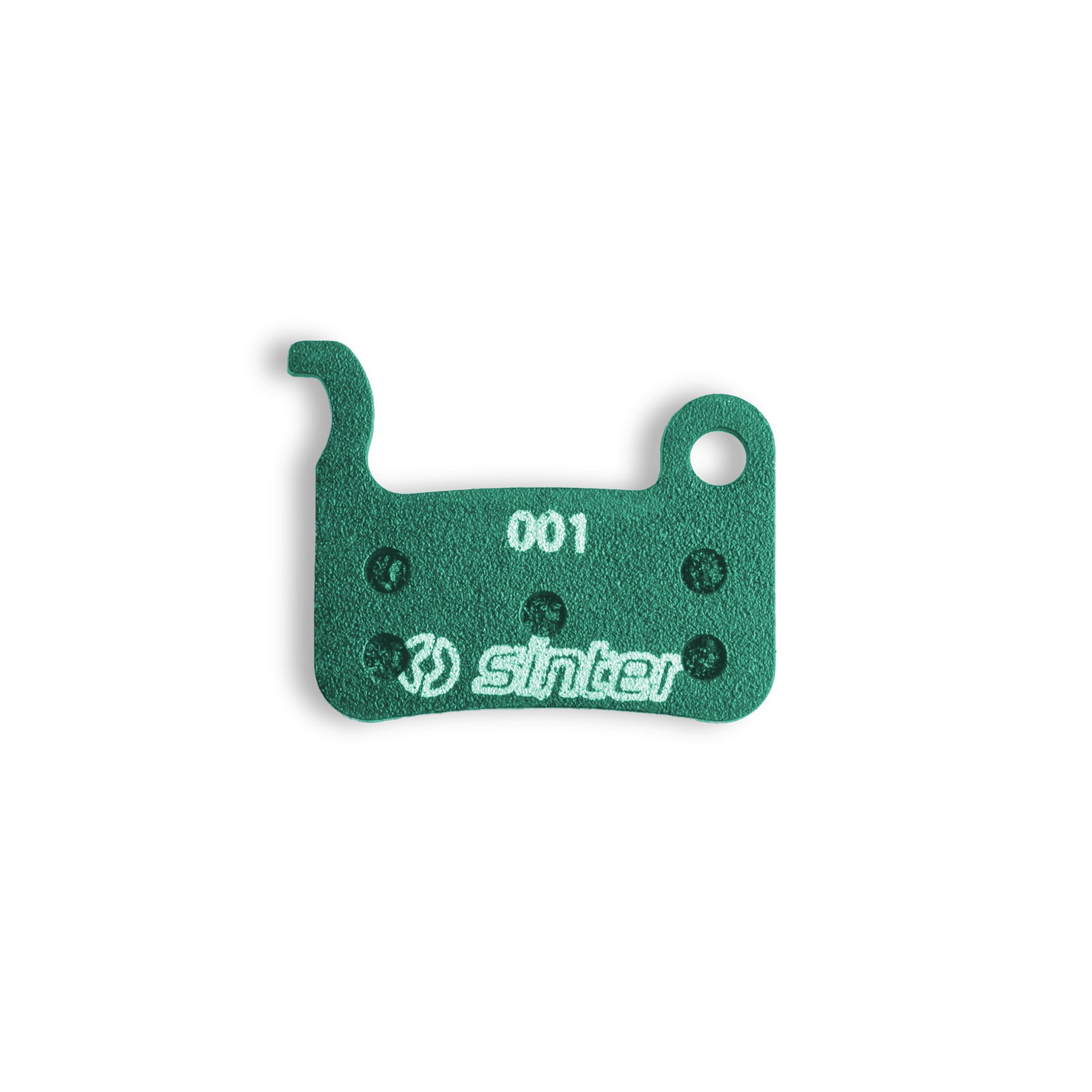
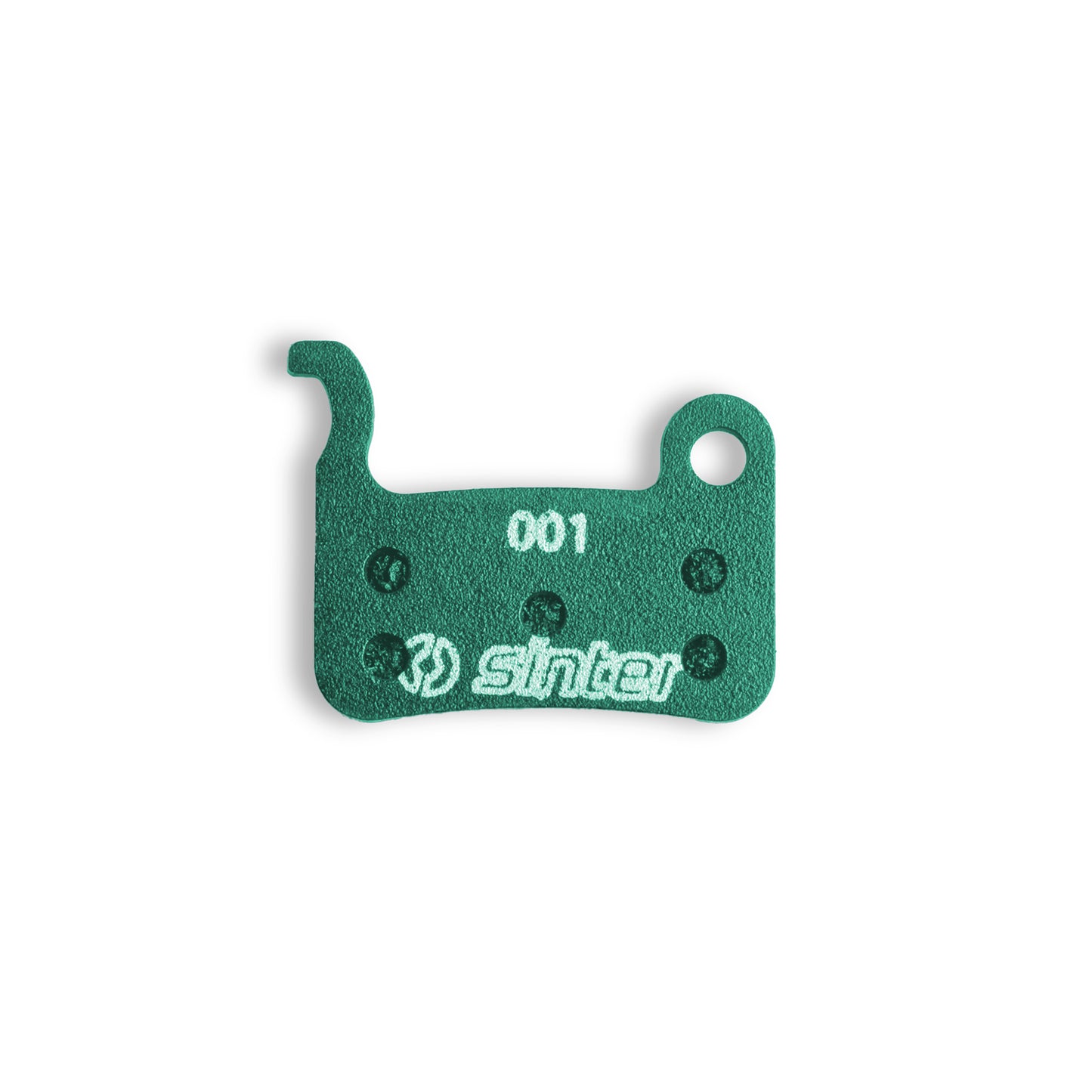
Green s2032
Sinter's race compound. A state-of-the-art material for braking aggressively while keeping ultimate power and control across temperatures.
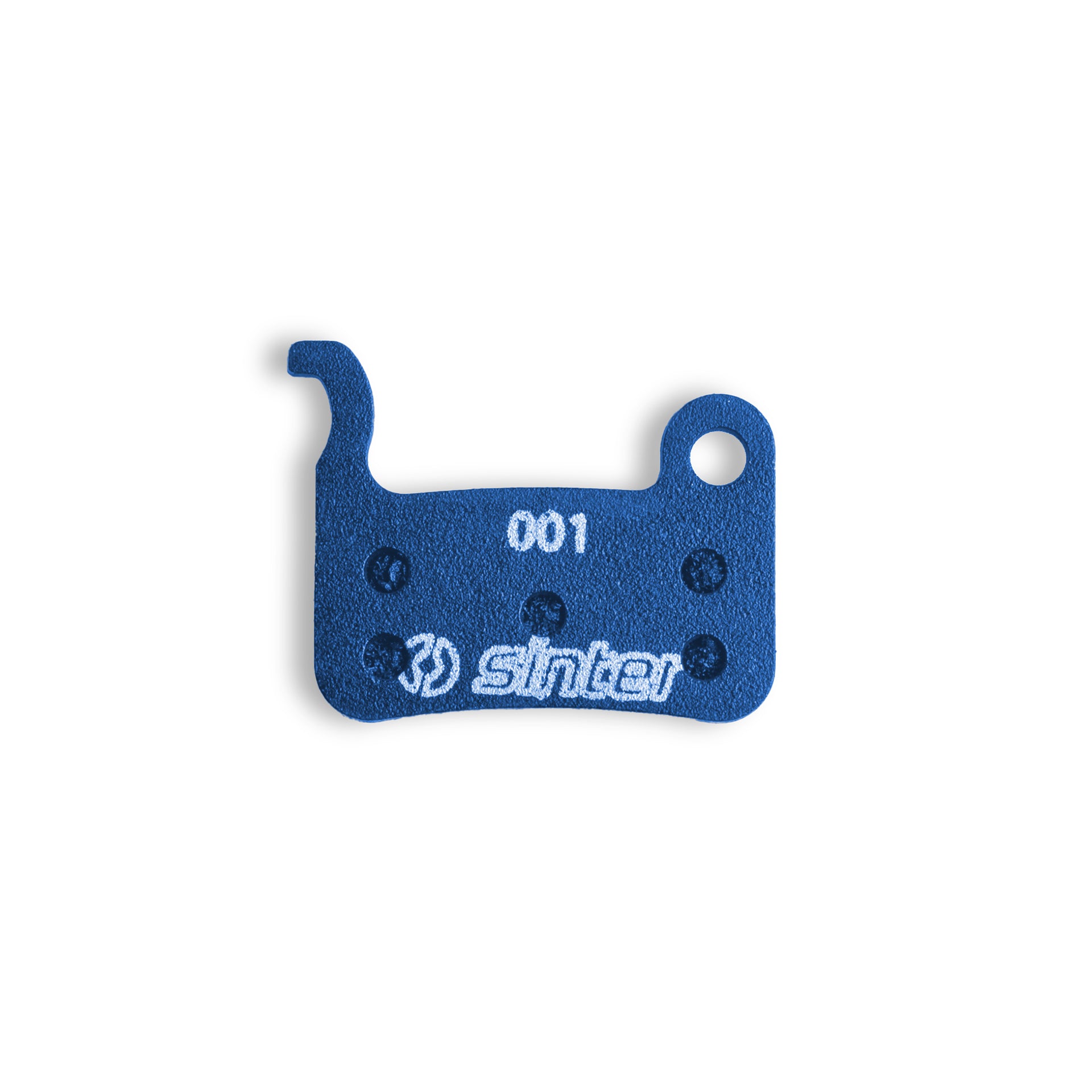
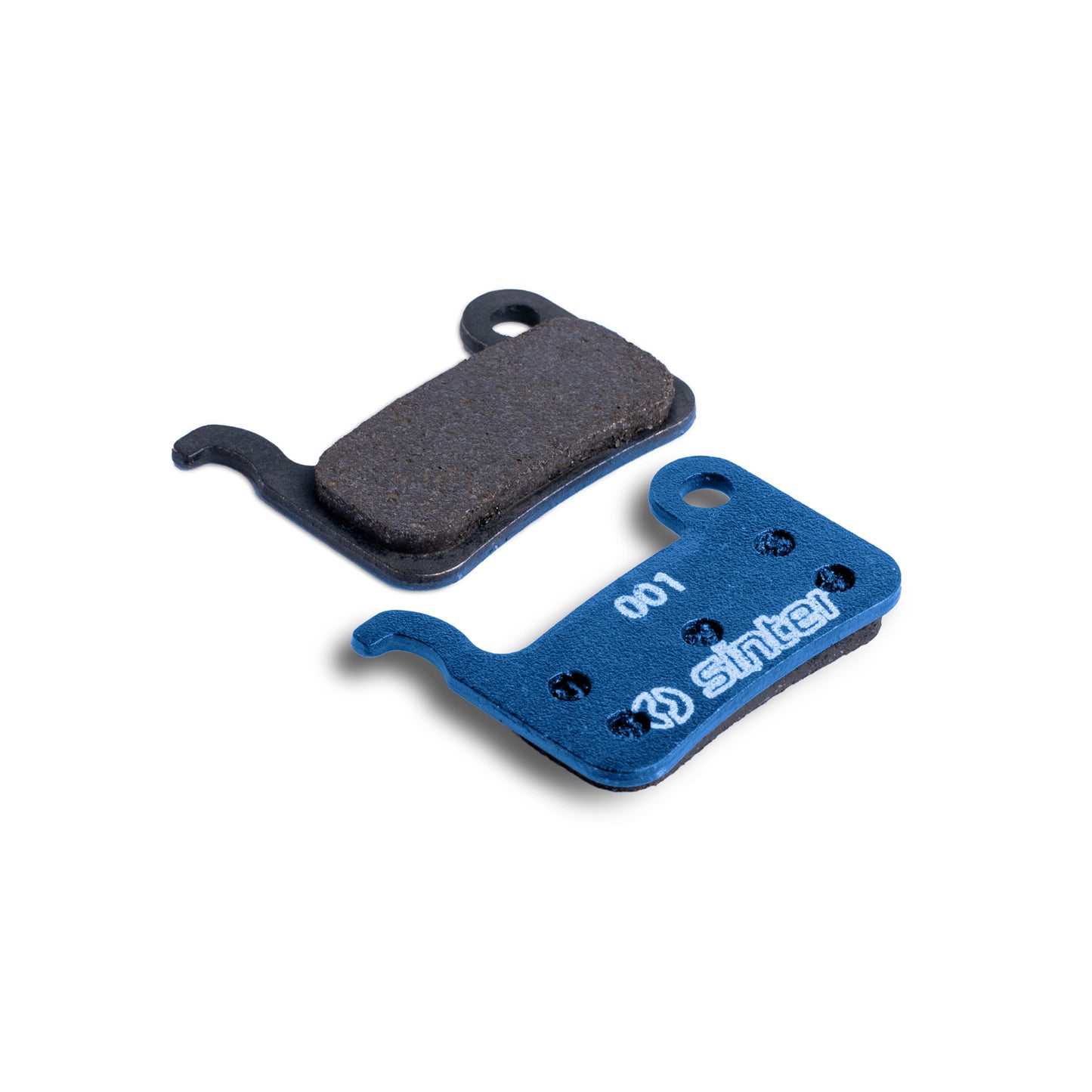
Blue s530
For e-bikes, DH and Enduro. Consistent power with high modulation, lever comfort and slow wear across all temperatures.
Our pick for this brake
Also in the Sinter range: the Cargo pad, built for cargo bikes and heavy daily city loads.
Specs
- Compound: organic (ceramic-loaded, resin-bound)
- Backing plate: steel
- Pad shape: Shimano A-type
- Pads per package: 2 (one caliper)
- Includes spring and pin
Includes: 2 pads (left and right), Shimano-compatible spring, pin, bedding-in instructions.
Slovenian friction materials, distributed by Euro Toolworks
Sinter has been making friction materials in Ljubljana since 1969, and developed the first disc brake pads in the former Yugoslavia in 1972. Unior has been forging hand tools in Zreče since 1919, and is the official technical partner of multiple World Tour and downhill teams. Distribution through Euro Toolworks is the same path that brings Unior's bench tools and Bleedkit's hydraulic kits to the North American market; the Model 001 is the long-tail Shimano A-type pad in that Slovenian-tools catalog, the one that earns a place on the shop wall for the legacy-brake customer base that almost everyone forgets.
Pro tip from our mechanics
A-type pads cover a long generational span on the Shimano side, and the pad shape outlasts most of the brake systems it ships with. If you're keeping a 10- or 15-year-old XTR M970 or XT M775 alive, the Sinter Model 001 is what closes the loop, but the brake-side wisdom (rotor thickness, bleed condition, caliper alignment) is what determines whether new pads fix the problem or paper over it.
The compound choice, the fitment matrix, and where Sinter Elite earns its premium are laid out in How to choose Sinter brake pads →.
FAQ
Which brakes does the Sinter Model 001 fit? This is the Model 001 pad for older Shimano calipers of the A and M type, covering the XTR, Deore, SLX, and LX era. Because these older systems used a few different pad shapes, the safest approach is to remove a worn pad and compare its backing plate, tab, and pin hole to this one, or read any model number stamped on the back. Going by the caliper name alone can lead you wrong on bikes of this vintage. If you are not certain, send us a photo of the old pad and we'll help you confirm.
Are these sintered metal pads? No. Despite the brand name, Sinter only makes organic brake pads, so the Model 001 is an organic-compound pad, not a sintered-metal one and not semi-metallic. Compared with sintered pads, organic compounds run cooler at the caliper, give you more lever feel and modulation, stay quieter, and put less wear and vibration into your rotor. That softer, more controlled feel is usually what the original Shimano pads delivered when these brakes were new.
Do I need to bed in the new pads? Yes, and it only takes a few minutes. After fitting, ride up to a moderate speed on flat ground and brake firmly to a near stop ten to twenty times without locking the wheel or dragging the brake, letting the pads cool slightly between efforts. This transfers an even layer of pad material onto the rotor and brings the pads up to full power. Skipping it leaves the brakes feeling weak and prone to noise until they wear in on their own.
Why won't the new pads fit back into the caliper? As the old pads wore down, the caliper pistons crept outward to keep them against the rotor, so a fresh, full-thickness pad no longer has room. Before fitting the Model 001, push the pistons back into the caliper body. Remove the old pads first, then gently and evenly spread both pistons back with a plastic tire lever or a dedicated piston press, taking care not to scratch them. Once they are fully reset, the new pads and the spring and pin drop back in.
 Tech Tips
Disc Brake Pad Bedding In Procedure
Tech Tips
Disc Brake Pad Bedding In Procedure
From the press
The Sinter pads demonstrated the most consistent performance with the least fade, maintaining effective braking under high heat.
The Sinter pads – which are organic, by the way – improved deceleration on all models, but to very different degrees.
