


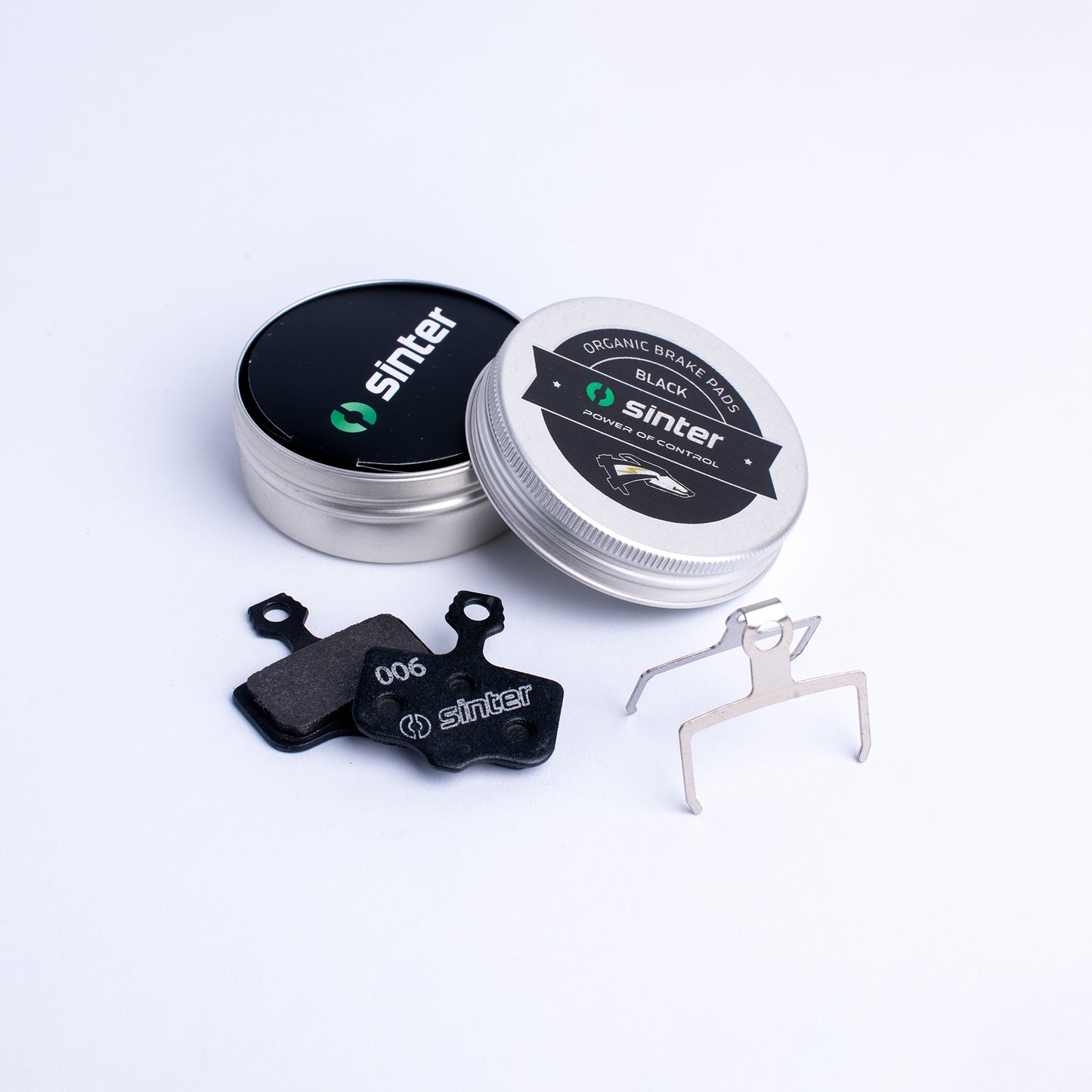
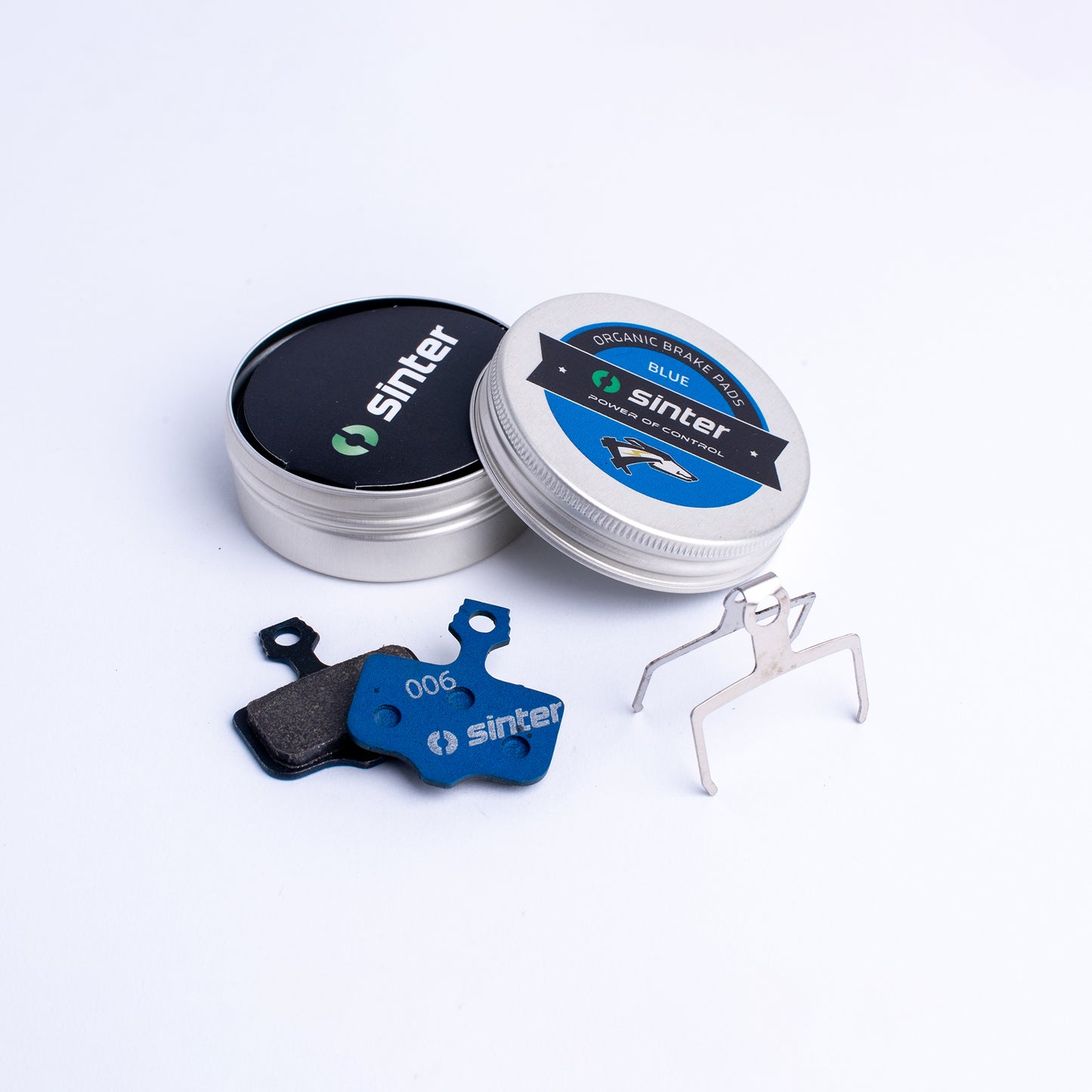
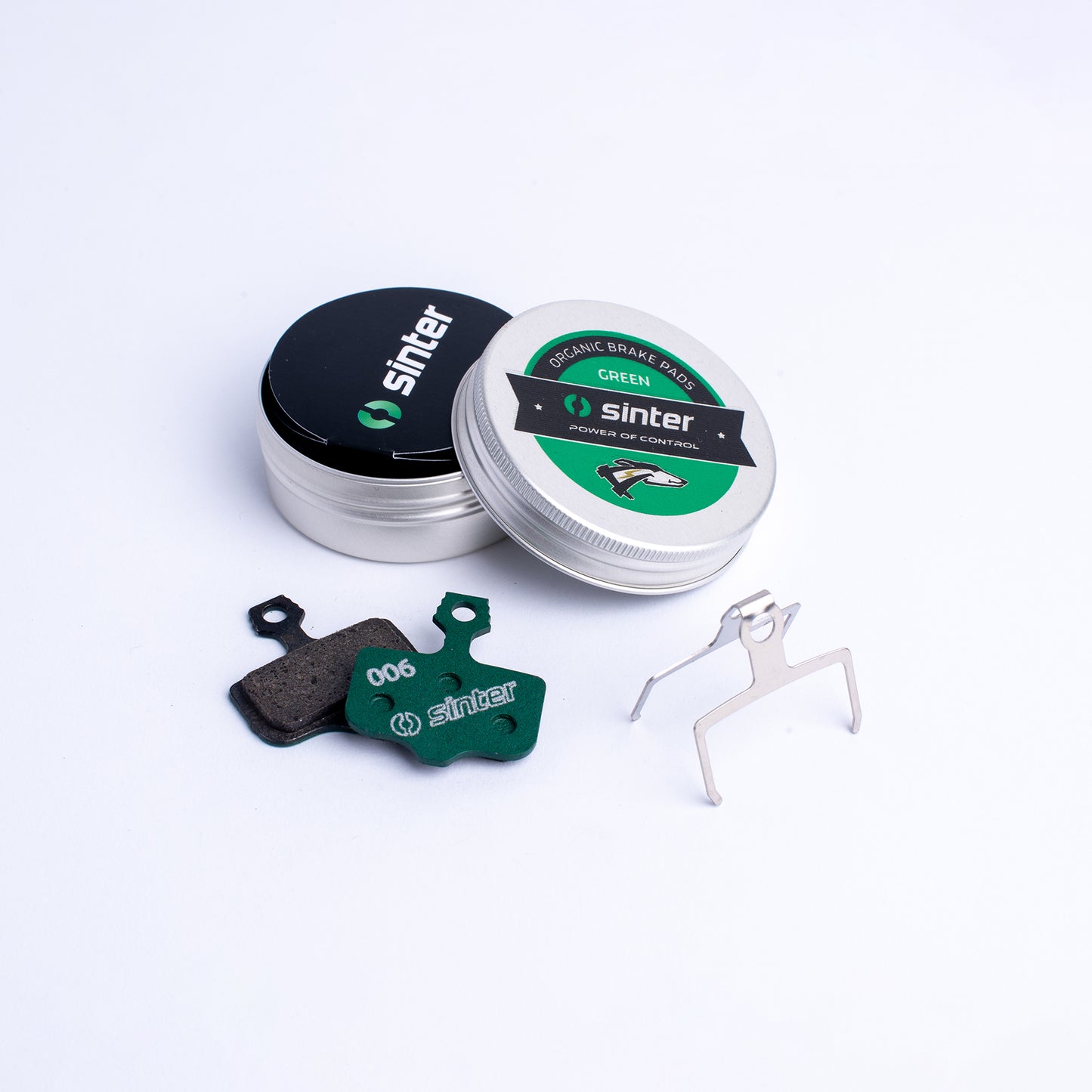
Sinter organic replacement pads for Avid Elixir and older SRAM calipers. Despite the name, Sinter only makes organic pads, not sintered-metal, so these run cooler at the caliper, give you more lever feedback and modulation, and wear your rotors less than metallic pads. Pick the compound color below.
Out of stock
Couldn't load pickup availability
Forged in Zreče, Slovenia since 1919. Official technical partner of multiple World Tour and downhill teams.

On this page
Avid Elixir and the SRAM XX / X0 / X7 / X9 / DB / Level family share a pad pocket, and the current SRAM AXS road levers (Red AXS, Rival AXS, Force AXS in the flat-mount two-piece geometry) use the same shape. The Sinter Model 006 is the organic-compound replacement for that pad pocket. It's the SRAM equivalent of the Shimano-side Model 018: one pad shape that covers a wide cross-section of current and recent SRAM hydraulic brakes.
What's in the kit
One caliper's worth of pads (2 pads, left and right) for the Elixir / DB / Level / AXS pocket. The kit ships with the spring, pin, and bedding-in instructions. Order two kits if you're replacing front and rear pads in the same service.
Fits
Elixir / DB / Level / AXS pad shape, covering this SRAM and Avid range:
- SRAM XX, X0, X7, X9
- SRAM DB (the budget hydraulic line)
- SRAM Level T, TL (entry- and mid-tier two-piston MTB)
- SRAM Red AXS (flat-mount two-piece)
- SRAM Rival AXS (flat-mount two-piece)
- SRAM Force AXS (flat-mount two-piece)
- Avid Elixir 1, 3, 5, 7, XX, X0
For SRAM road riders on AXS hydraulic, this is the pad on the flat-mount two-piece calipers (Red, Rival, Force in the 2019–current generation). For MTB riders, this covers the lower- and mid-tier 2-piston SRAM platform, plus all of the Avid Elixir hydraulic family.
Compound and feel
Sinter's organic ceramic-loaded compound runs quiet, bites cleanly off the lever, and stays predictable in the wet. For the SRAM-side calipers that Model 006 covers, that compound is more refined than the original-equipment SRAM pad it replaces. Road riders on AXS hydraulic will notice the modulation specifically; the compound was tuned around short, hard inputs that road braking creates. MTB riders on Level or older XX / X0 / X9 calipers will get a longer useful pad life from the resin matrix than from many of the OE pads that came stock on these brakes.
Choosing your compound
Despite the name, every Sinter compound is organic — not a sintered-metal pad. Organic pads run cooler at the caliper, give more lever feel and modulation, stay quiet, and are gentler on your rotors. The color of the backing plate tells you the compound.
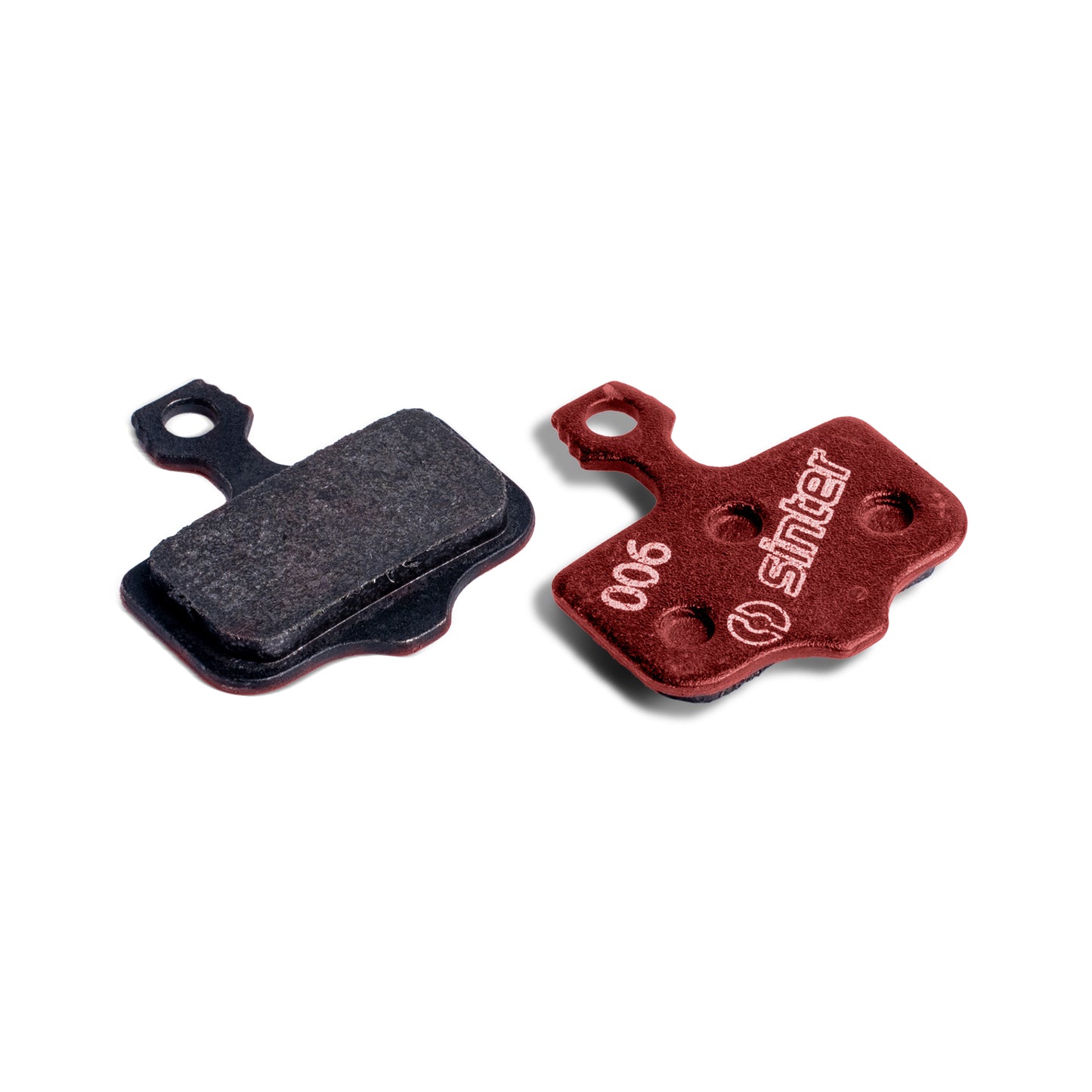
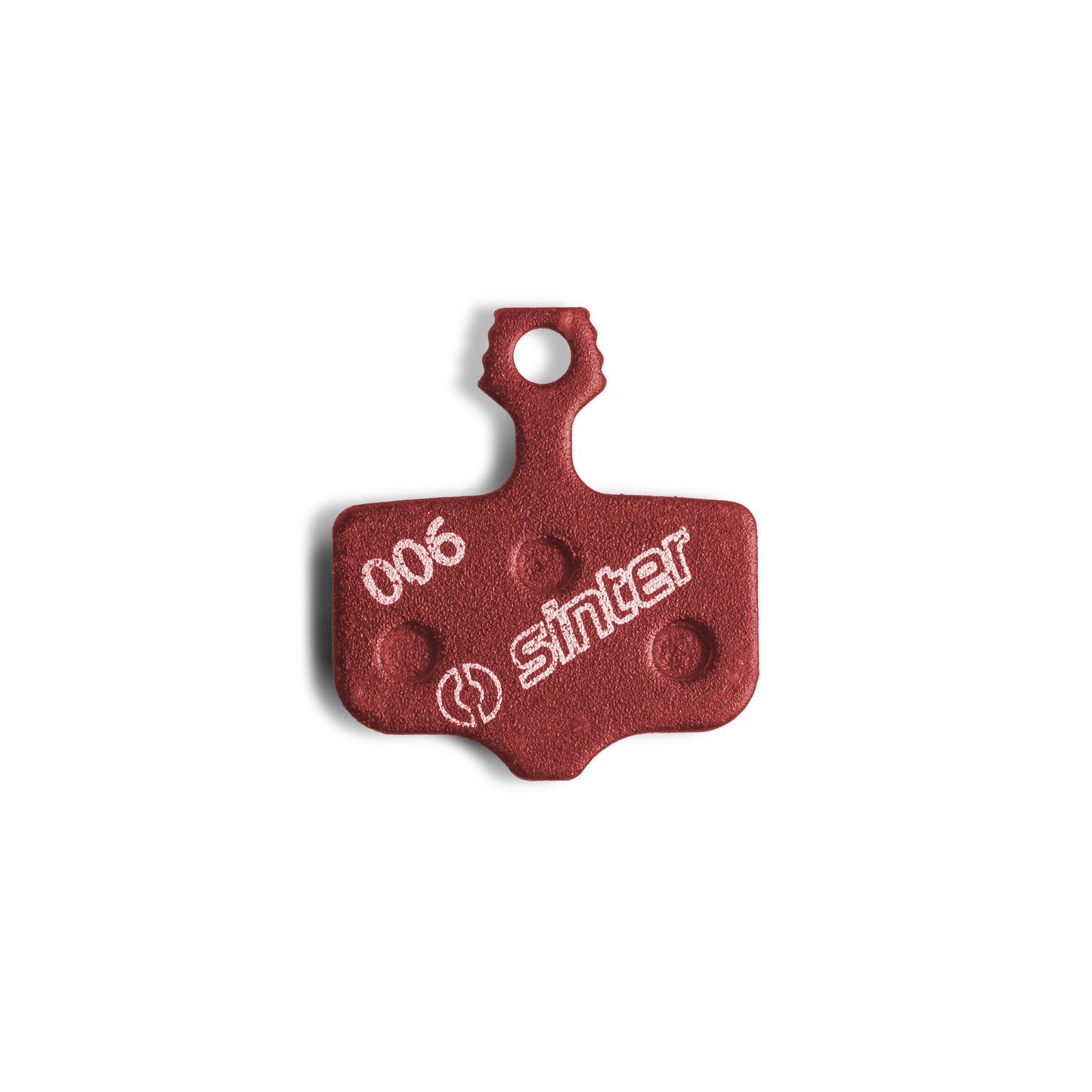
Red s514
The all-round upgrade from OEM. Consistent performance, smooth modulation and lever feel, excellent durability.
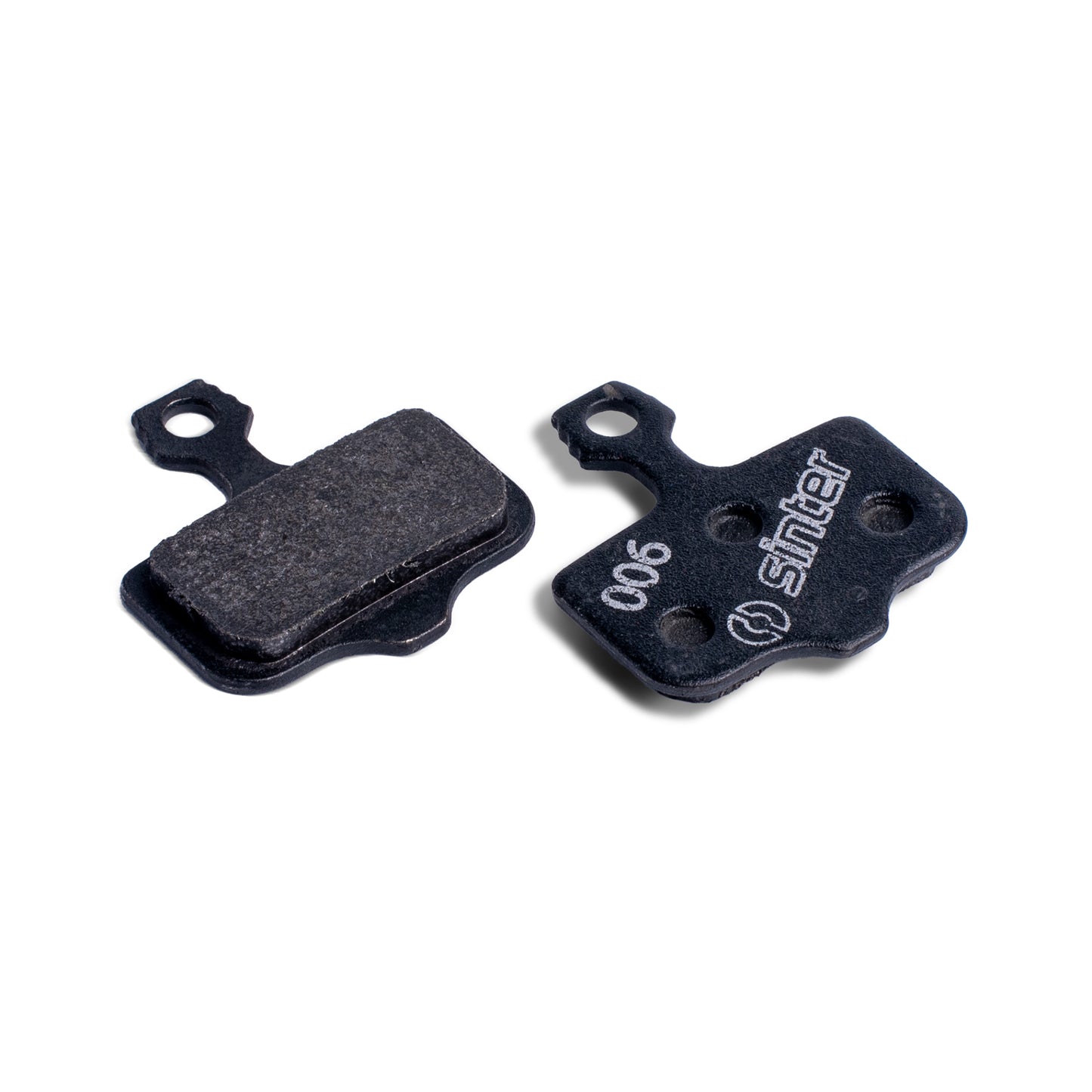
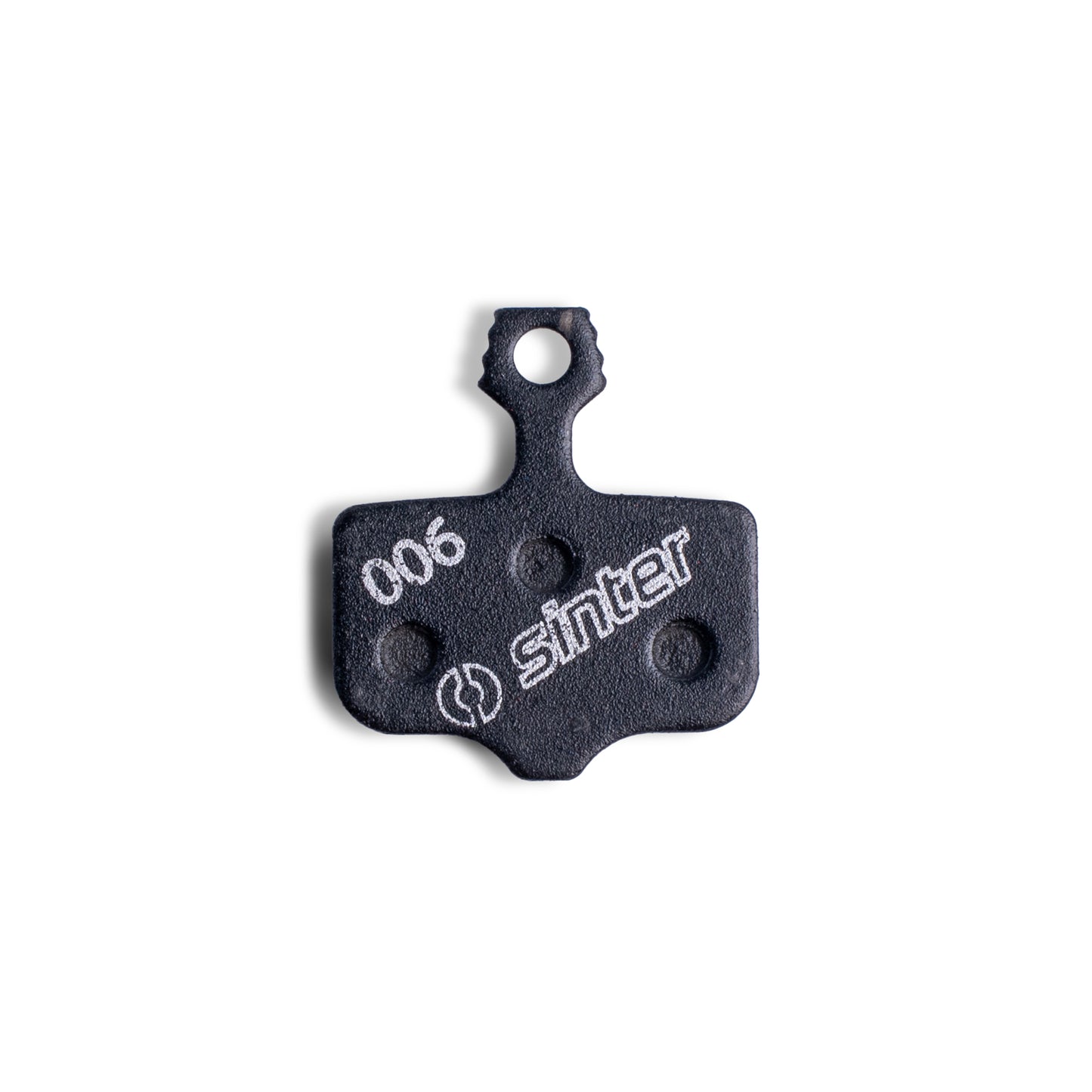
Black s550
Great-value organic compound with ceramic particles — a soft, controlled bite and strong resistance to wear.
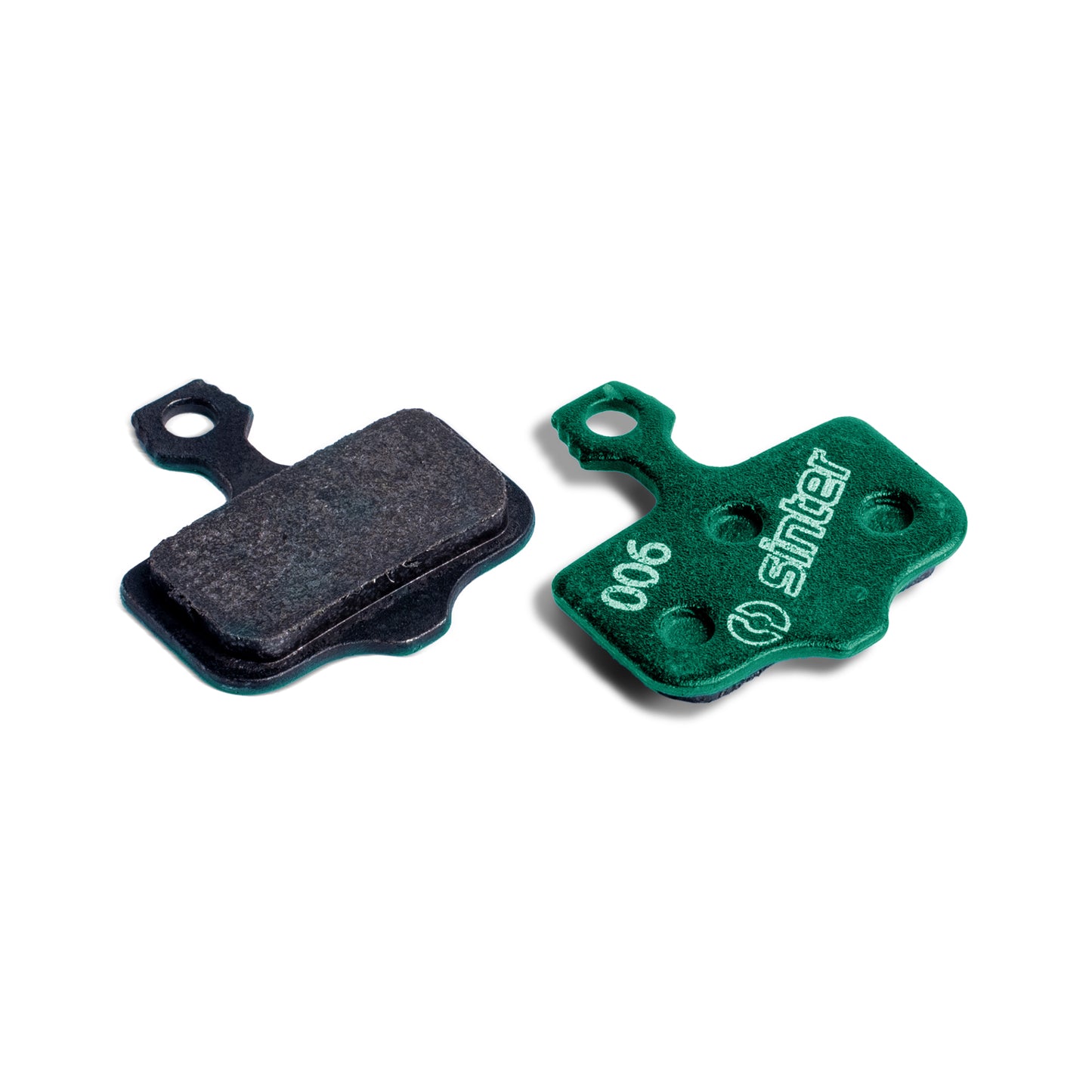
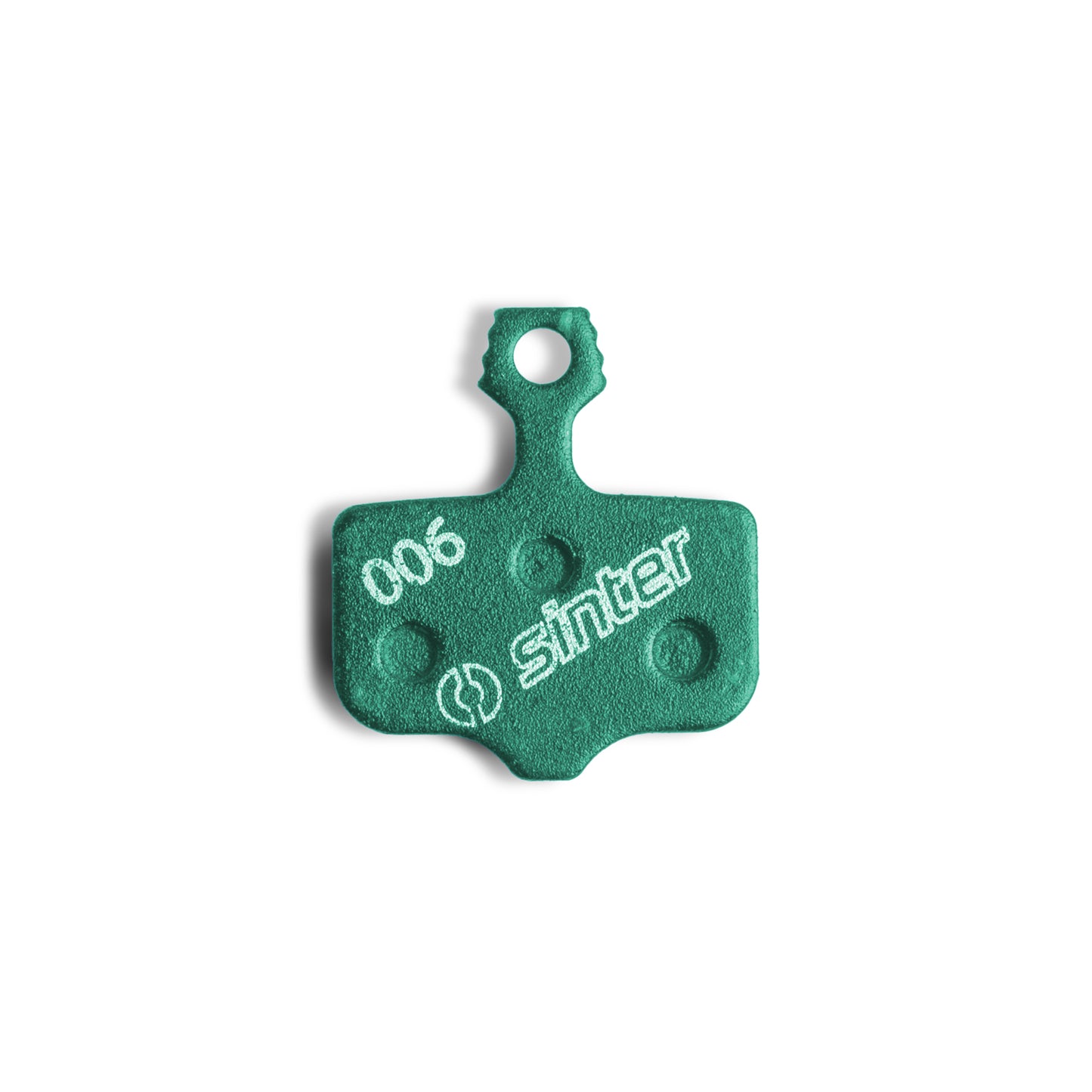
Green s2032
Sinter's race compound. A state-of-the-art material for braking aggressively while keeping ultimate power and control across temperatures.
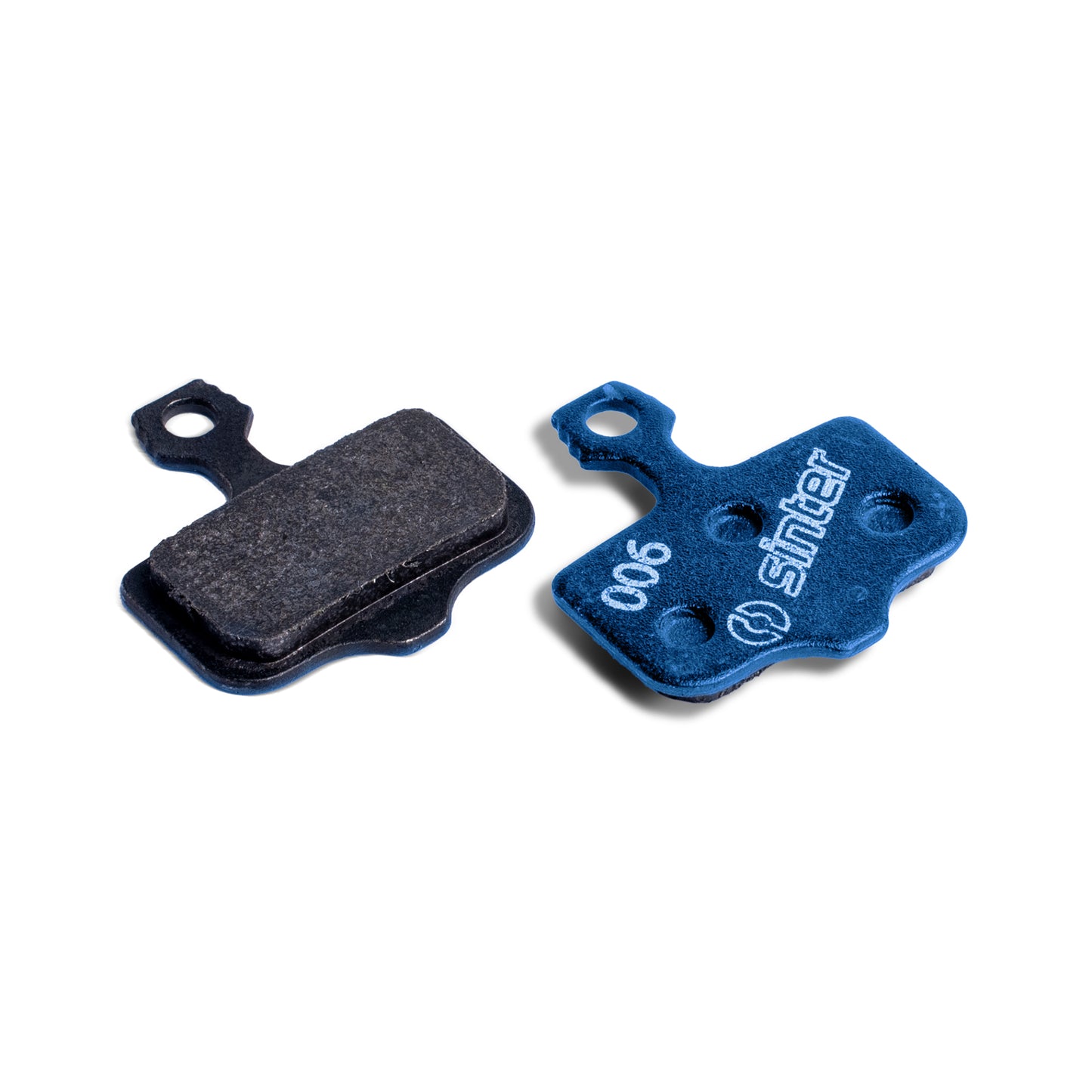
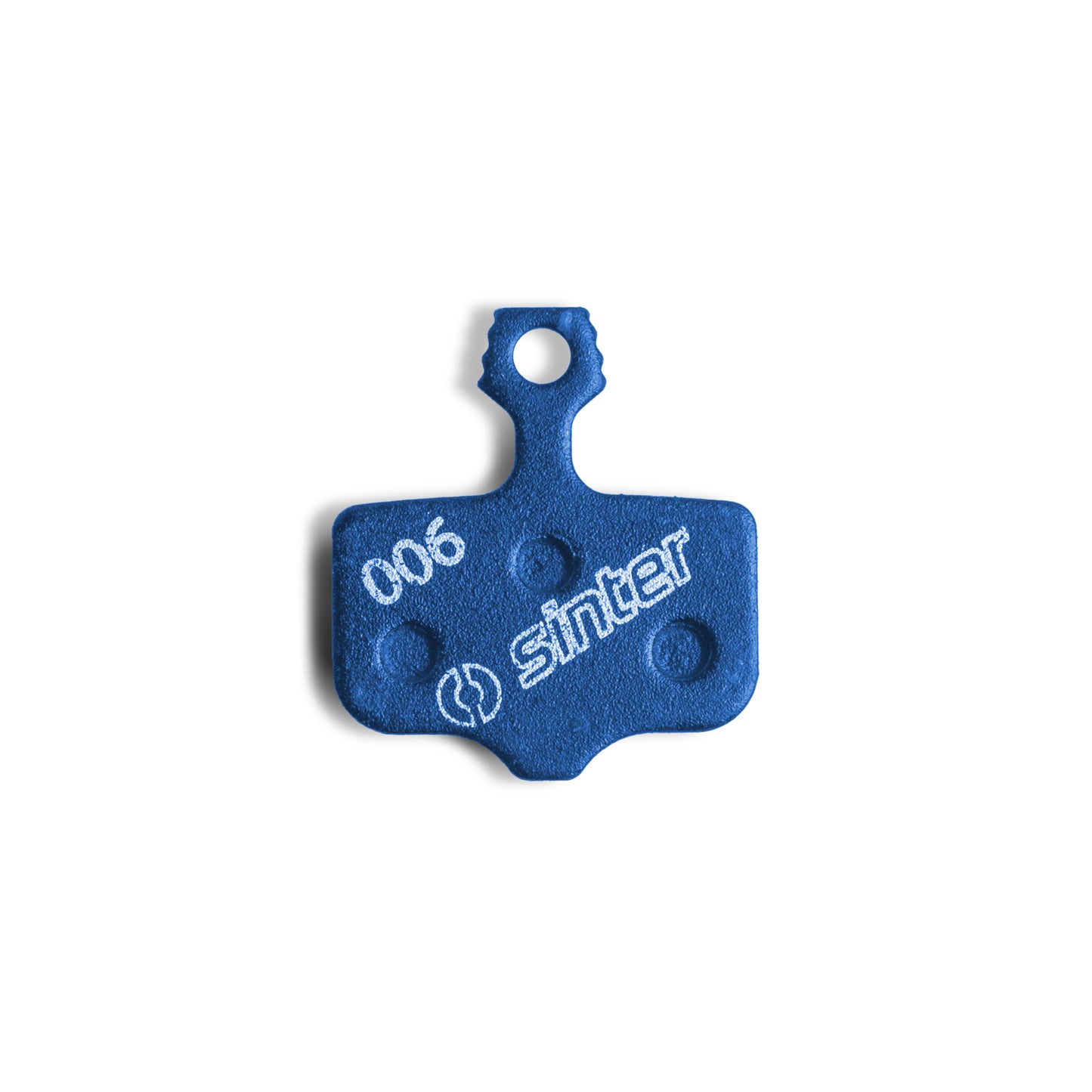
Blue s530
For e-bikes, DH and Enduro. Consistent power with high modulation, lever comfort and slow wear across all temperatures.
Our pick for this brake
Also in the Sinter range: the Cargo pad, built for cargo bikes and heavy daily city loads.
Specs
- Compound: organic (ceramic-loaded, resin-bound)
- Backing plate: steel
- Pad shape: Avid Elixir / SRAM DB / Level / AXS flat-mount
- Pads per package: 2 (one caliper)
- Includes spring and pin
Includes: 2 pads (left and right), spring, pin, bedding-in instructions.
Sinter's Slovenian metallurgy
Sinter has been making friction materials in Ljubljana since 1969, and developed the first disc brake pads in the former Yugoslavia in 1972; the company was among the first in Europe to ship asbestos-free pads in 1986. Unior has been forging hand tools in Zreče since 1919, and is the official technical partner of multiple World Tour and downhill teams. The Model 006 is the high-volume SRAM pad in the Sinter catalog; the breadth of SRAM brake systems sitting behind a single pad shape is part of why one Sinter model number does so much work.
Pro tip from our mechanics
SRAM Red AXS and Rival AXS flat-mount calipers are two-piece; the caliper body splits across the pad pocket; and the pad install needs the bridge bolt at the correct torque to keep the pocket geometry square. Use a torque wrench at SRAM's published spec (usually 5 to 7 Nm depending on the model year); over-tight bridge bolts on flat-mount AXS calipers have been known to misalign the pad pocket and cause uneven pad wear on the first ride.
For the broader compound primer and fitment grid, see How to choose Sinter brake pads →.
FAQ
Which brakes does the Sinter Model 006 fit? The Model 006 pad is intended for Avid calipers, including Elixir and older SRAM units. Avid used more than one pad shape, so don't rely on the caliper name alone: pull your current pad and match the backing-plate outline, the mounting tab, and the retaining-pin hole against this one. Any model number stamped on the old pad is a useful cross-check too. If the fit is at all unclear, send a clear photo of the worn pad and we can verify it for you before you order.
These are called Sinter but the listing says organic. Which is it? They are organic. Despite the name, Sinter only makes organic brake pads, not sintered-metal ones. Organic pads run cooler at the caliper, give you more lever feedback and modulation, stay quieter, and cause less rotor wear and vibration than metallic pads. None of the Sinter compounds are semi-metallic.
Do I need to bed in new pads before riding hard? Yes. Bedding-in transfers an even layer of pad material onto the rotor so the brake reaches full power and stays quiet. After fitting the pads, ride at moderate speed and do a series of progressive slowdowns, braking firmly without coming to a complete stop, until the brake feels stronger and consistent. Do this before any hard descending. The kit ships with bedding-in instructions.
The new pads won't fit back into the caliper. What do I do? As your old pads wore down, the caliper pistons advanced to take up the gap, so there is no longer room for fresh, full-thickness pads. Before installing the Model 006, remove the old pads and gently push the pistons all the way back into the caliper with a plastic tire lever or a dedicated piston-press tool. Once the pistons are fully reset, the new pads and the spring will slide in. Check that the wheel spins freely afterward.
 Tech Tips
Disc Brake Pad Bedding In Procedure
Tech Tips
Disc Brake Pad Bedding In Procedure
From the press
The Sinter pads demonstrated the most consistent performance with the least fade, maintaining effective braking under high heat.
The Sinter pads – which are organic, by the way – improved deceleration on all models, but to very different degrees.
