
SKU: P/N: 622818
Forged Ratcheting Combination Wrench
Forged Ratcheting Combination Wrench
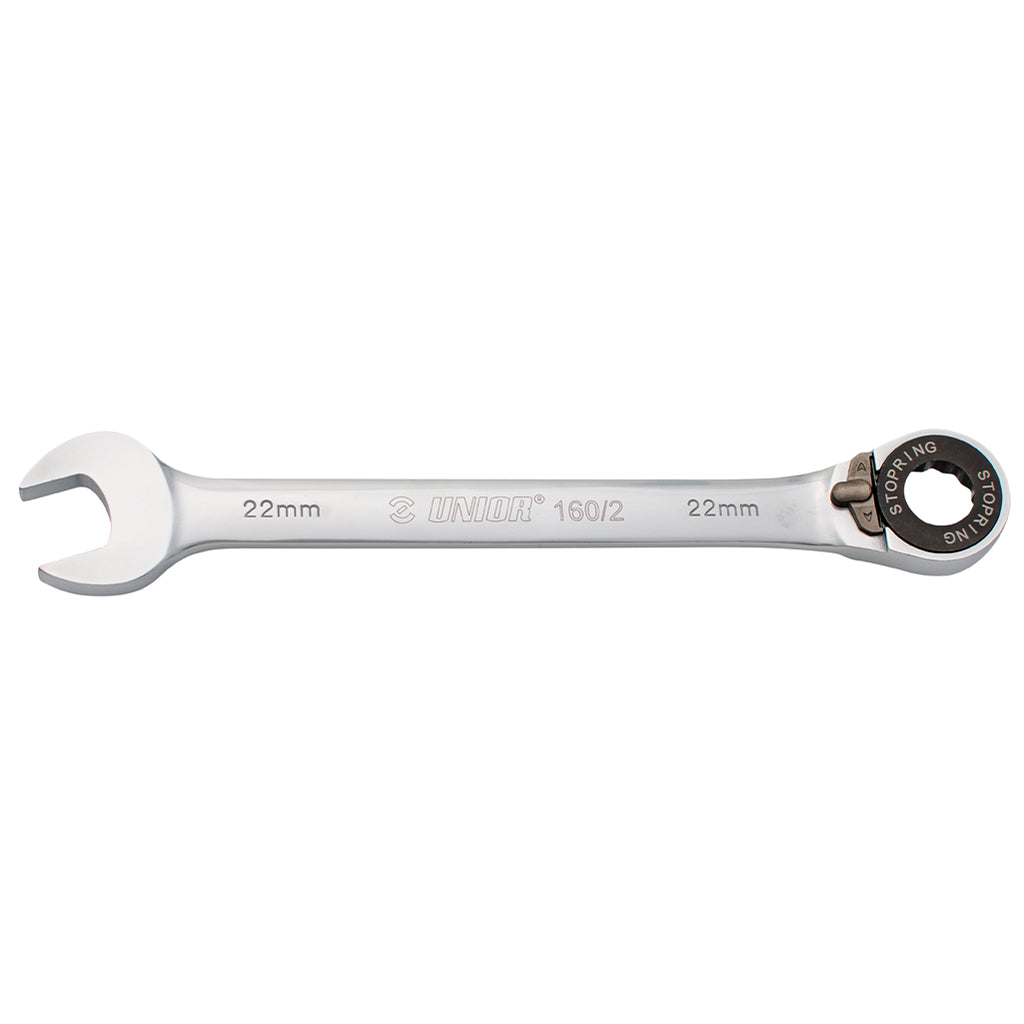
A ratcheting combination wrench gives you the cycle speed of a ratchet handle without the bulk or the size restriction. The box-end ratchets in both directions; slide a button on the head and the wrench reverses. The open-end is a normal open-end, so you have both access patterns on one tool. The 160/2 series covers 15 sizes from 8 to 24 mm, with a 72-tooth box-end mechanism that delivers 5° engagement for tight-workspace work.
What it does well
The 72-tooth ratchet mechanism is the design choice that makes this wrench valuable. Five-degree engagement means a fastener you’re cycling in a tight workspace advances every 5° of wrench rotation; fine pitch that lets the wrench work in cramped spaces where a coarser ratchet would need to be lifted off and re-positioned.
The reversing mechanism is a slide-button on the head. No need to flip the wrench over to change direction; the cycle from tighten to loosen happens at the wrench head. That keeps the geometry of your grip consistent and the workspace clear.
The combination geometry; open-end on one side, ratcheting box on the other; means you have both access patterns at the same size in one tool. Slip the open-end onto a fastener you can approach from the side; drop the box-end onto a fastener you can approach from above.
Where it earns its space in the bike shop
- High-cycle fasteners in constrained workspaces. Where a normal wrench would need many re-positions.
- Cable-anchor nuts on derailleurs and brakes. Quick cycling without re-positioning.
- Wheel-axle nuts on solid-axle bikes. Fast engagement on bolt-on hubs.
- Pedal-mount bolts. Where the box-end gets the high-torque seating and the ratchet speeds the assembly.
Why “forged” is the meaningful word in the name
A ratcheting mechanism puts asymmetric stress on the wrench head every cycle: the pawl engages on the forward stroke and releases on the return, which means the wrench body sees an alternating load pattern. Stamped or machined-from-bar-stock wrenches develop fatigue cracks at the box-end-to-handle transition; forged wrenches don’t, because the grain alignment from the forging step resists fatigue.
That’s why this set’s name puts “forged” in front: the metallurgy is what determines whether the ratcheting mechanism lasts.
Specs
- Size range: 8 mm to 24 mm (15 sizes)
- Box-end: 72-tooth ratchet, 5° engagement
- Direction: reversible via slide-button on head
- Stop-ring: included on box-end to prevent over-walking the wrench past the fastener
- Construction: heat-treated, forged chrome-vanadium steel
Made in Slovenia, since 1919
Unior has been forging hand tools in Zreče since 1919, and is the official technical partner of multiple World Tour and downhill teams. We’ve been wanting to bring the 160/2 series to the US catalog for a while; the ratcheting combination wrench is a workhorse in European bike shops, where shop space tends to be tighter and the cycle-speed advantages of a ratcheting box-end are more obvious in daily use. The 72-tooth mechanism, the reversing slide-button, the stop-ring on the head; each detail reflects what European mechanics asked for in the design.
Pro tip from our mechanics
If your shop work involves a lot of cycle counts in awkward spaces, this is the wrench that pays back the upgrade cost in saved time. For the framework on combination wrench types: Combination wrenches in the bike shop →.
Couldn't load pickup availability
Share
