


When the pads have closed on each other, lever pulled with no rotor in the caliper, the tapered tip still finds the gap. From there the full working end walks the pistons back to fully seated, and because this spreader does nothing else, it stays slim where combo tools bulk up, with leverage that's easy to meter.
Low stock
Couldn't load pickup availability
Free US shipping on orders $75+
Some exceptions apply — see shipping policy
Forged in Zreče, Slovenia since 1919. Sponsors professional road and mountain-bike race teams.

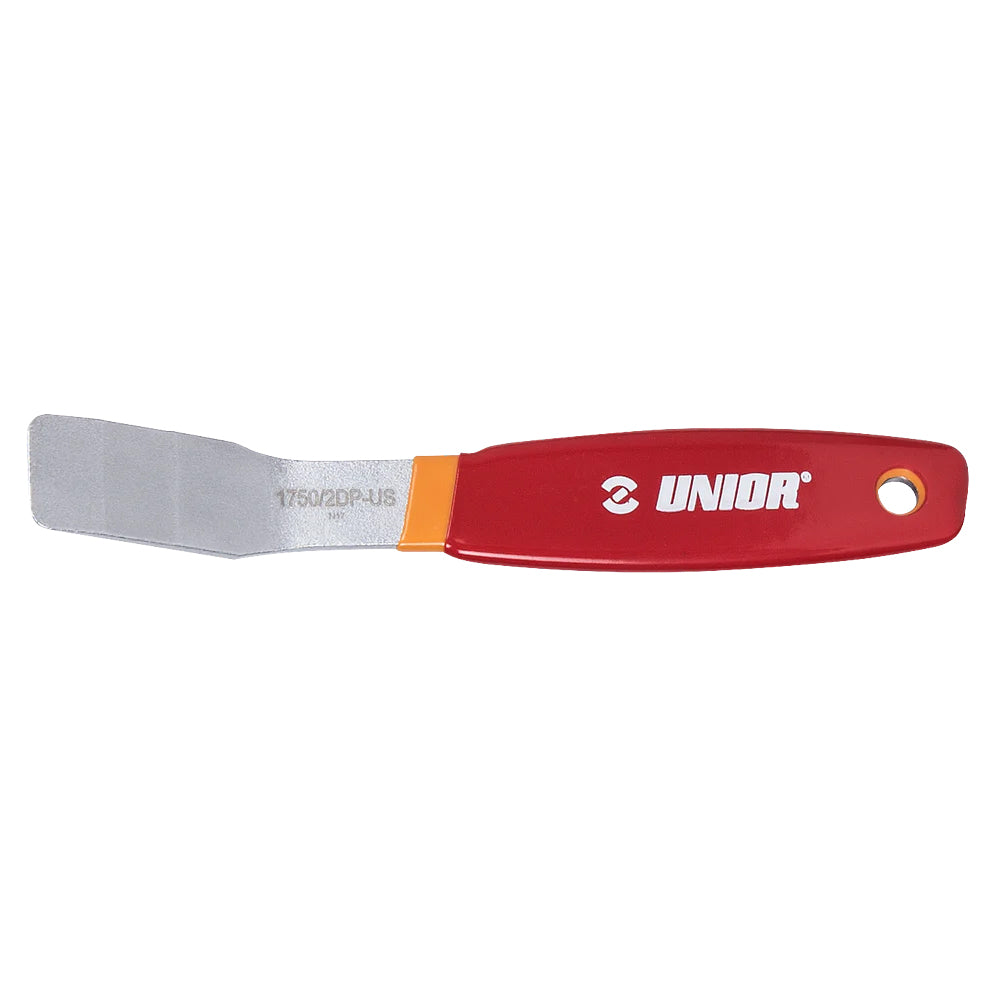

Spend an afternoon in a bike shop and you'll meet the Brake Squeezer. It's a person who, uncontrollably, pulls the brake lever on every bike they walk past, including the hydraulic disc bikes that don't have a rotor in the caliper at that moment. With no rotor between the pads to stop them, the pistons advance, the pads close on each other, and the next person who tries to fit a wheel meets a caliper that won't accept the rotor. The Disc Brake Piston Spreader 1750/2DP is the dedicated tool that backs the pistons out and gets you back to a workable starting position.
The tapered tip lets you get the tool between the pads even after they've advanced past the worn-pad clearance line. The full thickness of the spreader's working end then presses the pistons all the way back into their bores, which is the position you want before fitting a fresh rotor, after pulling old pads, or before bleeding the brakes. This is the single-purpose tool: spread only, no rotor-truing slot on the other end, which keeps the working end thinner and the leverage more controllable than the combo tools.
Piston-spread is one of the routine moves a shop or a confident home mechanic makes during disc-brake service. New pad install almost always requires it (fresh pads need full piston retraction to clear a fresh rotor without dragging). A brake bleed often requires it (pistons that have crept out partially during the prior service interval need to be pushed back so the system bleeds with the calipers in their reference position). Sticky pistons are flagged by the spreader before they progress to a full reseal job; if the spreader has to work hard to move them, that piston is overdue for service.
Specs
- Function: dedicated piston spreader for hydraulic disc brakes, shank bent 30° for caliper access
- Tapered tip seats between advanced pads — 3.5 mm at the tip, 9 mm across the full working end
- Trivalent chrome plated per ISO 1456:2009
- Laser cut tool steel, heat-treated — 197 mm overall, 160 g
- Article number: 1750/2DP-US
Built in Zreče, Slovenia
Unior has been forging hand tools in Zreče since 1919, and sponsors professional road and mountain-bike race teams. Single-purpose tools live or die on whether the working end is the right shape; the 1750/2DP is the spreader that lives on the brake bench because the tip and the body each do their job without compromise. The two-in-one combo tool has its place, and the spreader-only has its place, and a shop running enough hydraulic brakes that they want the spreader always within reach is the shop that buys the dedicated tool.
Pro tip from our mechanics
The order of operations matters. Pull the wheel first, then the pads, then spread the pistons. Spreading pistons with pads still in (against a contaminated pad surface) drives pad-face contaminants into the piston seal stack, which is a slow path to a brake reseal job. Spreading pistons without removing the pads first also risks damaging the pad backing plates if they aren't sitting evenly against the piston faces. When piston-spread doesn't fix the rub, the next move is in our disc-brake-rub diagnostic: Fix disc brake rub →
FAQ
Why won't the rotor fit back between the brake pads? Squeezing a hydraulic brake lever with no rotor in the caliper lets the pistons advance until the pads close on each other. The 1750/2DP-US corrects this: its conically shaped tip slides between the closed pads and pushes the pistons back into the caliper, restoring the clearance a rotor needs.
How does it reach pads that have closed completely? The tip tapers to 3.5 mm, thin enough to start in whatever gap remains between closed pads, and the shank's 30° bend angles the tool into the caliper opening. Driving it deeper brings in the full 9 mm working end, which presses the pistons all the way back into their bores.
Do I still need a rotor truing tool alongside it? Yes — the 1750/2DP-US is deliberately spread-only, with no truing slot, which keeps the working end slim and the leverage easy to meter. Unior's 2-in-1 disc brake tool (1757/2DP-US) folds a rotor truing fork into the same handle if you want one tool for travel; in a workshop the usual pairing is this spreader plus a dedicated truing fork.
What are the 1750/2DP-US's key dimensions and materials? It is 197 mm long, weighs 160 g, and is laser cut from tool steel, heat-treated, then trivalent chrome plated per ISO 1456:2009. The blade is 25 mm wide with a 9 mm working end tapering to 3.5 mm at the tip, and the double dipped handle keeps the grip comfortable.
 Tech Tips
Fix Disc Brake Rub
Tech Tips
Fix Disc Brake Rub
From the press
Having said that, the pad-spreader has so far worked well without chipping the brake pad material.
