
PN: 1669/4
SKU: 616758
Emergency Pocket Cassette Lockring Tool with Spoke Wrench
Emergency Pocket Cassette Lockring Tool with Spoke Wrench


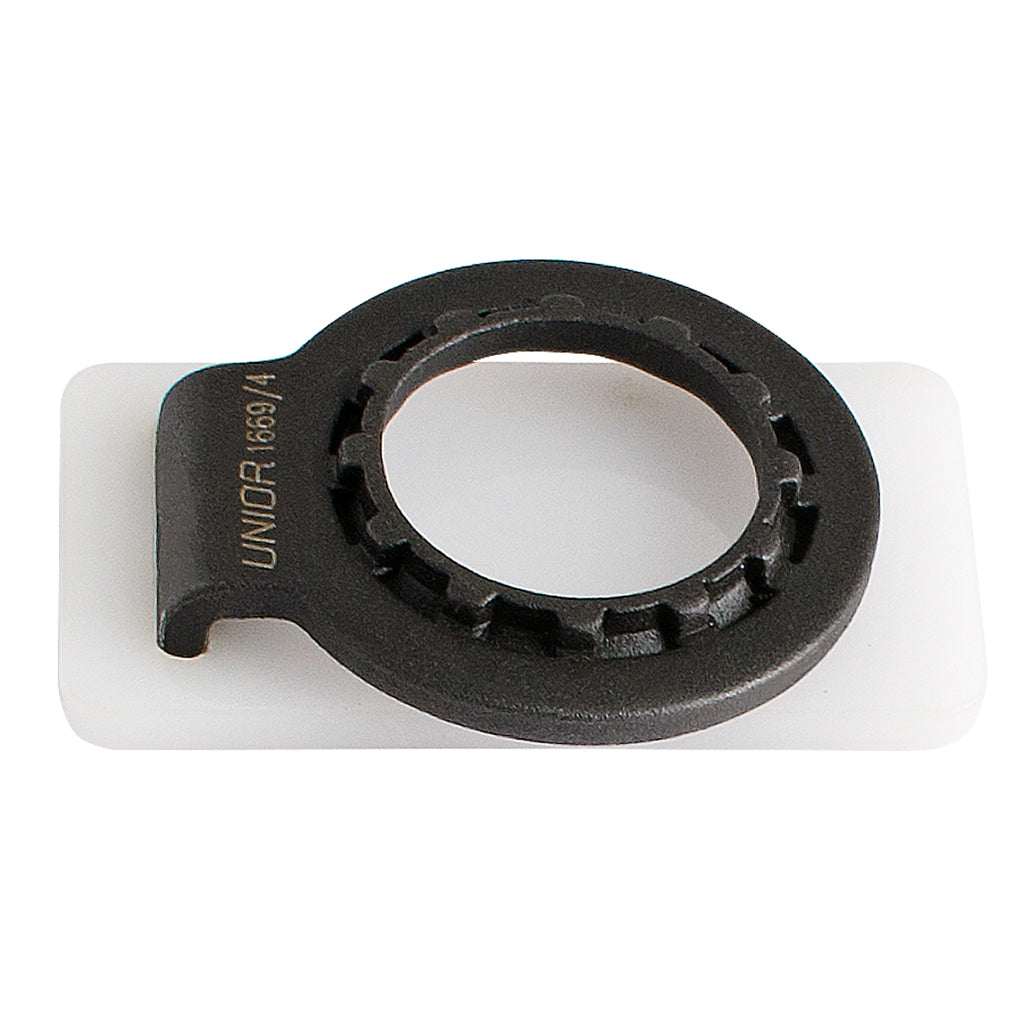
An HG cassette lockring tool, spoke wrench, and frame guard in one body small enough for a jersey pocket. Drive-side spokes on 10- to 12-speed wheels can't be replaced until the cassette comes off; this tool turns that into a trailside fix. Leverage is whatever you're carrying; a multi-tool or pedal works.
Out of stock
Couldn't load pickup availability
Free US shipping on orders $75+
Some exceptions apply — see shipping policy
Forged in Zreče, Slovenia since 1919. Sponsors professional road and mountain-bike race teams.


On this page
A cassette swap in the workshop is one set of tools; a cassette swap on the trail is a different set. The 1669/4 is the field-service version: a Shimano/SRAM-pattern cassette lockring tool, a spoke wrench, and a plastic frame guard, all sized to fit a jersey pocket or hydration-pack tool roll. One tool covers what would otherwise need three on the trail.
The use case is the one nobody plans for. A broken spoke on a remote ride means truing the wheel just enough to roll the rest of the way home; on most wheels the spoke can be replaced without pulling the cassette, but on the drive side of a 10-, 11-, or 12-speed wheel the cassette has to come off first to thread the new spoke through the hub flange. The pocket-format combination tool is what makes that field-service-able. Bring the 1669/4 and a spare spoke, and a broken drive-side spoke turns into a 20-minute roadside fix instead of a call for a ride home.
What's on the tool
- Cassette lockring tool; Shimano/SRAM HG 12-spline pattern (the dominant cassette interface). Engages the same lockring as the workshop tools.
- Spoke wrench; sized for the spoke nipples on the wheels the tool is most likely to be used on.
- Plastic frame guard; a removable plate that protects the frame or derailleur hanger at the point the tool braces against it while you apply force.
The trade-off versus a workshop-format tool is leverage. The 1669/4 doesn't have an integrated handle; instead, it uses the bike itself. You reinstall the wheel with the tool's flat edge braced against the frame or derailleur hanger, then push on the pedals; the chain turns the wheel, the freehub's own ratchet holds the cassette, and the lockring breaks loose against the braced tool. No chainwhip to carry. That's the pocket-format compromise. On the trail, you'll spend more time on the lockring than you would on the bench; in exchange, the tool is in your pocket when the workshop tool is 30 miles away.
How to use it
Remove the wheel from the bike and seat the 1669/4's splined head into the cassette lockring. Position the removable frame guard so it protects the frame or derailleur hanger where the tool will press. Reinstall the wheel with the tool's flat edge braced against the frame or hanger; in front of the hanger to remove a lockring, behind it to tighten one. Then push down on the pedals: the chain drives the wheel forward, the freehub ratchet holds the cassette, and the lockring breaks loose against the braced tool. No chainwhip required; that's the whole point.
Compatibility
- Shimano HG cassettes, 7- through 12-speed
- SRAM cassettes, including XD and XDR driver-body cassettes
- Microshift and Sunrace HG cassettes
- Not for Campagnolo or freewheels
Specs
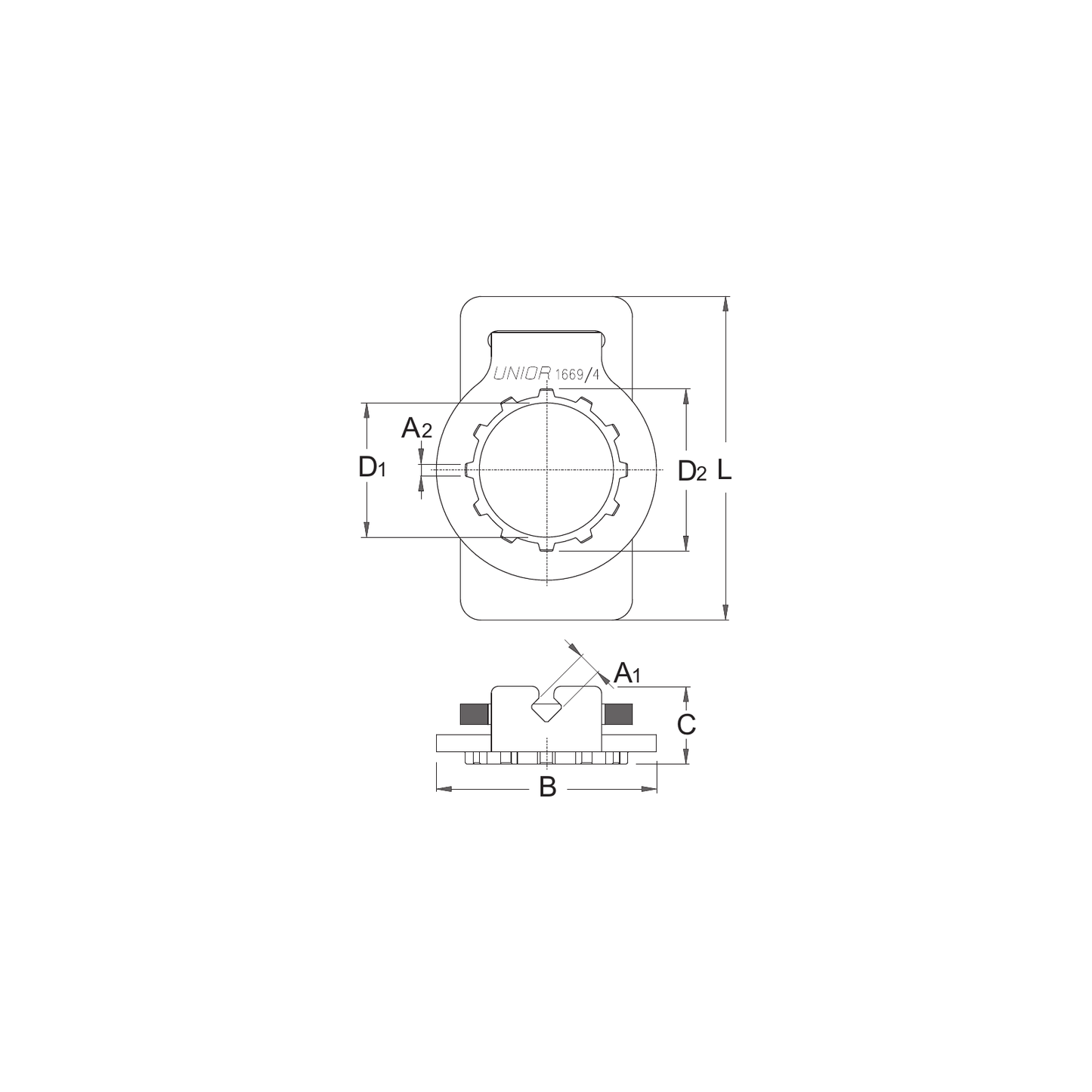
- Shimano/SRAM HG 12-spline cassette lockring engagement
- Integrated spoke wrench
- Plastic frame guard
- Pocket-format compact body
- Article number: 1669/4
Built in Zreče, Slovenia
Unior has been forging hand tools in Zreče since 1919, and sponsors professional road and mountain-bike race teams. The 1669/4 is a pocket-format compromise; the workshop equivalent does the same job with more leverage; and what gets compromised is exactly the right thing for the use case. A cyclist 30 miles from the workshop doesn't need bench-grade leverage; they need a tool small enough to actually be carrying when the spoke breaks. The 1669/4 is built for the day the planning didn't catch.
Pro tip from our mechanics
Pack the 1669/4 with a spare spoke and a master link, and a drive-side spoke break turns from a ride-ending problem into a 20-minute roadside repair. Most riders don't carry a cassette tool on rides, which is fine until you need one and you're 30 miles in. If you're heading out somewhere remote; backcountry gravel, multi-day touring, a self-supported event; the 1669/4 earns its weight in pocket every ride after the first time it saves you. The cassette-replacement workflow lays out cassette removal end-to-end: When and how to replace your cassette →
FAQ
Which cassettes does the 1669/4 fit? It engages the standard Shimano/SRAM HG cassette lockring — the same 12-spline interface a workshop cassette lockring tool uses. That covers Shimano HG cassettes from 7- to 12-speed, SRAM HG cassettes including XD and XDR driver-body cassettes (which are retained by a splined locktube that the same lockring tool removes — no separate XD tool needed), plus Microshift and Sunrace HG cassettes. It is not for Campagnolo, which uses its own lockring pattern, and not for old threaded freewheels, which thread onto the hub and need a completely different freewheel remover rather than a lockring tool.
There's no handle — how do I get enough leverage on the trail? That's the deliberate trade-off for a tool this small: the 1669/4 has no integrated handle, so you supply the leverage with whatever you're already carrying. Seat the splined head into the lockring and drive it with a multi-tool, a clip-in pedal, or the axle as a lever. To hold the cassette from spinning, wrap a length of chain around a cog if you have one; in a pinch you can brace the cassette against a tree or curb. You'll spend more time on the lockring than you would on a bench tool, but the point is that it's in your pocket when the workshop tool is 30 miles away.
Why do I need a cassette tool just to replace a spoke? Because of where the spoke sits. On the drive side of a 10-, 11-, or 12-speed rear wheel, the head of a replacement spoke can't pass through the hub flange until the cassette is off — the cassette blocks it. So a drive-side spoke break, the most common kind under drivetrain load, means removing the cassette before you can even thread the new spoke. Carrying the 1669/4 with a spare spoke is what turns that from a ride-ending problem into a roadside repair; without a cassette tool, a broken drive-side spoke usually ends the ride.
What size spoke nipples does the built-in spoke wrench fit? The integrated spoke wrench is sized for standard 14-gauge spoke nipples — roughly 3.3 mm, the most common nipple on modern wheels (Unior lists it as 3.4 mm, which sits right in the usual 3.3–3.45 mm range). It's there for exactly the job the tool is built around: after you've replaced a broken spoke on the trail, you use it to bring the wheel true enough to roll home. It handles roadside truing, not a full wheel build — for that, a dedicated spoke wrench set is the better tool.
 Tech Tips
When and how to replace your cassette
Tech Tips
When and how to replace your cassette
From the press
This clever little tool is designed to help remove your cassette without the need for additional bulky tools, and looks like a great addition to any emergency repair kit on longer, more remote tours.
All that fits in the palm of your hand ~3x5cm (or buried in a saddlebag) at just a 17g insurance penalty.
