Cassette & Freewheel Tools

Swapping gears or checking for chain wear is a breeze with the right set of bicycle tools. Our collection of cassette and freewheel tools covers everything from modern 12-speed systems to classic BMX setups. Whether you need a shop-quality chain whip, a precision lockring wrench with a guide pin, or a specialized freewheel remover, Unior tools provide the durability professional mechanics trust. Keep your drivetrain smooth and your shifts crisp with our European-made gear.

  • Most modern cassettes

    If the bike has a freehub and a 12-spline lockring, the [Shimano/SRAM Cassette Lockring Tool 1670.5/4](/products/shimano-cassette-lock-ring-tool) is the one tool that fits it. The same 12-spline HG pattern covers Shimano HG and Micro Spline, SRAM HG/PG, and SRAM XD/XDR cassette bodies, so it carries the broadest single-tool coverage in the catalog. Pair it with a chainwhip or a cassette wrench to counter-hold the cogs, and thread your skewer back through to keep the tool centered under load.

    Most modern cassettes 
  • One-tool benchtop service

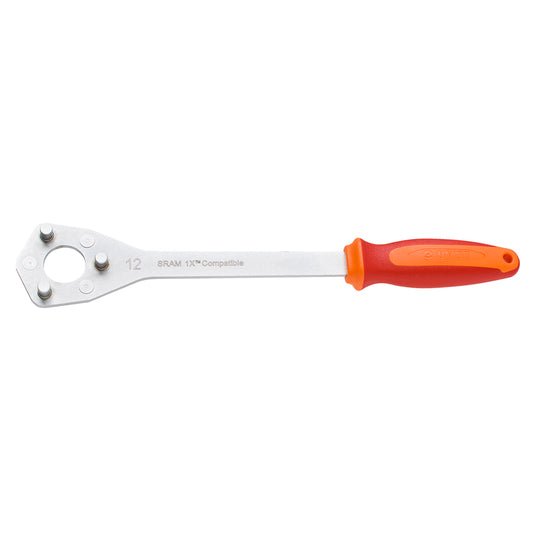
    The [Integrated Cassette Lockring Wrench w/Guide 1670.8/2BI-US](/products/cassette-remover-with-handle) pairs a long integrated handle with a guide pin that slides through the wheel's skewer bore to keep the 12-spline driver centered and seated under full breaker-bar load. You still counter-hold the cogs with a chainwhip or cassette wrench, but the long handle and locked-in guide make it the fastest, most secure path on any HG-pattern cassette 10t and up.

    One-tool benchtop service 
  • Legacy freewheels and Campagnolo

    Not every rear cog cluster is a cassette. Threaded freewheels need a remover sized to their engagement pattern, like the [Shimano Freewheel Tool 1670.1/4](/products/freewheel-remover-shimano) for the 4-spline Shimano pattern. Campagnolo runs its own freehub and lockring splines that the HG tool will not touch, so reach for the [Campagnolo Cassette Lockring Tool 1670.4/4](/products/campagnolo-cassette-remover) on Record, Chorus, and Ekar builds.

    Legacy freewheels and Campagnolo 

How the Unior cassette tools compare

ToolWhat it removesEngagementCounter-holdBest for
Shimano/SRAM Cassette Lockring Tool 1670.5/4Cassette lockring12-spline HG patternNeeds a chainwhip or cassette wrench$11.99
Integrated Cassette Lockring Wrench w/Guide 1670.8/2BI-USCassette lockring12-spline HG pattern with guide pinLong handle + skewer-bore guide pin (still pair with a whip)$49.99
Multispeed Chainwhip 1660/2DP-USHolds cogs still (used with a lockring tool)Wraps the cog teethThis is the counter-hold$39.99
Campagnolo Cassette Lockring Tool 1670.4/4Campagnolo cassette lockringCampagnolo spline patternNeeds a chainwhip or cassette wrench$15.99
Shimano Freewheel Tool 1670.1/4Threaded freewheel (whole unit)Shimano 4-spline patternNone, the freewheel threads off as a whole$9.99

Cassette and freewheel tool FAQs

How do I tell whether I have a cassette or a freewheel?

Lift the rear wheel and spin the cog cluster backwards by hand, the direction it turns when you coast. If the click comes from the hub body behind the cogs, it is a cassette: the freehub holds the ratchet and the cogs slide on as a unit, removed with a 12-spline lockring tool plus a chainwhip or cassette wrench. If the click comes from inside the cog cluster itself, it is a freewheel: the whole threaded-on unit is its own ratchet and threads off with a pattern-matched freewheel remover. There is no visual cue once the wheel is on the bike, so the spin test is the reliable check before you buy a tool.

Which cassette lockring tool fits Shimano and SRAM cassettes?

Shimano HG, Shimano Micro Spline, SRAM HG/PG, and SRAM XD/XDR cassettes all use the same 12-spline HG lockring pattern, so a single HG-pattern tool such as the Shimano/SRAM Cassette Lockring Tool 1670.5/4 services all of them. The freehub body splines differ between these standards, but the lockring on top is shared, which is why one tool covers 11-speed road and 12-speed MTB alike. SRAM XD and XDR cassettes hide their lockring inside the cog stack (SRAM calls the XD version a locktube), so it is not a visible ring on top, but the same 12-spline HG-pattern tool engages it and you still need a chainwhip to counter-hold while you break it loose. Campagnolo is the exception: it uses its own freehub and lockring splines and needs the dedicated Campagnolo Cassette Lockring Tool 1670.4/4.

Do I need a chainwhip to remove a cassette?

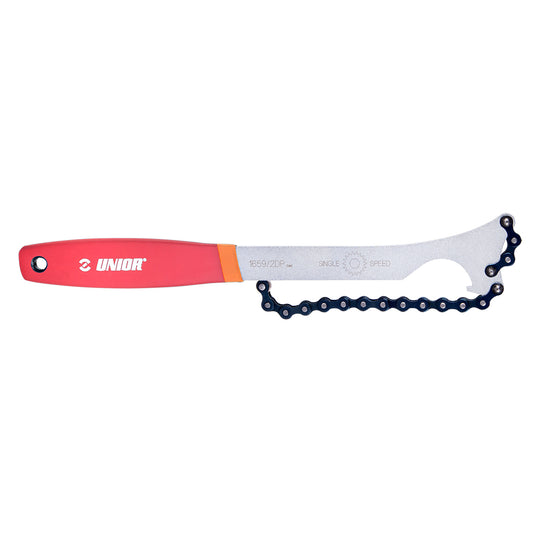
You need something to counter-hold the cogs while the lockring tool breaks the lockring loose, because the freehub ratchets backwards and the cassette would just spin otherwise. A chainwhip like the Multispeed Chainwhip 1660/2DP-US wraps the cog teeth and works on any cassette, including worn cogs or odd small-cog sizes. A three-pin cassette wrench is faster and cleaner when the small cog sits in the wrench's size window. The Integrated Cassette Lockring Wrench w/Guide 1670.8/2BI-US adds a guide pin and a long handle that lock the lockring tool onto the wheel for maximum leverage, but you still pair it with a chainwhip or cassette wrench to counter-hold the cogs.

How tight should a cassette lockring be?

Shimano and SRAM HG-pattern cassette lockrings torque to 40 Nm (about 354 in-lbf). SRAM XD and XDR cassettes, which use a hidden integrated lockring, run about 40 Nm. Campagnolo road and Ekar gravel lockrings go higher, at 50 Nm. All four use a standard right-hand thread, so you loosen counter-clockwise and tighten clockwise. When you reinstall, thread the skewer or axle back through the lockring tool and snug it lightly against the tool's back face to keep the splines seated, then back it off a quarter-turn at a time as the lockring advances so the tool can follow it onto the threads.

How do I know if my cassette is worn out along with the chain?

Cassette wear is a tooth-valley problem, not a visual one: a stretched chain reshapes the cog teeth so a fresh chain no longer drops cleanly into them. The Sprocket Wear Indicator 1658/2P reads this directly. Drape its short chain length over the cog you ride hardest, plant the tip into the next tooth valley, and lever down with about 100 N (roughly 10 kg, or 22 lb) of reference force. If the last link drops into the valley, the cassette is still in its service window; if the link rides high and resists, the teeth have been reshaped to the old chain's pitch and the cassette is done. The late warning is a fresh chain skipping under load on the most-ridden cogs, by which point replacement is the only fix. In our experience, catching the chain at its wear threshold is what keeps a cassette from getting dragged into replace-both territory.