
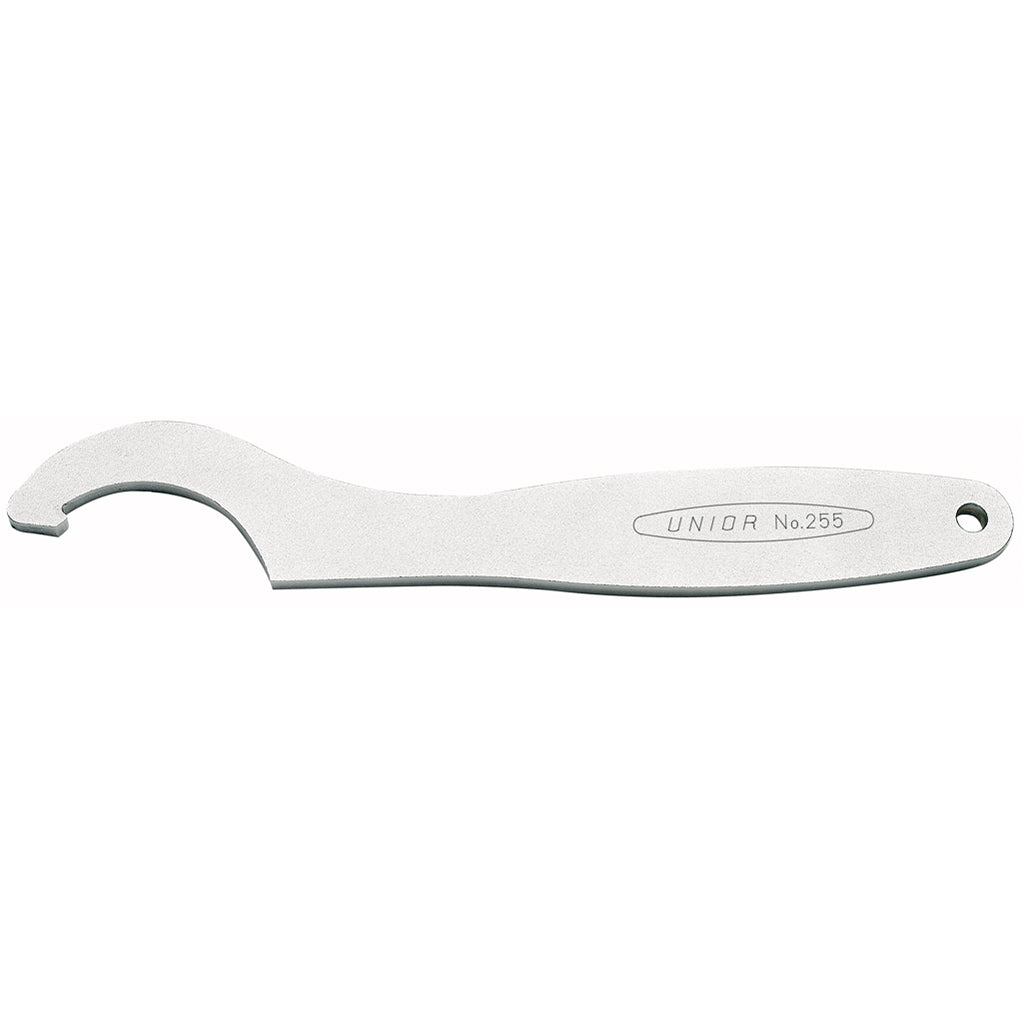

A hook wrench for the slotted lockrings on fixed-gear cogs, threaded headsets and older bottom brackets. Chrome vanadium steel, hardened right through, trivalent chrome plated to ISO 1456:2009 and made to DIN 1810 form A. Two hook sizes, 34–36 mm and 40–42 mm, share the same 171 mm handle.
In stock
Couldn't load pickup availability
Free US shipping on orders $75+
Some exceptions apply — see shipping policy
Unior has made hand tools in Zreče, Slovenia since 1919 and sponsors professional road and mountain-bike race teams.

On this page
A hook wrench engages slotted or notched lockrings; the rings whose engagement points are pockets cut into the outer face rather than splines or prongs. The 255/2 is the Unior hook wrench sized for the lockring patterns most commonly seen on bicycles: fixed-gear cog lockrings, some bottom-bracket lockrings, threaded-headset lockrings. One tool, several jobs.
Unior makes 14 hook wrench sizes across the industrial-tool catalog. The 255/2 is the size selected for bike-specific use: long enough to give leverage on a tightened lockring without being so long that it doesn't fit between hub flanges or against a frame. The hook itself is shaped to drop cleanly into the lockring's notch and stay engaged through the turn.
Where the 255/2 earns its place
The wrench is a multipurpose tool; three or four jobs on a typical service bike, depending on the build:
- Fixed-gear cog lockring. Track and fixed-gear hubs use a small reverse-threaded lockring over the cog that the 255/2 backs off. The Singlespeed Chainwhip 1659/2DP has an integrated lockring tool, but the 255/2 is the dedicated version if you do fixed-gear work in volume.
- Threaded bottom-bracket lockring. Older square-taper and ISIS bottom brackets often use a slotted lockring on the non-drive cup. The 255/2 fits the most common notch geometries; oddball patterns may need a dedicated BB lockring tool instead.
- Threaded headset lockring. Quill-stem headsets on classic bikes use a slotted top lockring above the adjustable cone. The 255/2 backs it off without resorting to a hammer-and-punch workaround.
The tool isn't a one-size-fits-everything solution; lockring patterns vary by manufacturer and era, and some notches are too narrow or too deep for the 255/2's hook. When the hook drops in cleanly, the tool works. When it doesn't, you've got a different lockring pattern and you need a different tool.
How to use it
Identify the lockring's notch; the slot or pocket cut into its outer face. Slip the wrench's hook into the notch with the handle oriented for the swing arc you need. Turn counter-clockwise (the usual direction for backing off, though some patterns reverse this; check the specific component if uncertain). Apply force through the handle; lockrings are typically tightened to lower torque than cassette lockrings, so they back off with a firm hand-pull rather than a breaker bar.
If the hook doesn't seat, don't force it. Forcing a slightly-mismatched hook wrench rounds the notch and makes the next attempt harder. Either the lockring is a different pattern (check Unior's other lockring-tool sizes) or the notch has already been rounded by prior service.
Compatibility
- Fixed-gear and track cog lockrings (most common notch patterns)
- Slotted bottom-bracket lockrings (older square-taper, ISIS, some current designs)
- Quill-stem headset lockrings
- Other slotted/notched rings on the bike that match the 255/2's hook geometry
Specs
- Slotted-engagement hook design to DIN 1810 form A, in hardened chrome vanadium steel
- Bike-appropriate 171 mm handle length for between-flange clearance (both sizes)
- Trivalent chrome plated to ISO 1456:2009
- Article number: 255/2, in two hook sizes: 34–36 mm (SKU 613054, 114 g) and 40–42 mm (SKU 613055, 111 g)
Built in Zreče, Slovenia
Unior has been forging hand tools in Zreče since 1919, and sponsors professional road and mountain-bike race teams. The hook wrench is one of those tools that started life on industrial benches; Unior makes 14 sizes across the broader catalog for non-bike applications; and the bike-specific version is the size that earned its place through workshop use rather than catalog design. The 255/2 is in the cycling collection because mechanics keep reaching for it.
Pro tip from our mechanics
If you're working on older bikes or doing fixed-gear conversions, the 255/2 ends up in the same drawer as your bottom-bracket and headset tools. The fixed-gear-cog application is the one most riders never think about until the cog needs swapping for a different ratio; on a track bike, that's a 90-second job with the 255/2 and a chainwhip. For multi-job bench utility, the 255/2 is the kind of tool that sits there unused for weeks and then handles three different jobs in an afternoon. The cassette-replacement workflow covers the fixed-gear lockring sequence: When and how to replace your cassette →
FAQ
Which size do I need, 34–36 mm or 40–42 mm? Measure the outside diameter of the lockring or slotted nut. The 34–36 mm hook (SKU 613054) spans rings in that range; the 40–42 mm hook (SKU 613055) covers the larger one. Both are 171 mm long, so reach and leverage are identical.
Does the 255/2 fit modern splined cassette lockrings? No. Shimano and SRAM cassette lockrings are splined and take a splined lockring tool plus a chain whip. The 255/2 engages slotted and notched rings: fixed-gear cog lockrings, threaded-headset lockrings and some older bottom-bracket lockrings.
What is the 255/2 made of? Premium chrome vanadium steel, entirely hardened and tempered, finished with trivalent chrome plating to ISO 1456:2009. The hook profile is made to DIN 1810 form A, the standard for hook wrenches that drive slotted round nuts.
Can I add a cheater bar for a stuck lockring? No. Unior's safety guidance for hook wrenches is explicit: don't hammer on the handle and don't extend it. If a ring won't budge, re-check the thread direction first; fixed-gear cog lockrings are commonly reverse-threaded, so they loosen the opposite way.
Size guide
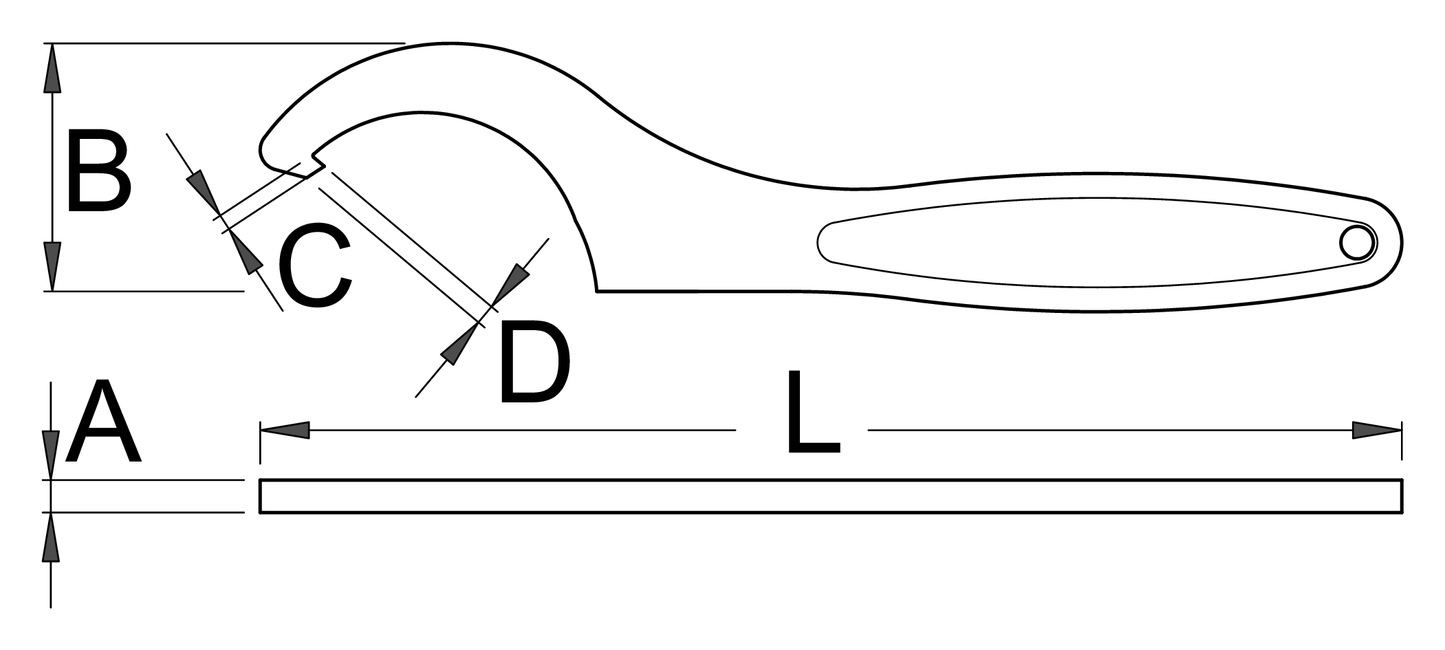
Size is the outside-diameter range of the lockring or slotted nut the hook spans. Both sizes share the same 171 mm length; weight is Unior's bare-tool spec. The size you have selected is highlighted.
| Size | Overall length | Weight |
|---|---|---|
| 34mm - 36mm | 171 mm | 114 g (4.0 oz) |
| 40mm - 42mm | 171 mm | 111 g (3.9 oz) |
 Tech Tips
When and how to replace your cassette
Tech Tips
When and how to replace your cassette
