


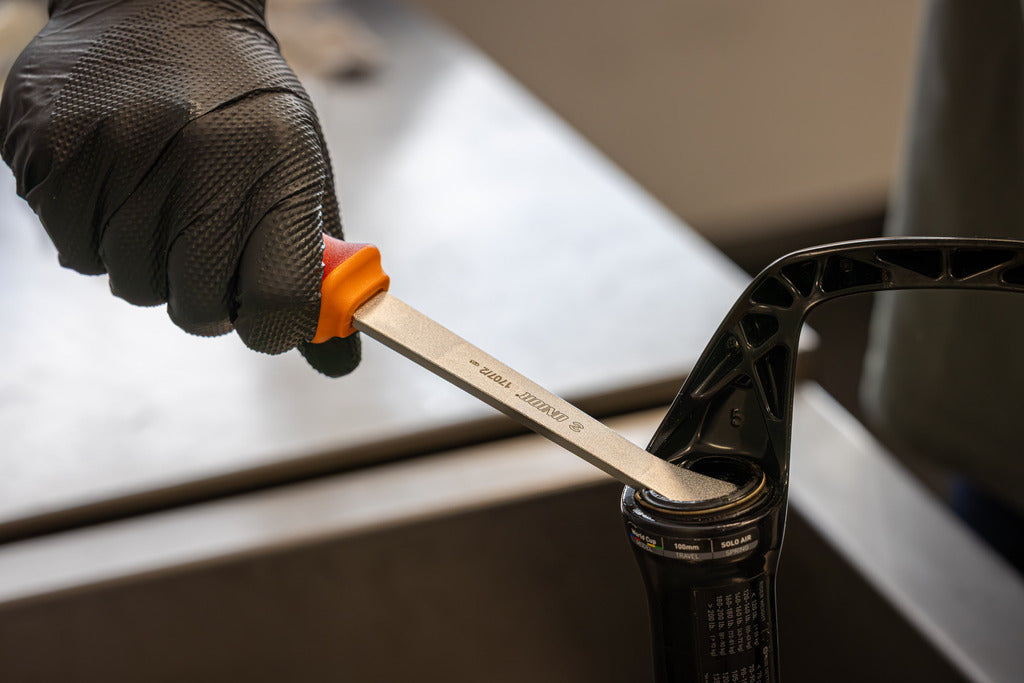
A flathead screwdriver scores the lower-leg counterbore every time, and the next seal weeps through the gap it leaves. This hook lifts the dust seal under its outer flange instead, so the casting stays untouched and the new seal seats square. Flex-plus carbon steel, trivalent-chrome plated.
In stock
Couldn't load pickup availability
Free US shipping on orders $75+
Some exceptions apply — see shipping policy
Unior has made hand tools in Zreče, Slovenia since 1919 and sponsors professional road and mountain-bike race teams.
View full details


On this page
The home mechanic's standard tool for pulling a dust seal is a flathead screwdriver. The result, every time, is a scored lower-leg counterbore where the screwdriver tip levered against the casting wall. Once the counterbore is scored, the new dust seal does not seat cleanly and the service starts losing oil through a gap the old seal never had.
The Fork Dust Seal Remover lifts the seal under its outer flange, the load-bearing edge, without contacting the lower-leg wall. The seal comes out in one motion, the counterbore stays clean, and the new seal seats square against an undamaged surface.
How the geometry works
A standard pry tool contacts whichever surface it can reach first. The Dust Seal Remover's hook geometry is shaped to slip beneath the seal flange and then act against the seal itself, not against the lower-leg wall. The pulling force is borne by the seal you are replacing, not by the casting you are keeping.
The tool works on the dust-seal designs across the modern fork catalog; the seal-flange geometry is consistent enough across manufacturers that one removal-tool profile covers the field.
Specs
- Material: premium flex plus carbon steel (Unior corporate spec)
- Finish: trivalent chrome plated to ISO 1456:2009
- Compatibility: standard dust seals on modern telescopic suspension forks
- Article: see product page for current article number
Built in Zreče, Slovenia
Unior has been forging hand tools in Zreče since 1919, and sponsors professional road and mountain-bike race teams. The dust-seal remover's geometry is the load-bearing detail; it lifts under the seal flange without scoring the lower-leg counterbore. The shape exists because the screwdriver-and-pry-bar workaround was costing forks their next service.
Pro tip from our mechanics
Pulling dust seals is the step where most home services start scoring the lower legs. The screwdriver workaround leaves a mark on every service; by the third service, the cumulative damage has the new seal weeping oil within the first ride. The right remover keeps the counterbore intact across the fork's service life, not just the current service.
How to service your suspension fork's lower legs →
FAQ
Why not just use a flathead screwdriver to remove a dust seal? A screwdriver levers against the lower-leg counterbore wall and scores it. Once that surface is scored, the new dust seal can't seat cleanly and the fork starts weeping oil through a gap the old seal never had. This tool lifts the seal under its flange instead, so the casting you're keeping stays untouched.
Does it work across different fork brands? Yes. The hook profile slips beneath the seal's outer flange, and that flange geometry is consistent enough across the modern fork catalog that one tool profile covers the field. The pulling force acts on the seal you're replacing, not on the lower leg.
What is the Fork Dust Seal Remover made of? Premium flex-plus carbon steel, finished with trivalent chrome plating to ISO 1456:2009 — the material-and-finish standard Unior uses across its precision hand tools.
