


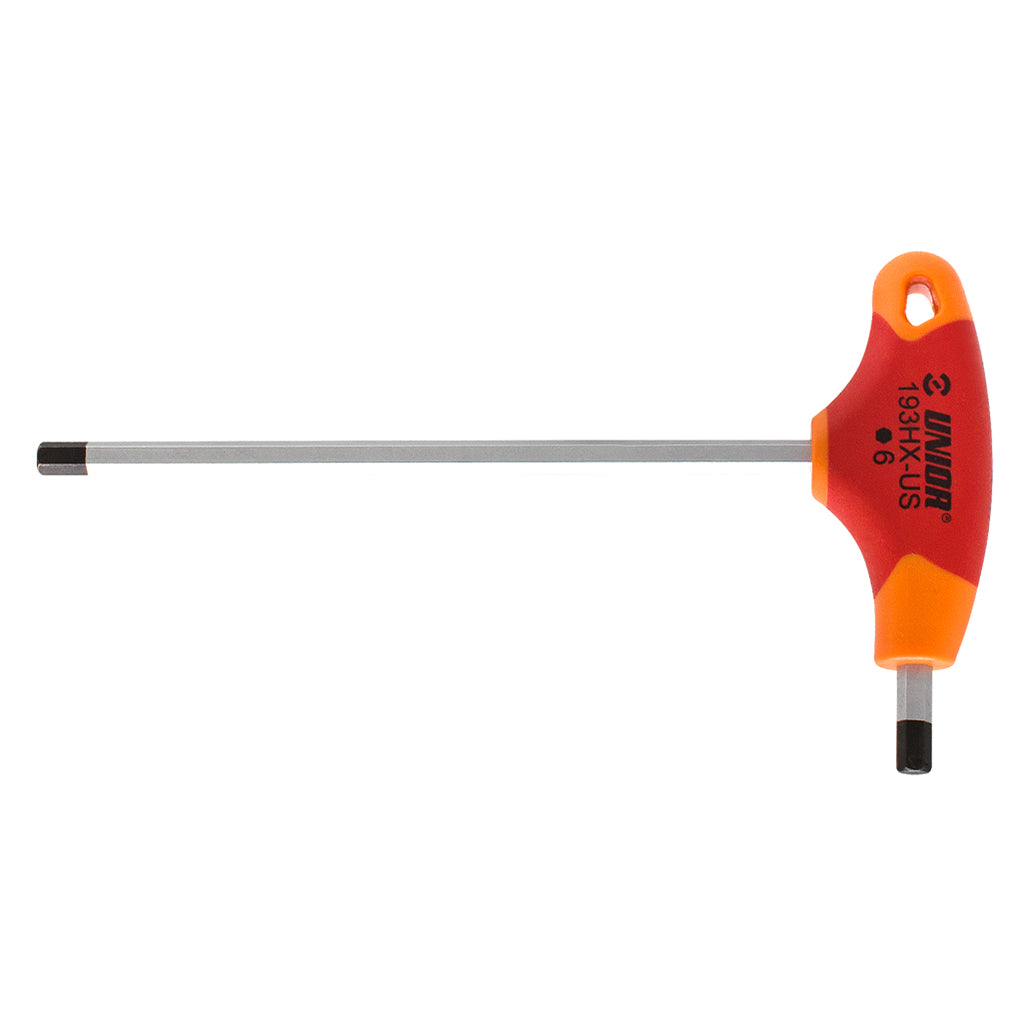
The shop-pace hex format in a single size: spin the shank between your fingers to run the bolt down, then brace into the cross-bar for the snug-down. Sizes 2–10 mm, sold individually, so you buy the one you reach for most instead of the whole rack.
In stock
Couldn't load pickup availability
Free US shipping on orders $75+
Some exceptions apply — see shipping policy
Unior has made hand tools in Zreče, Slovenia since 1919 and sponsors professional road and mountain-bike race teams.


On this page
The T-handle hex in a single size. Buy the one you reach for most, on the format that lets you spin a bolt with the shank rolling between your fingers and brace into the cross-bar for the snug-down. Standalone individual sizing for the 193HX line, available across the metric hex span.
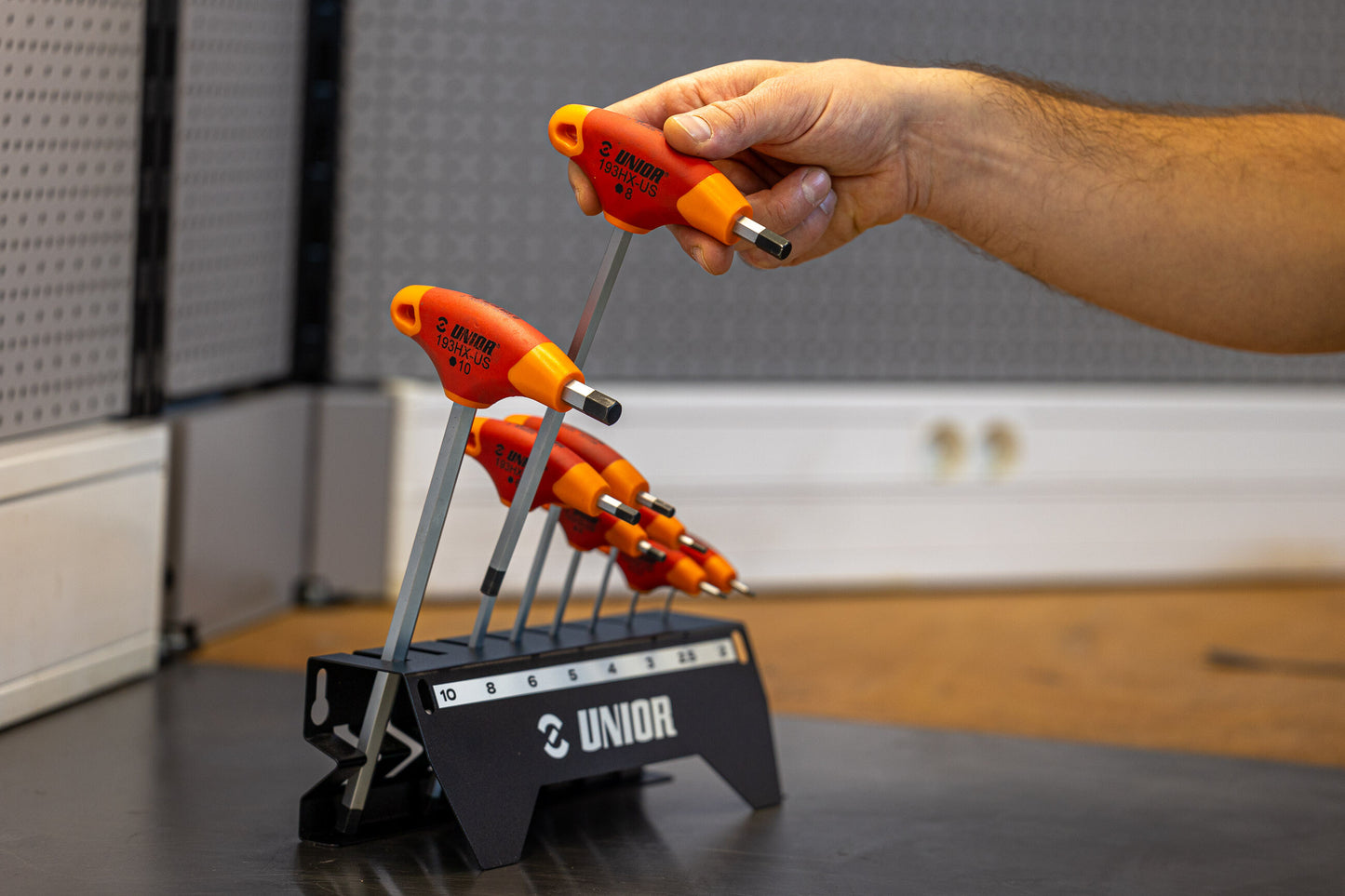
The T-handle format is the shop-pace hex tool. Where an L-key forces you to choose between the long-arm pull (high torque, slow) and the short-arm pull (low torque, fast), a T-handle gives you both at the same time. The bolt sits on the long axis of the shank; spin the shank between thumb and forefinger to drive the bolt fast, then plant both hands on the cross-bar for the final torque pass.
The chrome-vanadium shank is hardened and tempered, with a black-oxide tip for corrosion resistance and a clean fit into the hex recess. The cross-bar is polypropylene, balanced to spin between your fingers without fighting back. The shank length is sized to the bolt's typical working environment: long enough to reach into a deep-set fastener, short enough to fit on a bench tool rack without bending under its own weight.
Compatibility
Each size in the 193HX line covers a different fastener cluster on a typical bike:
- 2 mm: small fasteners on electronic groupsets (Shimano Di2, SRAM AXS) and accessory mounts
- 2.5 mm: small set-screws and internal shifter or lever hardware
- 3 mm: legacy shifter and brake-lever clamp bolts
- 4 mm: stem face-plate bolts on many bars; brake-lever clamps; bottle-cage bolts; cleat bolts
- 5 mm: stem steerer-clamp bolts; seatpost binders; saddle-rail bolts; disc-brake caliper mounting bolts
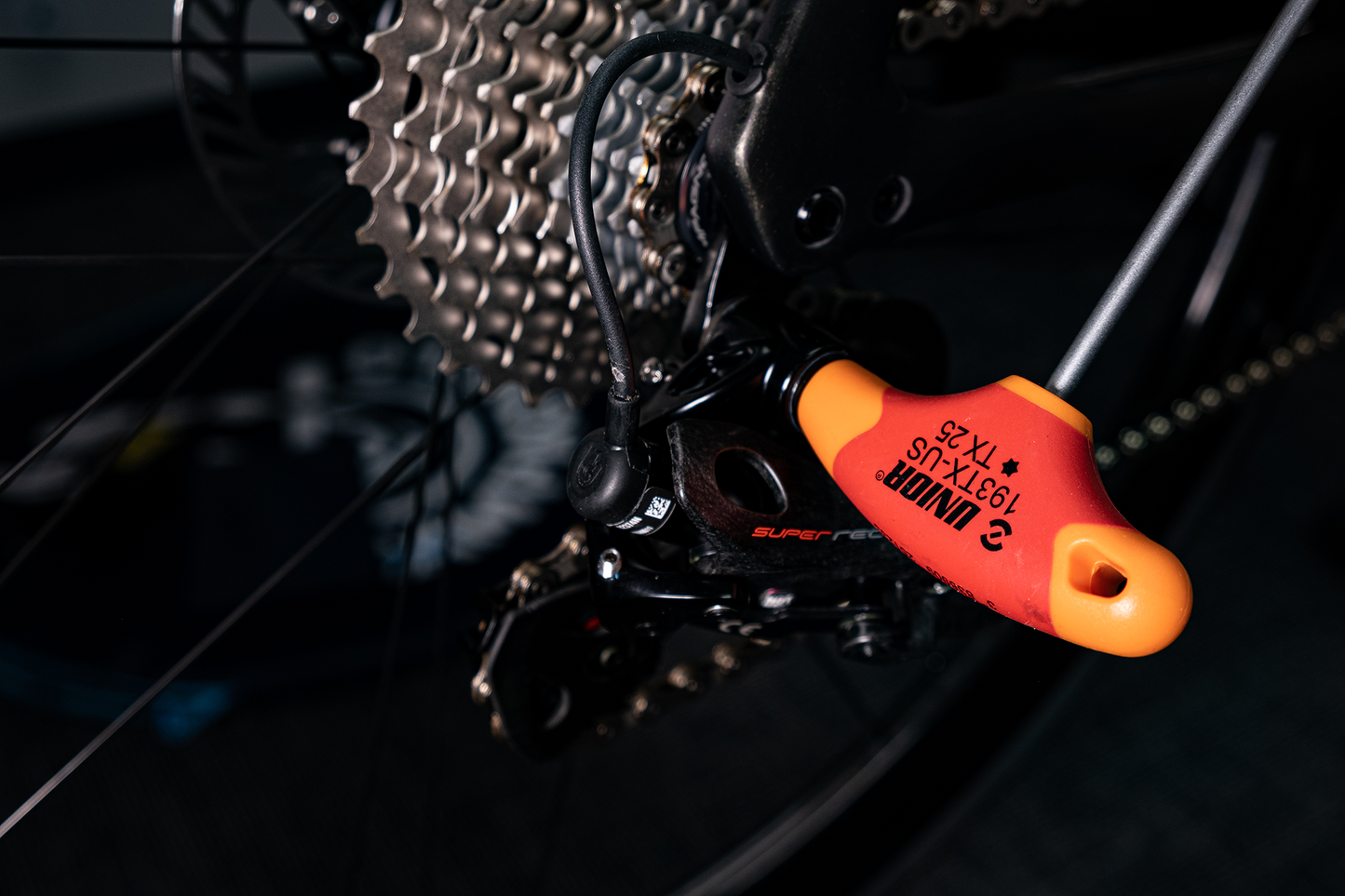
- 6 mm: thru-axles on many front and rear wheels; some crank and chainring bolts on older designs
- 8 mm: pedal axles driven from the back of the crank arm; some crank-fixing bolts
- 10 mm: Campagnolo Ultra Torque crank-spindle bolts; some legacy crank-fixing bolts
The 4, 5, and 6 mm sizes are the most reached-for hex sizes on a typical bike's fastener layout, which is why these tend to be the duplicates a shop keeps in addition to the full set.
Specs
- Single-size T-handle hex wrench (size selected at order)
- Chrome-vanadium steel shank, hardened and tempered
- Black-oxide tip for corrosion resistance and recess fit
- Trivalent chrome plating on the non-tip shank surfaces
- Polypropylene T-handle
- Hex keys manufactured to the ISO 2936 dimensional standard for metric hex keys
- Manufactured in Slovenia
Built in Zreče, Slovenia
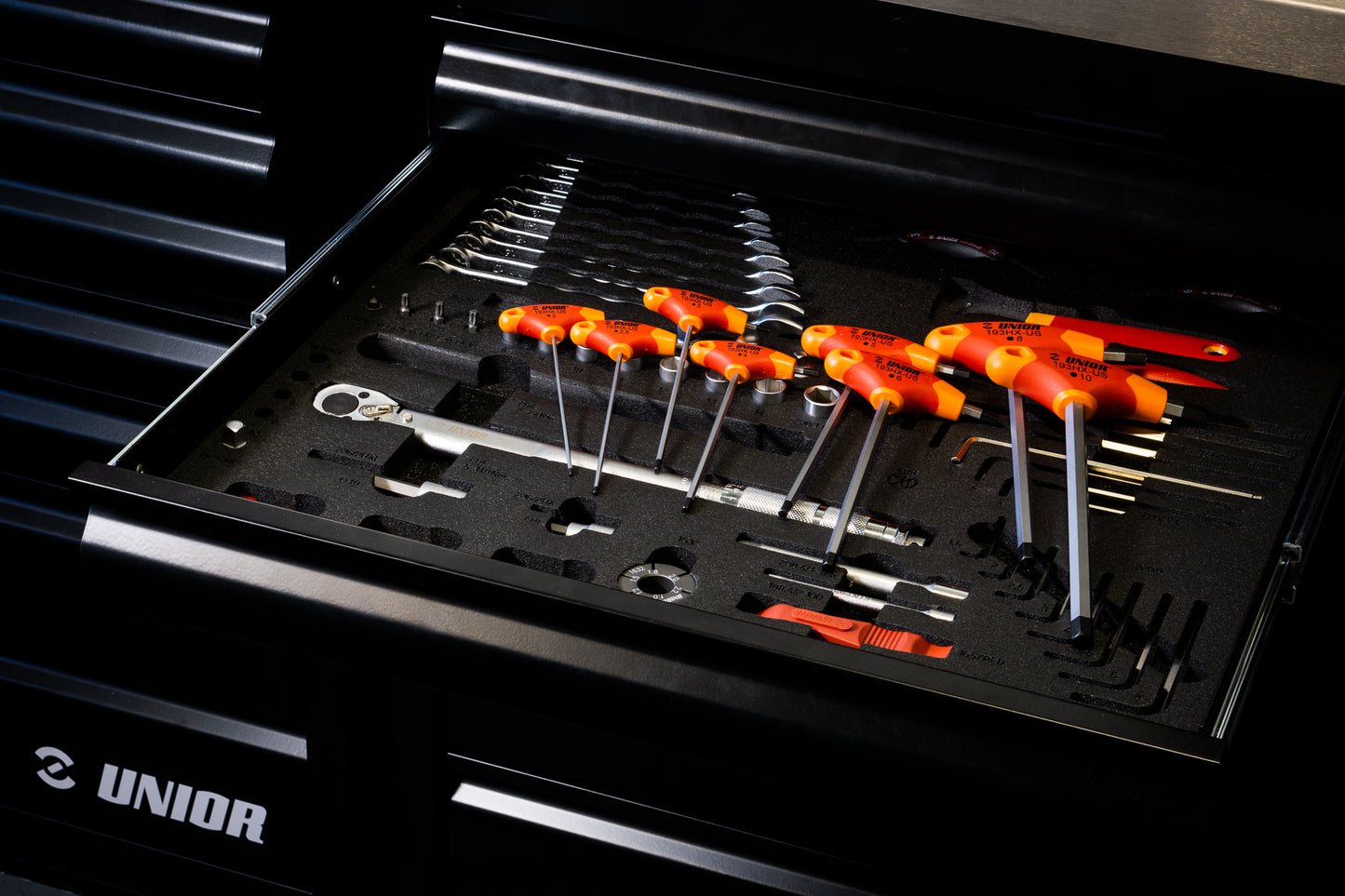
Unior has been forging hand tools in Zreče since 1919. The standalone T-handle hex is the same tool that ships in the 8-piece T-handle hex set; it's available individually so a shop can keep duplicates of the sizes that get reached for most, without buying a second full kit.
Pro tip from our mechanics
A hex driver wears at the tip first. The shank stays straight for decades; the tip's six-flat geometry rounds over a few thousand engagements. If you find yourself reaching for the same 5 mm hex three or four times per service, that tip is wearing faster than the rest of your set. Buying the standalone matching size and rotating it in for the worn one is the cheap way to extend a working hex kit's life.
For the trade-offs between T-handle, L-shape, and Y-handle formats, and the size cluster that benefits most from a duplicate at the bench: Hex and Torx wrenches: how to pick the right tool for the job →.
FAQ
Which size do I need for which bolt? It depends on the fastener. On a typical bike, 4 mm drives stem face-plate bolts, brake-lever clamps, and bottle-cage and cleat bolts; 5 mm handles stem steerer-clamp bolts, seatpost binders, saddle-rail bolts and disc-brake caliper mounting bolts; 6 mm fits many front and rear thru-axles and some older crank and chainring bolts; and 8 mm installs and removes most clipless pedals from the back of the crank arm, plus square-taper and splined crank bolts. The smaller 2, 2.5 and 3 mm sizes handle electronic-shifting fasteners, set-screws and legacy shifter clamps, while 10 mm is the Campagnolo Ultra Torque crank-spindle bolt. If you are unsure, seat the hex fully in the recess before turning: a size that rocks in the socket is too small and will round the fastener.
T-handle, L-key, or Y-handle — which format should I use? The three formats trade access for speed. An L-key (Allen key) is the most compact and reaches the widest range of angles, but you have to choose between the long arm for torque and the short arm for speed. A Y-handle gangs three common sizes on one tool for fast shop work, but it is bulky and limited to those three sizes. A T-handle like the 193HX gives you both torque and speed at once: spin the shank between your fingers to run a bolt down, then brace both hands on the cross-bar for the final pass. It is the bench mechanic's first reach for everyday 4, 5 and 6 mm work; keep a set of L-keys alongside it for the tight angles a T-handle cannot reach.
Is this the same tool as in the set, and why buy singles? Yes. Each 193HX single is the identical tool that ships in the 8-piece T-Handle Hex Wrench Set (2 to 10 mm). The full set is the better value if you are building a bench from scratch. Singles exist so a working shop can replace or duplicate the sizes it reaches for most, usually 4, 5 and 6 mm, without buying a whole second kit. A common pattern is one full set on the wall plus loose 4, 5 and 6 mm duplicates kept at each work stand.
How durable is the chrome-vanadium shank and the black-oxide tip? A hex driver wears at the tip first: the shank stays straight for decades while the six-flat tip geometry slowly rounds over across thousands of engagements. The 193HX shank is hardened-and-tempered chrome-vanadium steel, the industry-standard alloy for hex tools, where chromium adds corrosion and wear resistance and vanadium refines the grain so the tip holds its profile under repeated load. The engagement tip is finished with black oxide, a thin chemical-conversion coating that resists corrosion without adding dimensional bulk, so the tip still fits the fastener recess to its machined tolerance. When a size you use constantly finally rounds, rotating in a fresh single is the cheap way to extend the life of a working set.
Size guide
Every size is the same tool — pick the hex that fits the fastener. Overall length and weight are the bare-tool spec; the size you have selected is highlighted.
| Size | Overall length | Weight |
|---|---|---|
| 2mm | 126 mm | 12 g (0.4 oz) |
| 2.5mm | 126 mm | 13 g (0.5 oz) |
| 3mm | 126 mm | 16 g (0.6 oz) |
| 4mm | 151 mm | 24 g (0.8 oz) |
| 5mm | 184.5 mm | 56 g (2.0 oz) |
| 6mm | 184.5 mm | 74 g (2.6 oz) |
| 8mm | 217.9 mm | 155 g (5.5 oz) |
| 10mm | 242.9 mm | 233 g (8.2 oz) |
 Tech Tips
Hex and Torx wrenches: how to pick the right tool for the job
Tech Tips
Hex and Torx wrenches: how to pick the right tool for the job
