


Sinter organic replacement pads for Shimano Saint and Zee (D/H type, 4-piston gravity) calipers. Despite the name, Sinter makes organic pads, not sintered-metal, so they run cooler at the caliper and give you sharper lever feel and modulation than the stock pads, with less rotor wear. Pick the compound color below to match how you ride.
In stock
Couldn't load pickup availability
Free US shipping on orders $75+
Some exceptions apply — see shipping policy
Founded in 1969, Sinter makes brake pads in Ljubljana, Slovenia.

On this page
The Shimano D-type and H-type pad shapes (Sinter Model 003) live in the calipers that take the most thermal load in Shimano's MTB catalog: Saint, Zee, and the four-piston Deore XT M8020 / M8120, SLX M7120, Deore M6120, and the current Deore M5100 four-piston platforms. If your bike runs a four-piston Shimano caliper for downhill, enduro, or heavy e-MTB duty, this is the replacement pad. Sinter's organic compound earns its keep on these brakes because the rider is asking the brake for sustained heat dissipation, and the resin matrix's modulation is the difference between bite-and-fade and bite-and-control on a long descent.
What's in the kit
One caliper's worth of pads (2 pads, left and right) for the D-type or H-type Shimano pocket. Bedding-in instructions are included; spring and pin are part of the pad assembly. Order two kits if you're replacing front and rear pads on the same service.
Fits
D-type and H-type pad shape, covering the Shimano four-piston MTB platform plus several aftermarket calipers that licensed the same geometry:
- Shimano Deore XT M8100 series (BR-M8120), M8000 series (BR-M8020)
- Shimano SLX M7100 series (BR-M7120)
- Shimano Deore M6100 series (BR-M6120), M5100 series
- Shimano Saint M820 (BR-M820), M810 (BR-M810)
- Shimano Zee M640 (BR-M640)
- Shimano BR-MT520, BR-MT420
- Shimano CUES U8000 (BR-U8020)
- Tektro: HD-E725, HD-M735, HD-M745, HD-M750
- TRP: Quadiem, SL Slate, T4, DH-R EVO
- HEL Advocate 4-Piston
If your Shimano four-piston caliper is in this generational range, the Sinter Model 003 is the pad. The TRP DH-R EVO and Quadiem coverage extends the same pad shape into competitive DH builds.
Compound and feel
Sinter's organic ceramic-loaded compound (kevlar, ceramic, clay minerals, and carbon bound in resin) is calibrated to the sustained-load profile that four-piston MTB calipers create. Where a two-piston caliper sees short, hard inputs, a four-piston caliper sees long, moderate-pressure dragging on technical descents. Organic compound modulates better for that pattern; sintered pads transfer more heat into the rotor and run noisier in the wet. Match the pad to the use case the brake was designed for.
Choosing your compound
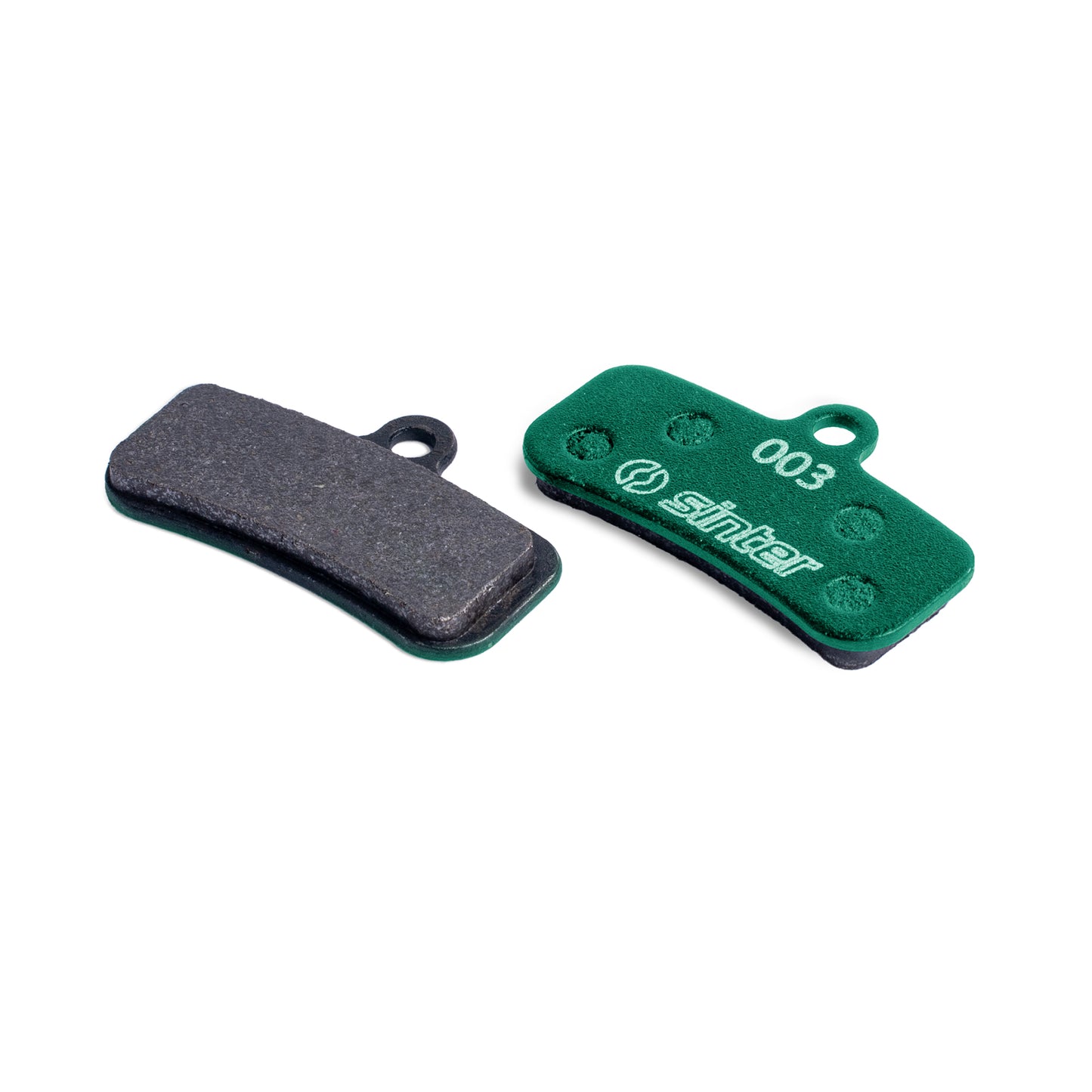
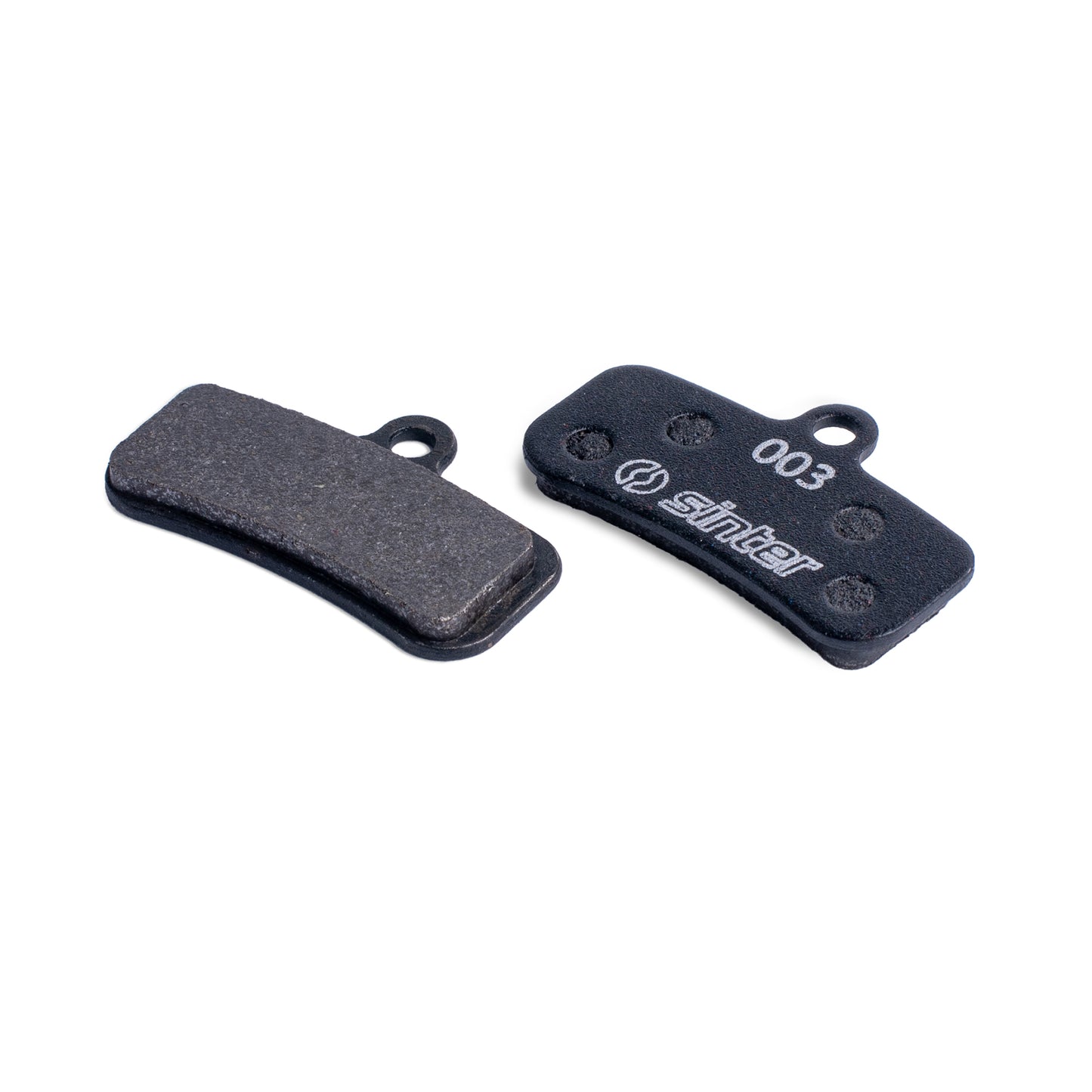
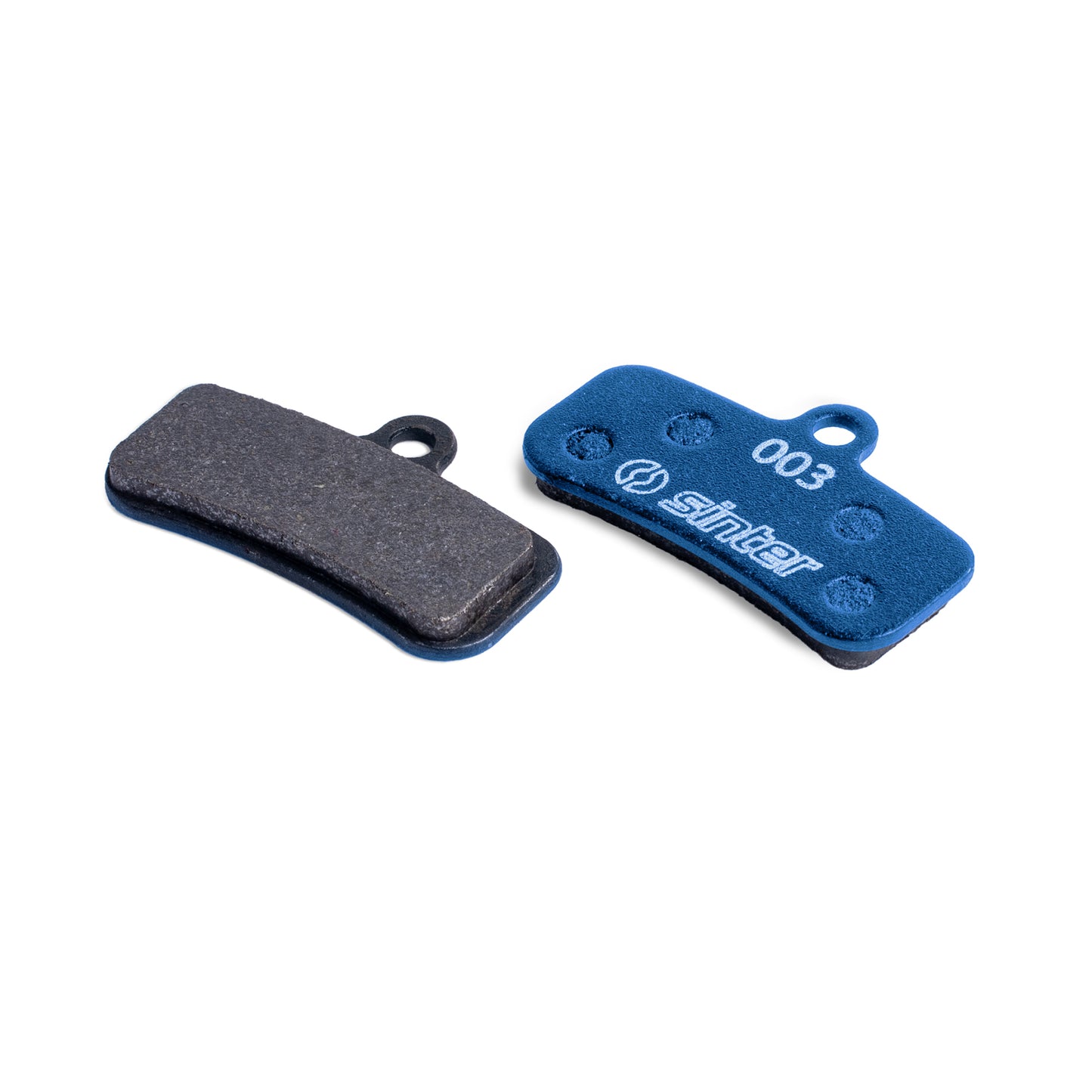
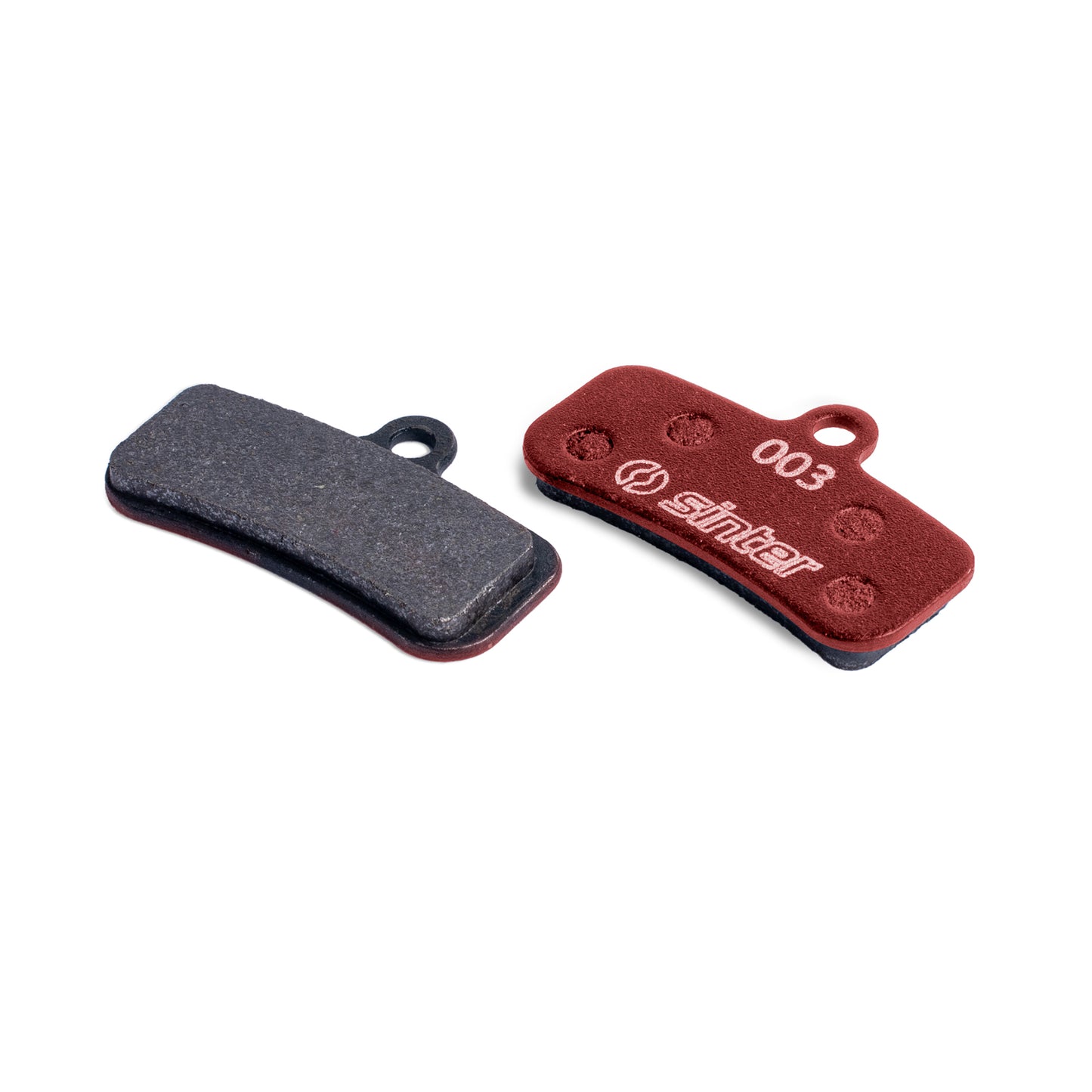
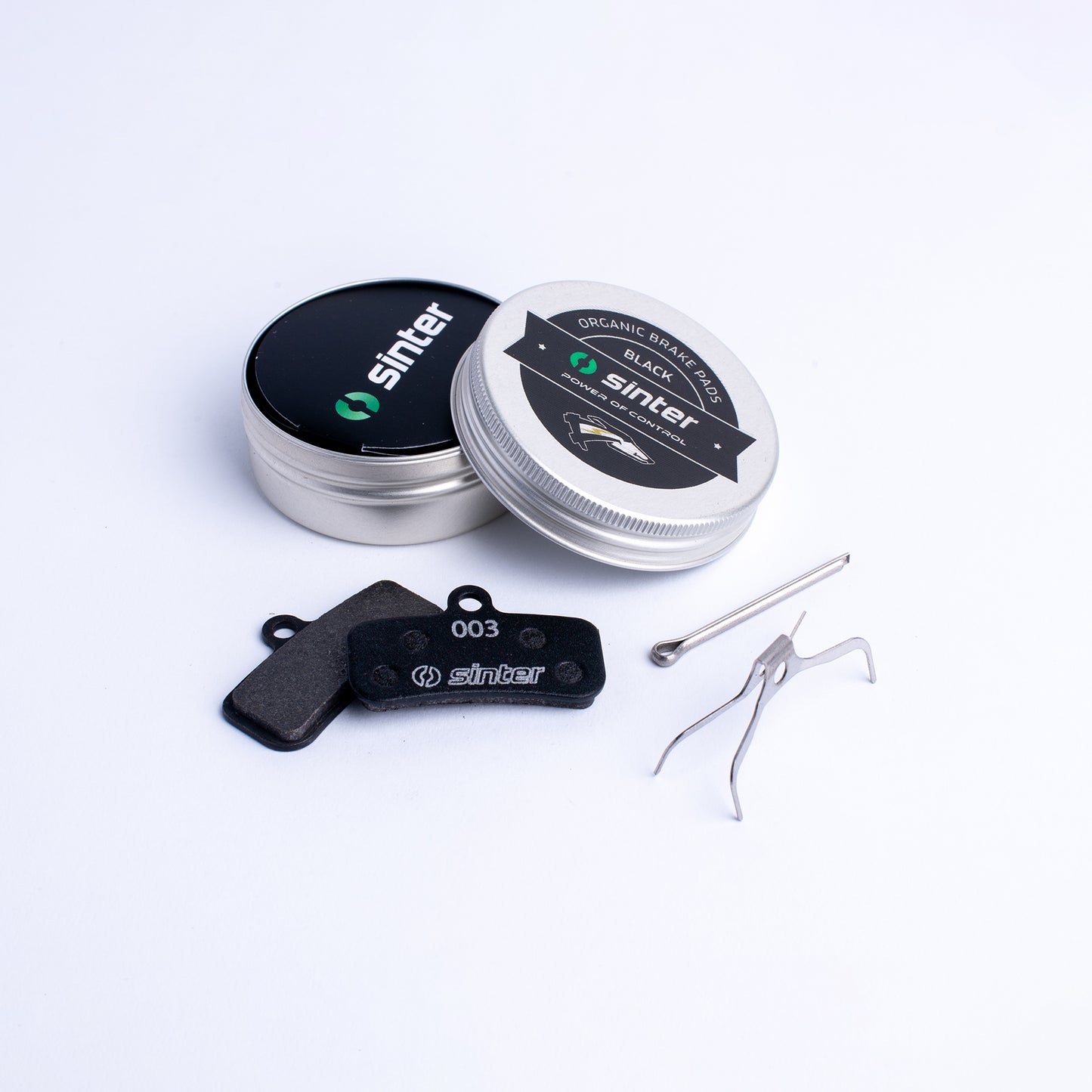
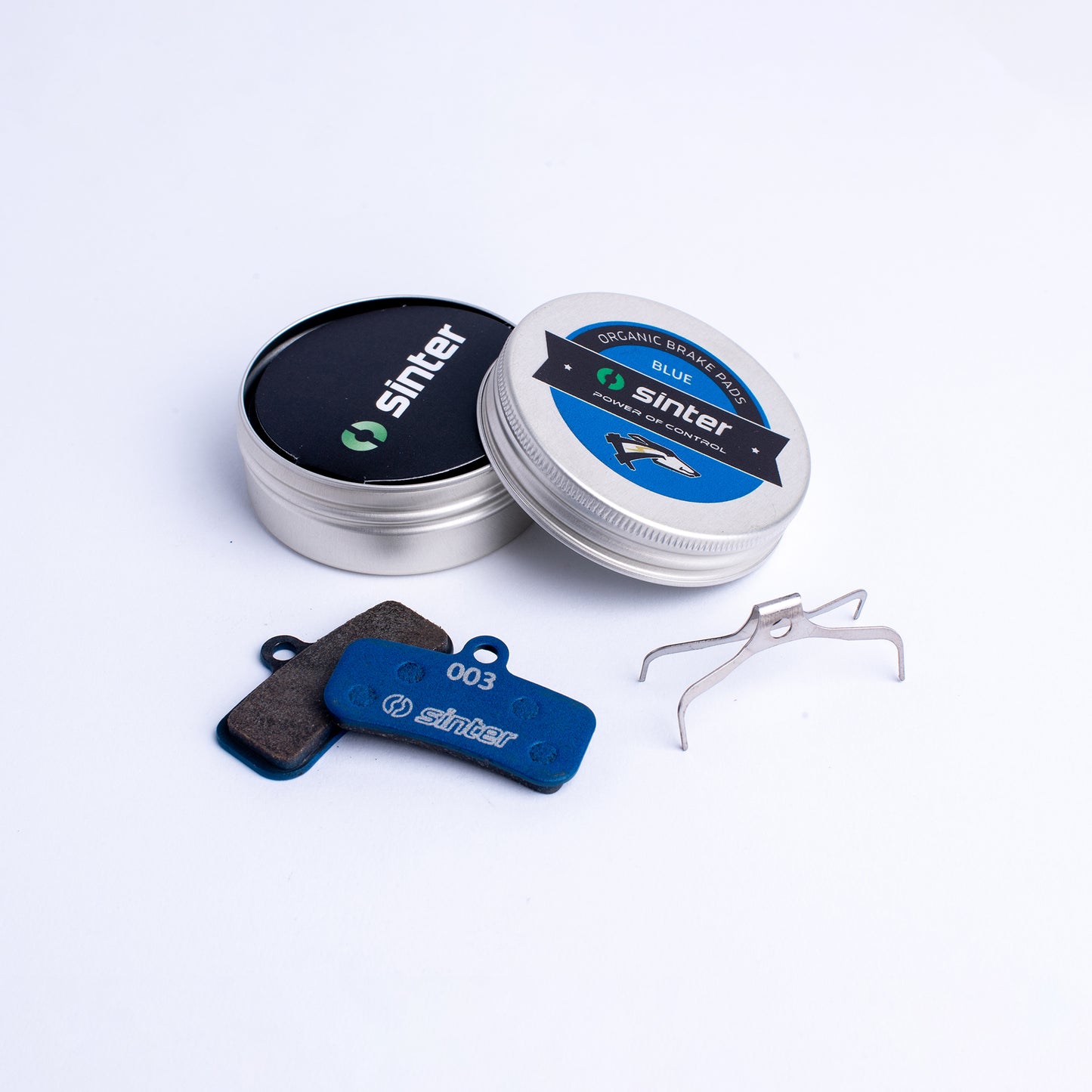
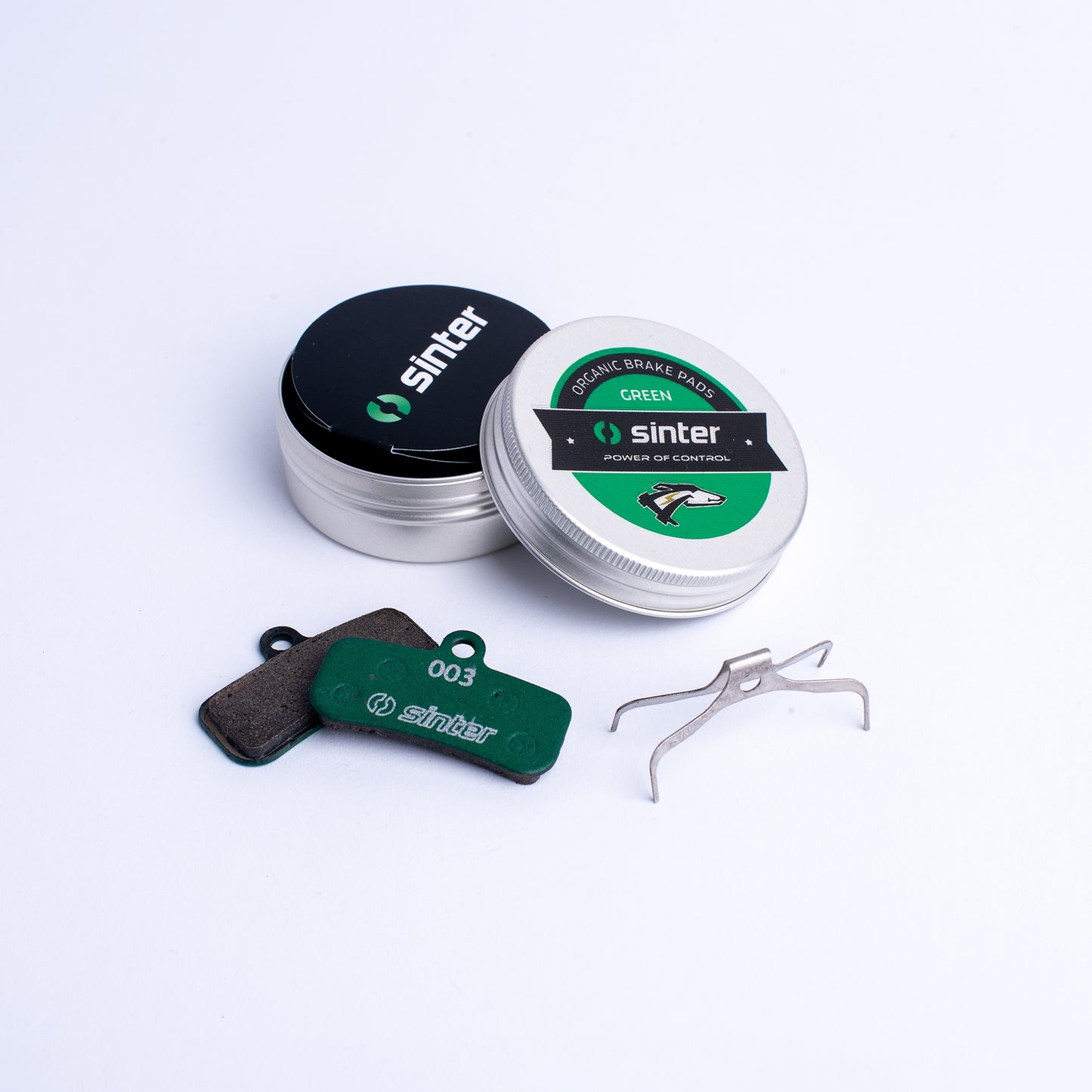
Despite the name, every Sinter compound is organic — not a sintered-metal pad. Organic pads run cooler at the caliper, give more lever feel and modulation, stay quiet, and are gentler on your rotors. The color of the backing plate tells you the compound.
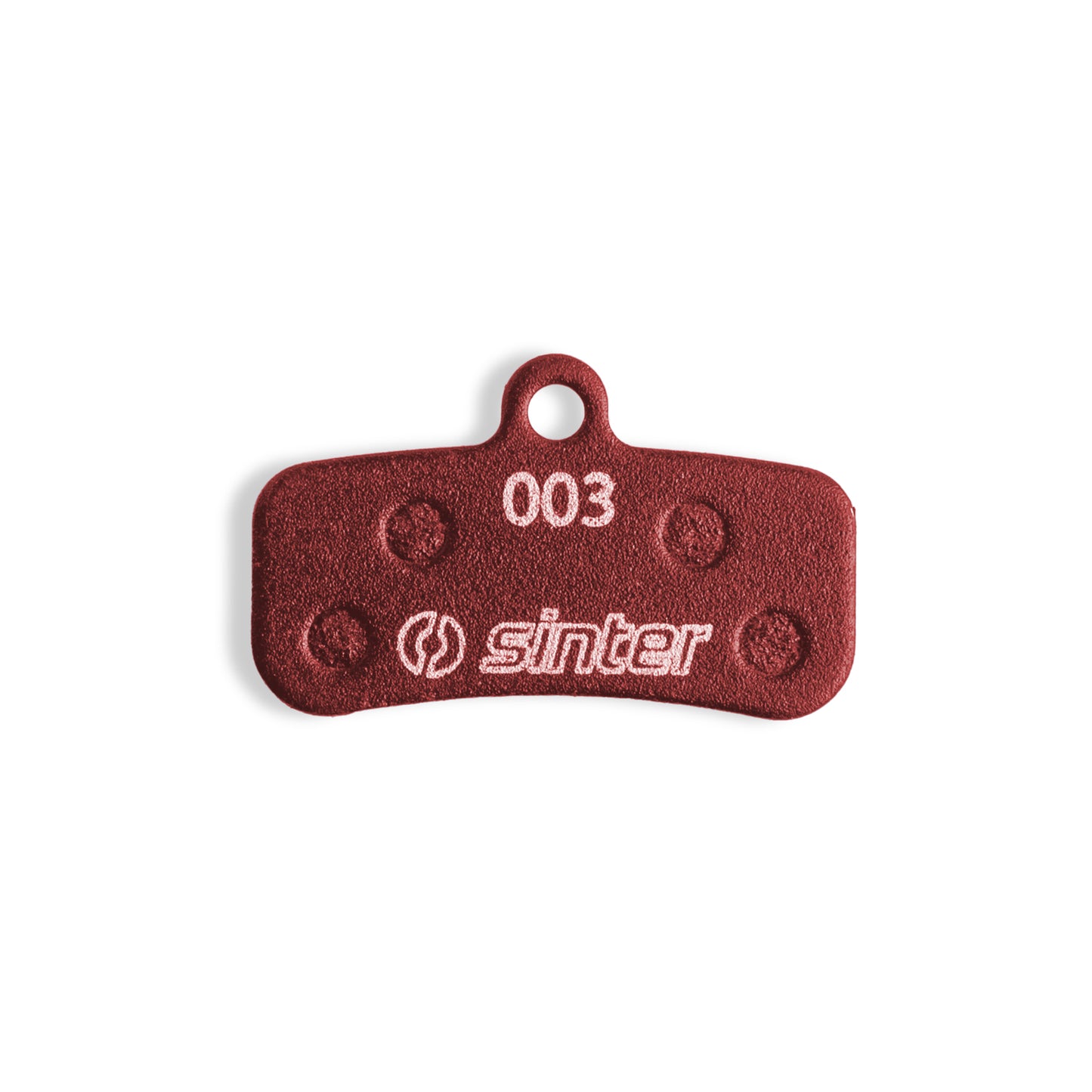
Red s514
The all-round upgrade from OEM. Consistent performance, smooth modulation and lever feel, excellent durability.
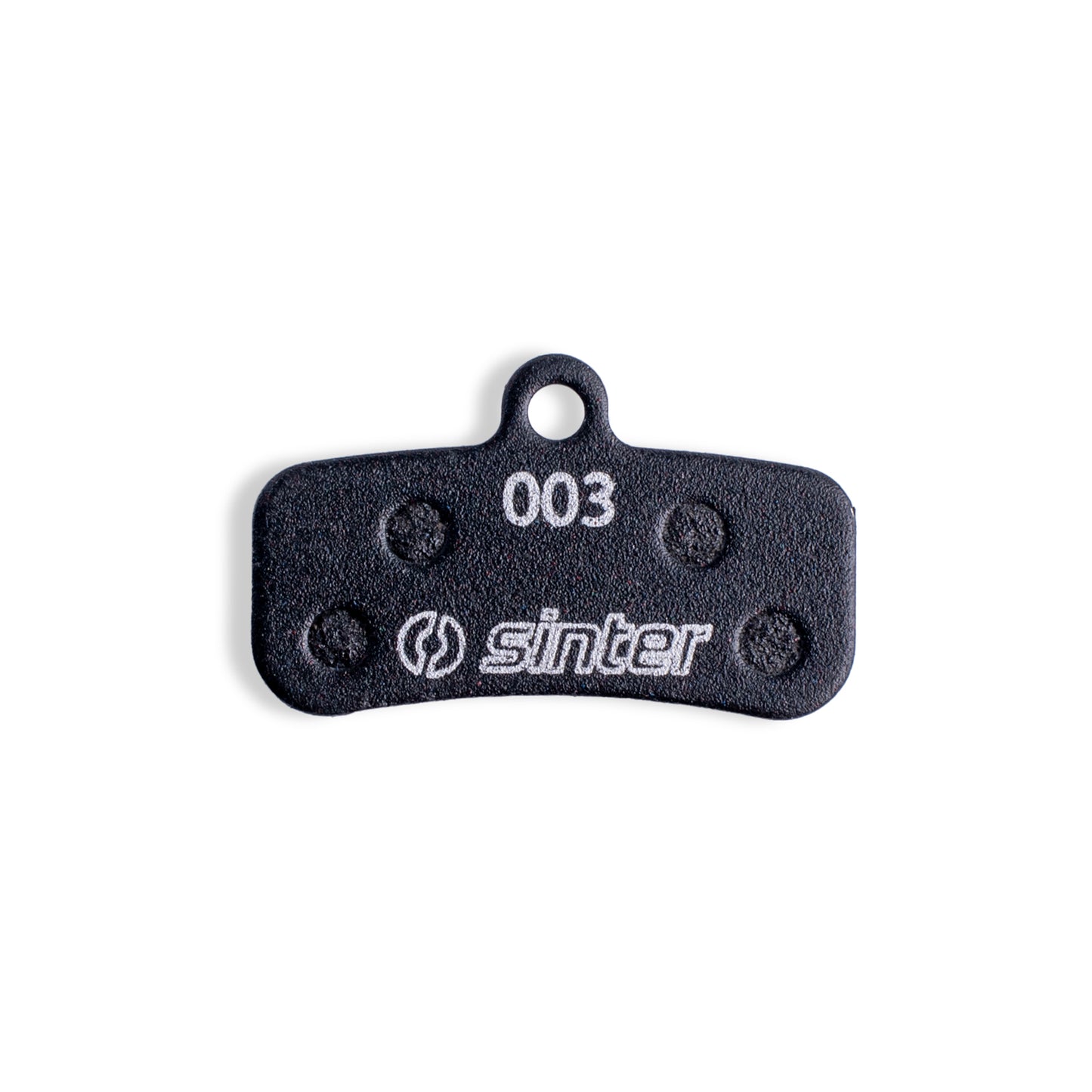
Black s550
Long-wearing organic compound. Predictable braking across temperatures in all conditions, including mud and wet.
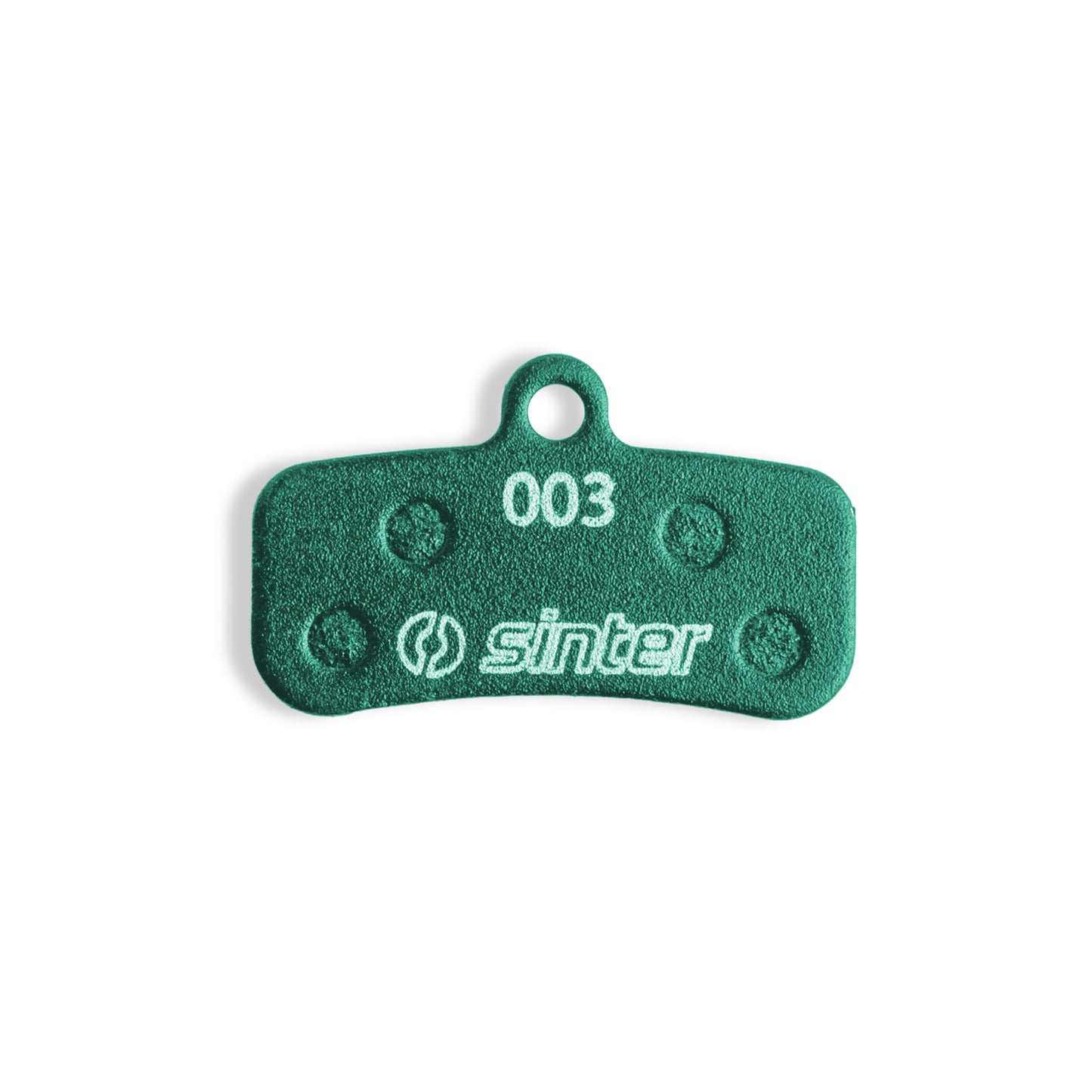
Green s2032
Sinter's race compound. A state-of-the-art material for braking aggressively while keeping ultimate power and control across temperatures.
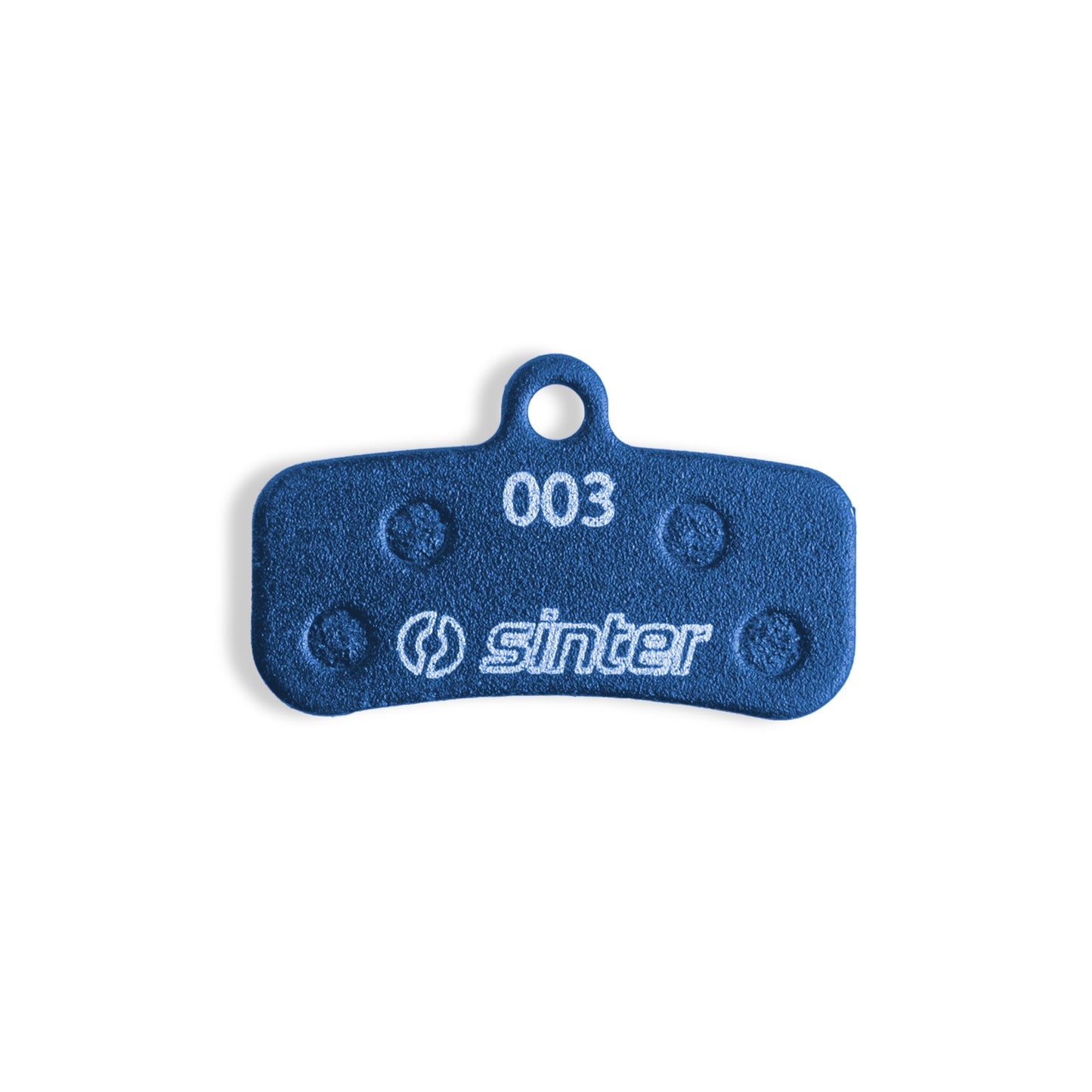
Blue s530
For e-bikes, DH and Enduro. Consistent power with high modulation, lever comfort and slow wear across all temperatures.
Our pick for this brake
Also in the Sinter range: the Cargo pad, built for cargo bikes and heavy daily city loads.
Specs
- Compound: organic (ceramic-loaded, resin-bound)
- Backing plate: steel
- Pad shape: Shimano D-type / H-type
- Pads per package: 2 (one caliper)
Includes: 2 pads (left and right), bedding-in instructions.
From Sinter's Ljubljana plant
Sinter has been making friction materials in Ljubljana since 1969, and developed the first disc brake pads in the former Yugoslavia in 1972. The same plant supplies organic-compound pads at scale to motorcycle OEMs and to the bicycle aftermarket. Unior has been forging hand tools in Zreče since 1919, and sponsors professional road and mountain-bike race teams. Both run through Euro Toolworks in North America. The Model 003 lands in the four-piston MTB segment where the riders who put the most hours into descending demand the most from the friction matrix.
Pro tip from our mechanics
Four-piston Shimano calipers reward a careful piston-spread step before pad install: pistons that retract unevenly produce uneven pad wear and the well-known Shimano “rubbing rear caliper” complaint within a hundred miles. Spread the pistons evenly with a flat-blade tool or a piston-spreader before sliding fresh Sinter pads in, and the brake bites cleanly from the first descent.
For the broader compound primer and fitment grid, see How to choose Sinter brake pads →.
FAQ
Which brakes does the Sinter Model 003 pad fit? Made for Shimano Saint and Zee four-piston gravity calipers (the D and H type), this pad fits the larger four-piston pocket rather than a two-piston caliper. Since Shimano uses different pad shapes across models, compare the backing plate, mounting tab, and pin hole of your worn pad with this one before ordering, or check the model number stamped on the old pad. That physical match is what counts, not the caliper name. If you are not sure, send us a clear photo of the old pad and we'll check it for you.
Are these sintered metal pads? No. Despite the brand name, Sinter only makes organic pads, not sintered-metal. Organic compounds run cooler at the caliper, give you more lever feel and modulation, stay quieter, and cause less rotor wear and vibration than sintered pads. They are not semi-metallic either. For the full picture of how sintered pads are made and when each compound makes sense, read our guide to sintered vs organic brake pads.
Do I need to bed in new pads? Yes. New organic pads need bedding in to transfer an even layer of compound onto the rotor and reach full power. Find a safe stretch of road or trail, bring the bike up to a moderate speed, and brake firmly to nearly a stop without locking the wheel, then repeat several times. Avoid hard stops or dragging the brake until they are bedded, or you can glaze the surface.
Why won't the new pads fit back in the caliper? As the old pads wore down, the pistons advanced outward to keep contact with the rotor, so there is no room for the thicker new pads. Before fitting the Model 003, push the pistons back into the caliper bores to spread them. Remove the old pads first, then use a plastic tire lever or a dedicated piston press to ease both pistons back evenly so the new pads and rotor slide in cleanly.
 Tech Tips
Disc Brake Pad Bedding In Procedure
Tech Tips
Disc Brake Pad Bedding In Procedure
From the press
The Sinter pads demonstrated the most consistent performance with the least fade, maintaining effective braking under high heat.
The Sinter pads – which are organic, by the way – improved deceleration on all models, but to very different degrees.
