


Sinter organic replacement pads for Avid calipers, made in Europe. One set covers a single caliper (left and right pads plus the spring). Despite the name, Sinter only make organic pads, so you get quieter braking, more lever feel, and less rotor wear than sintered-metal. Pick your compound color below.
In stock
Couldn't load pickup availability
Free US shipping on orders $75+
Some exceptions apply — see shipping policy
Forged in Zreče, Slovenia since 1919. Sponsors professional road and mountain-bike race teams.

On this page
The Avid Juicy and BB7 calipers are the long-tail of Sinter's SRAM-side coverage: the Juicy 3 / 5 / 7 / Ultimate / Carbon hydraulic family from the late-2000s era, and the BB7 mechanical disc that's still on a meaningful share of cyclocross, gravel, and touring bikes built between 2005 and the present. The Sinter Model 005 is the organic-compound replacement for those calipers. One pad shape covers the cable-actuated BB7 and the hydraulic Juicy line because Avid kept the pocket geometry consistent across the platform.
What's in the kit
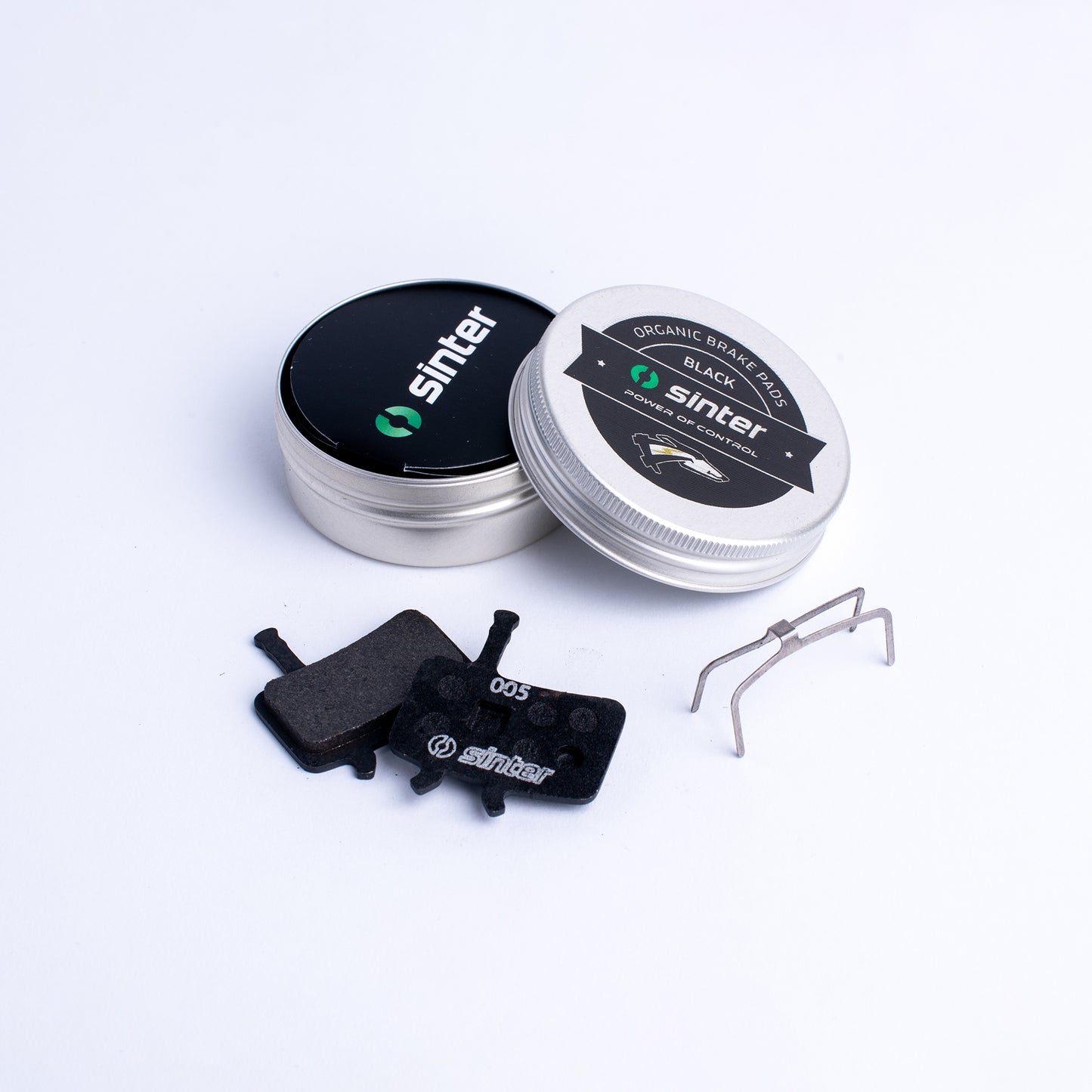
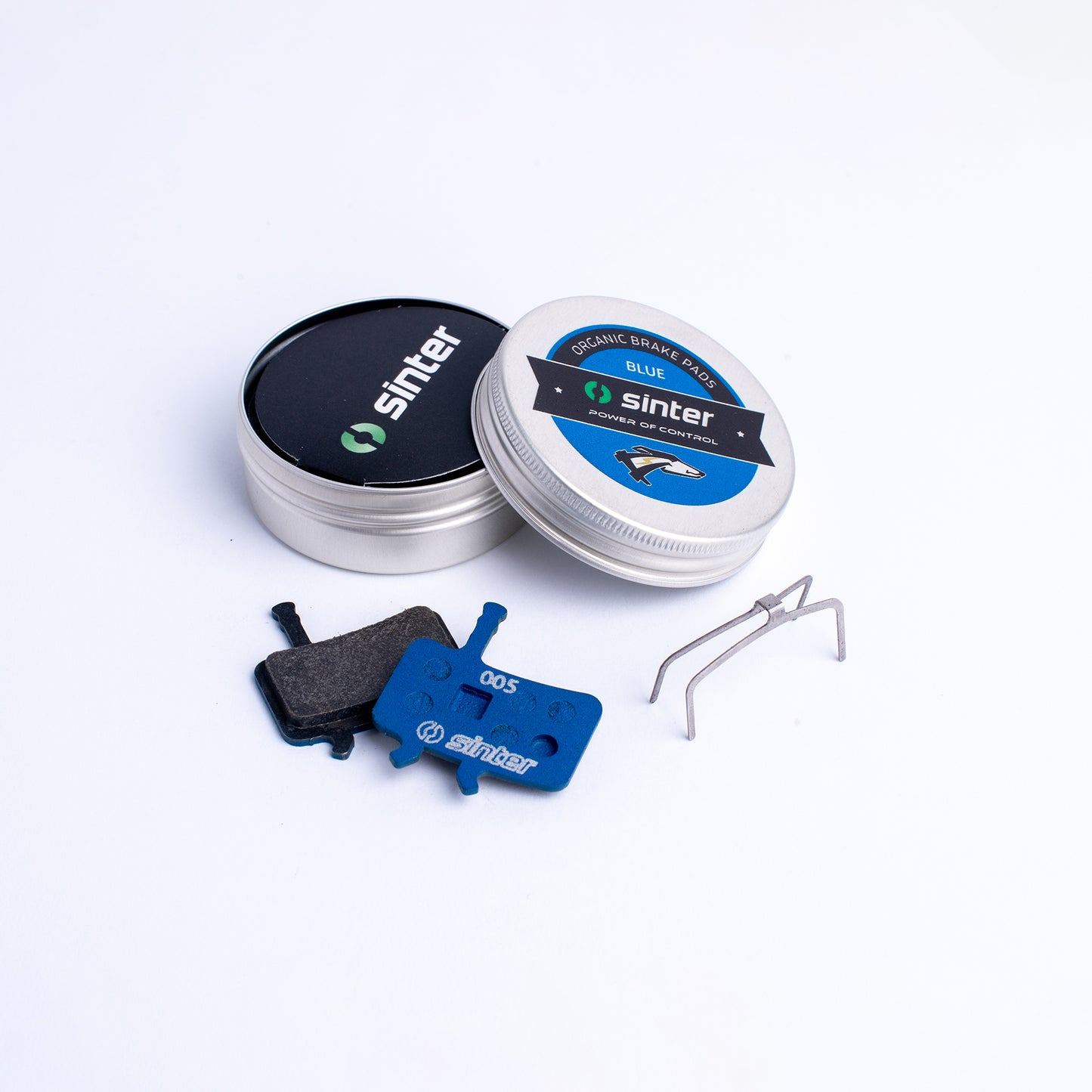
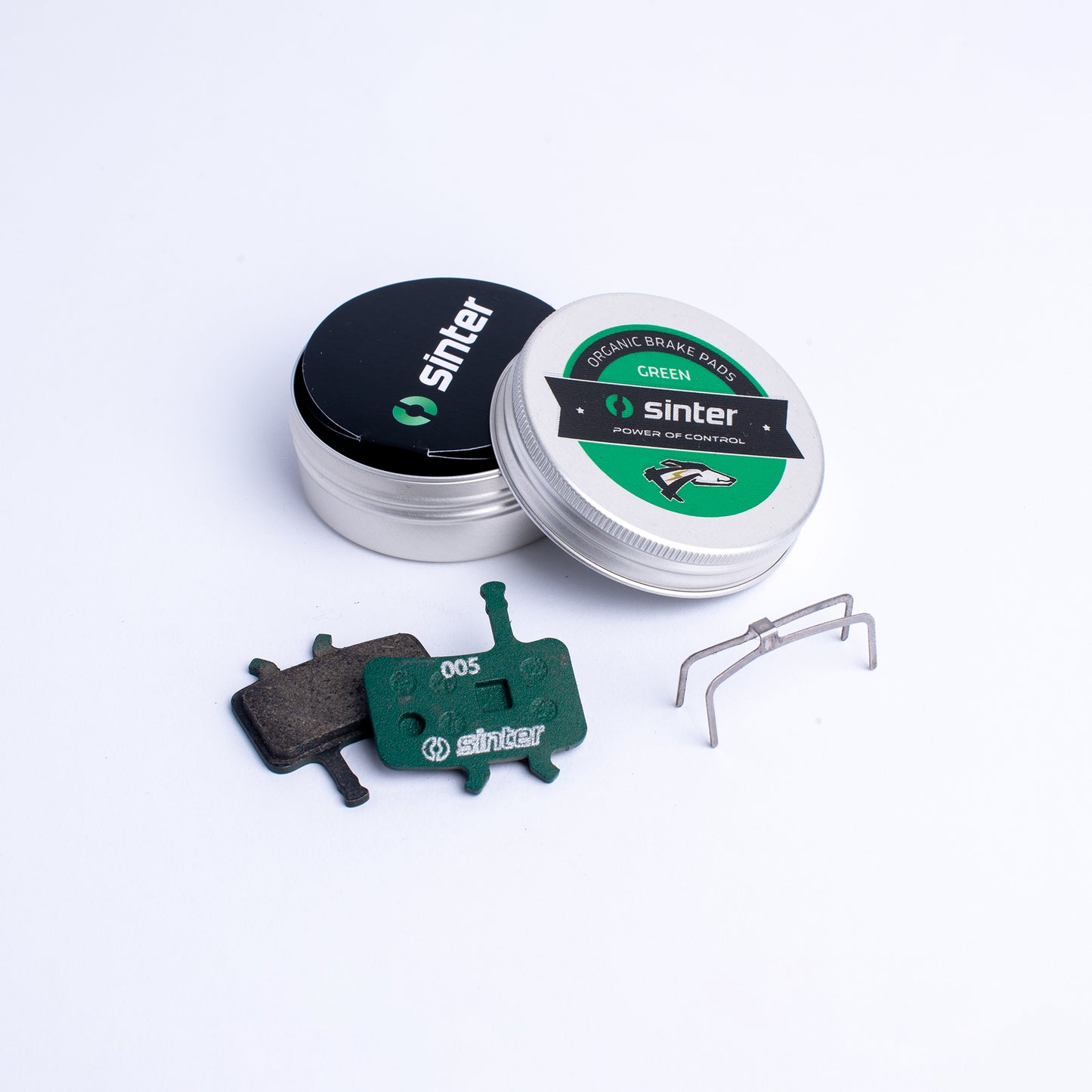
One caliper's worth of pads (2 pads, left and right), plus the spring that holds them in place against the Avid caliper body, and Sinter's bedding-in instructions. Order two kits if you're replacing front and rear pads in the same service.
Fits
Avid pad shape, covering the BB7 mechanical disc and the Juicy hydraulic family:
- Avid BB7 (mechanical disc, road and mountain variants)
- Avid Juicy 3
- Avid Juicy 5
- Avid Juicy 7
- Avid Juicy Ultimate
- Avid Juicy Carbon
The BB7 specifically is the cable-actuated disc that ships on a large catalog of cyclocross, gravel, and touring bikes still in active service; it's also the disc brake of choice on a fair number of bikepacking builds where cable simplicity beats hydraulic-line maintenance. The hydraulic Juicy line ran from about 2005 through the early Elixir era; replacement pads for those brakes are increasingly hard to source through OE channels.
Compound and feel
Sinter's organic ceramic-loaded compound brings the modulation that the Juicy hydraulic line was originally designed around. The BB7 mechanical disc benefits even more from the organic compound: cable-actuated brakes amplify any inconsistency in pad-rotor friction (because the lever can't sense pad position the way a hydraulic system can), so a pad with predictable bite and a wide working envelope makes the brake feel more refined than it usually does. For cyclocross and gravel riders running BB7s, this is the pad swap that meaningfully improves how the brake responds in the wet.
Choosing your compound
Despite the name, every Sinter compound is organic — not a sintered-metal pad. Organic pads run cooler at the caliper, give more lever feel and modulation, stay quiet, and are gentler on your rotors. The color of the backing plate tells you the compound.
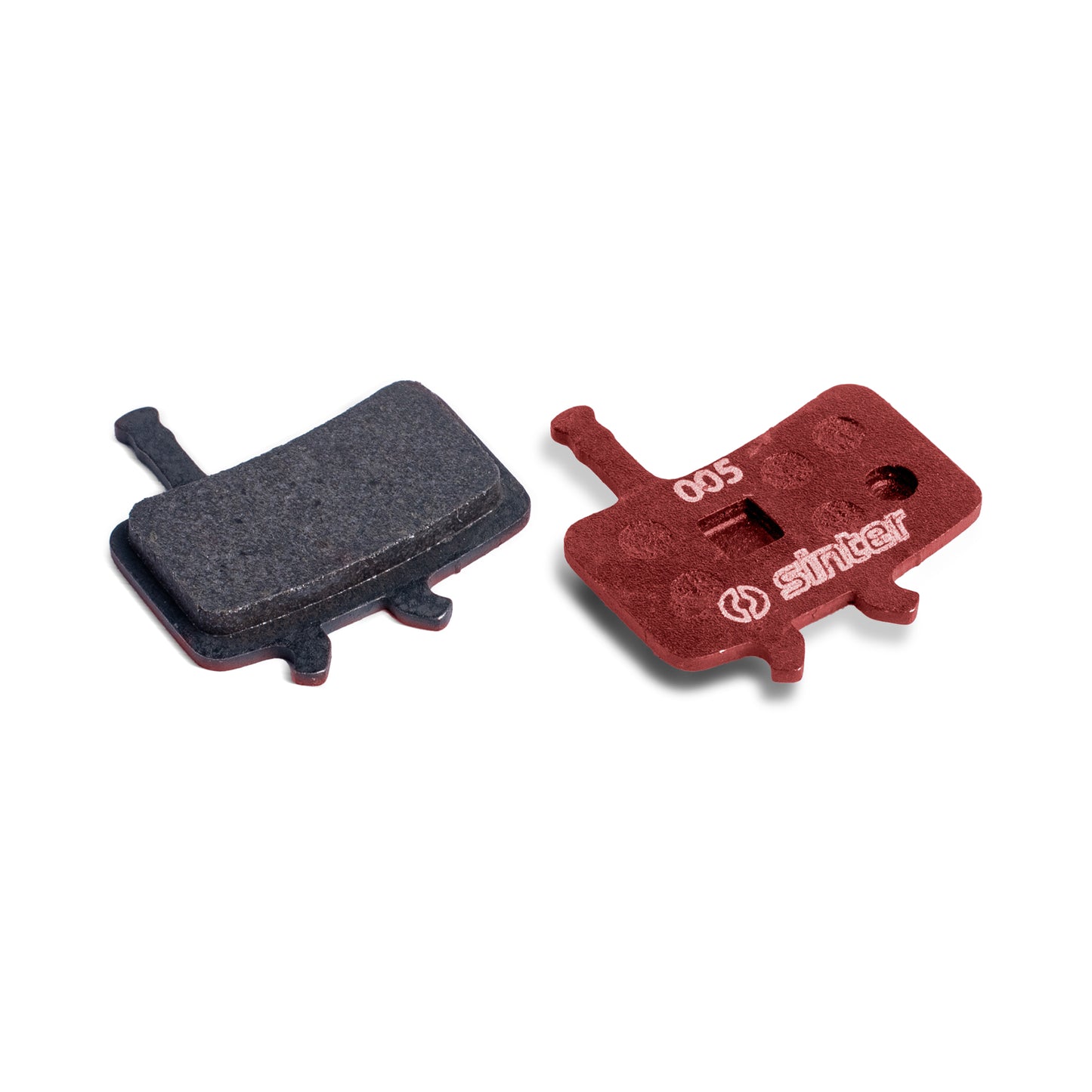
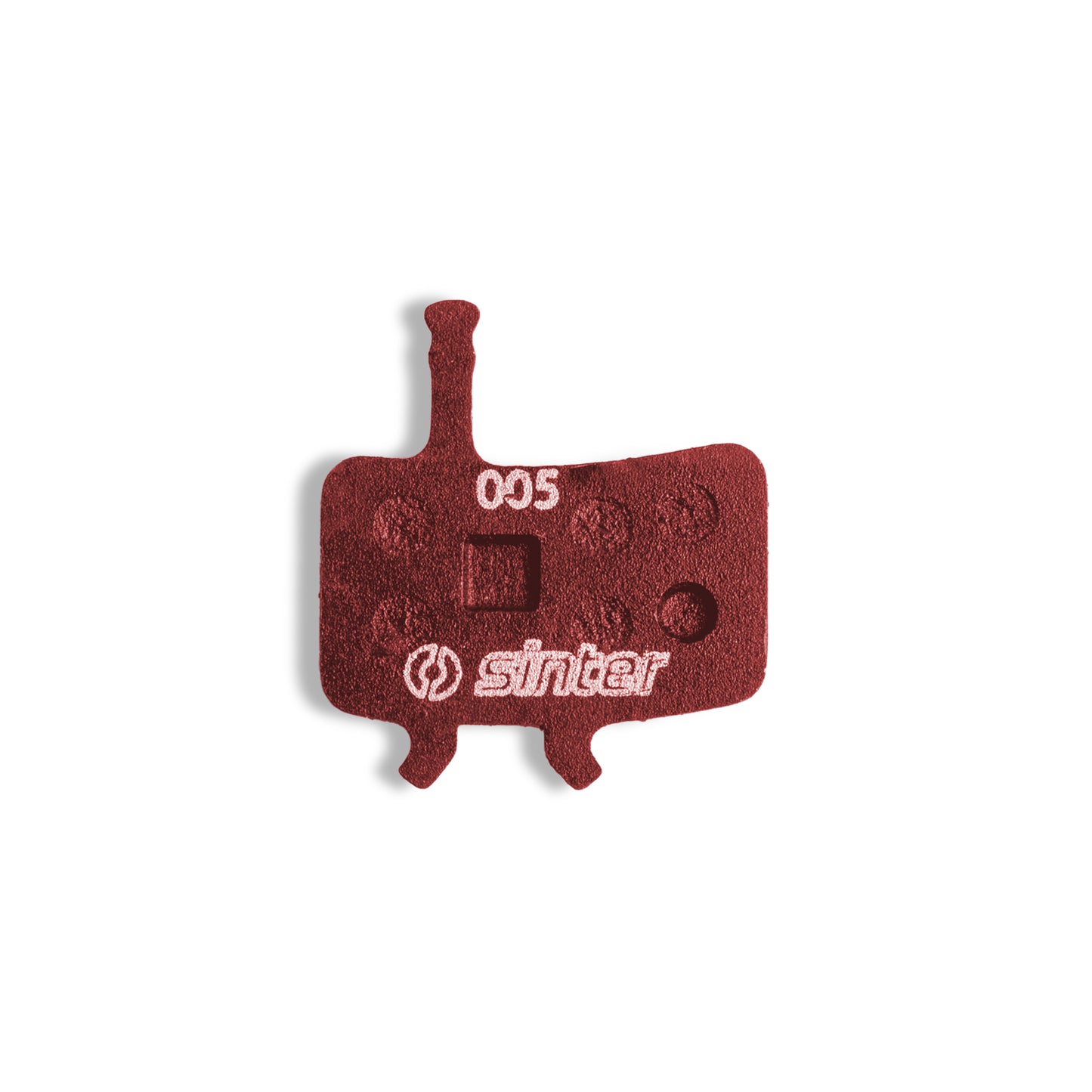
Red s514
The all-round upgrade from OEM. Consistent performance, smooth modulation and lever feel, excellent durability.
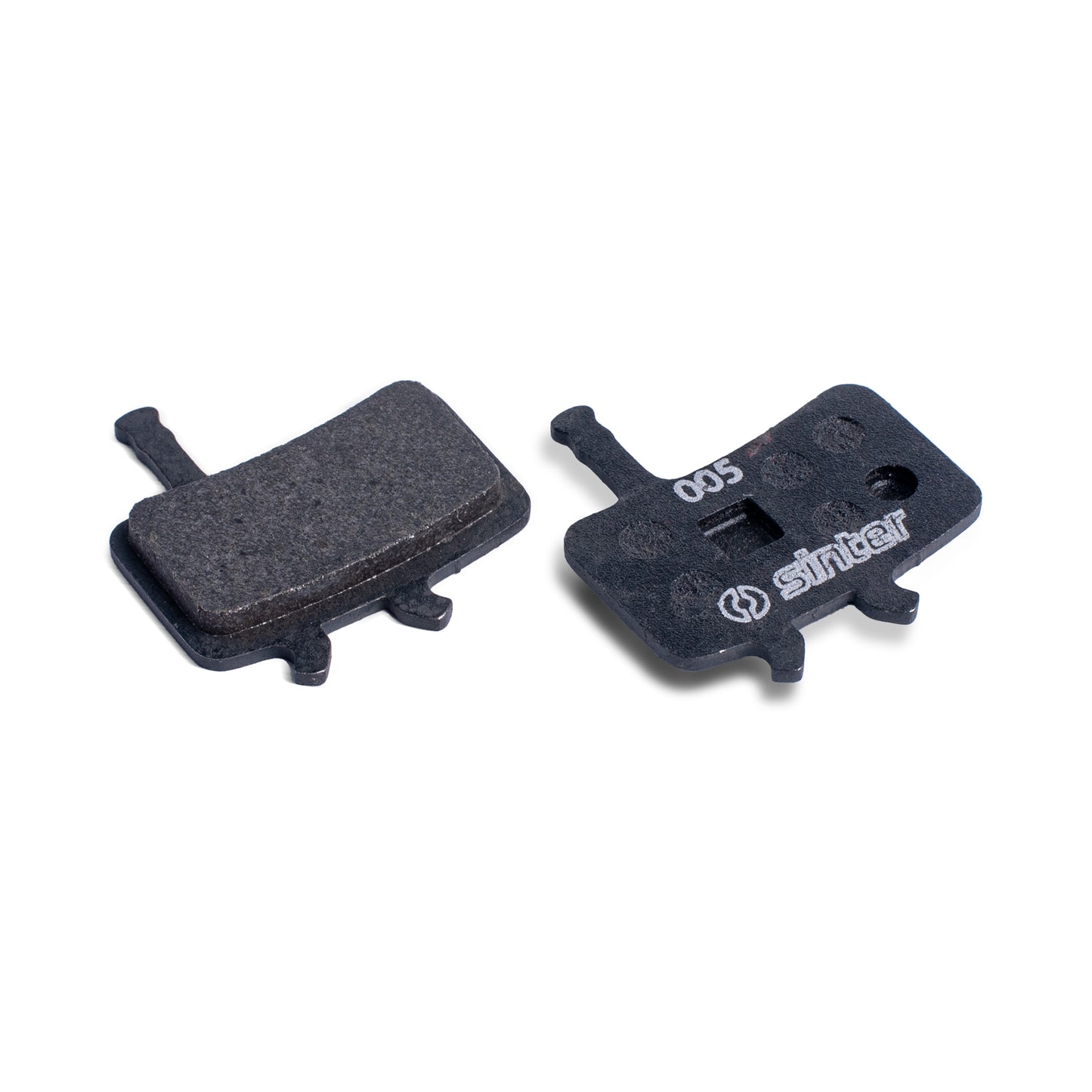
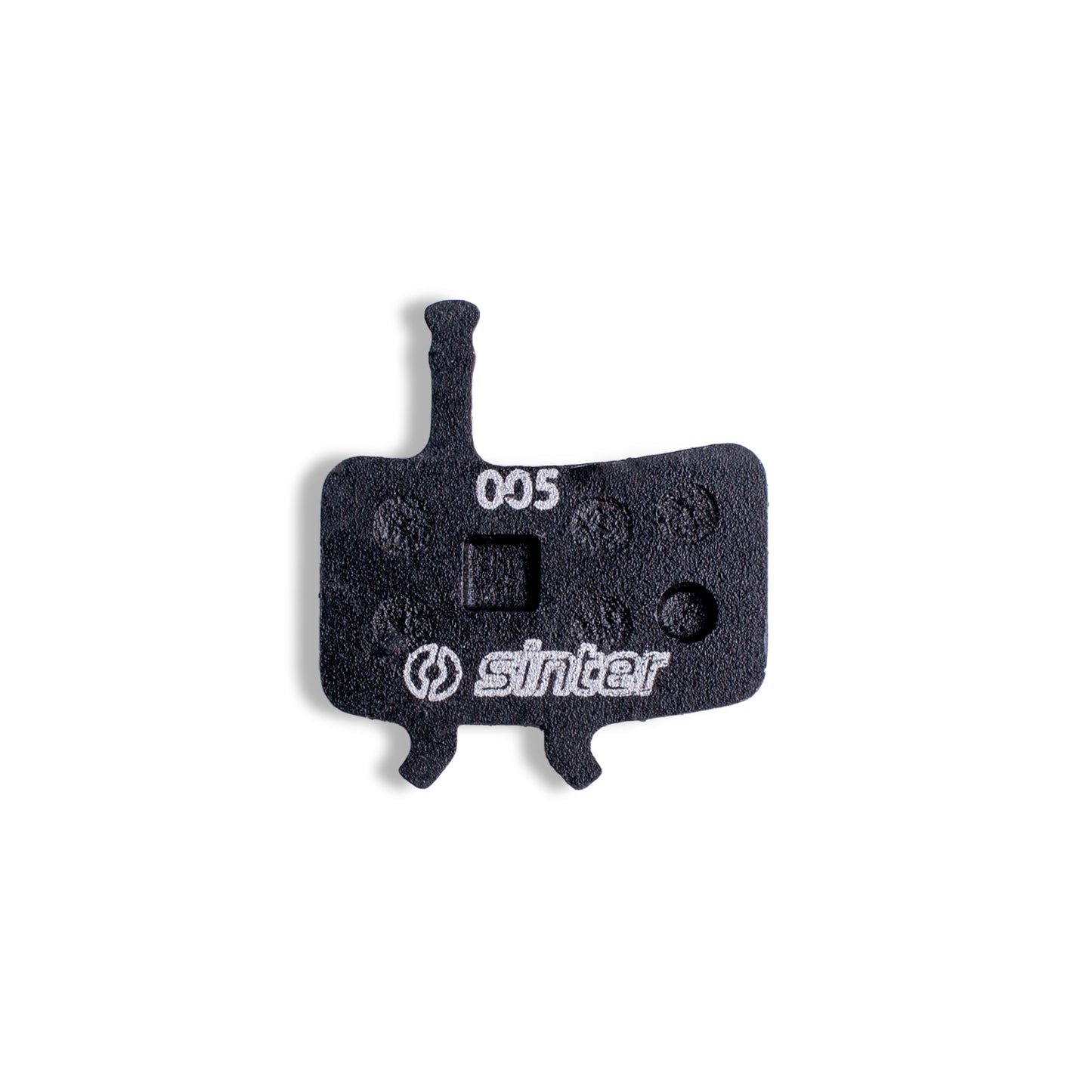
Black s550
Great-value organic compound with ceramic particles — a soft, controlled bite and strong resistance to wear.
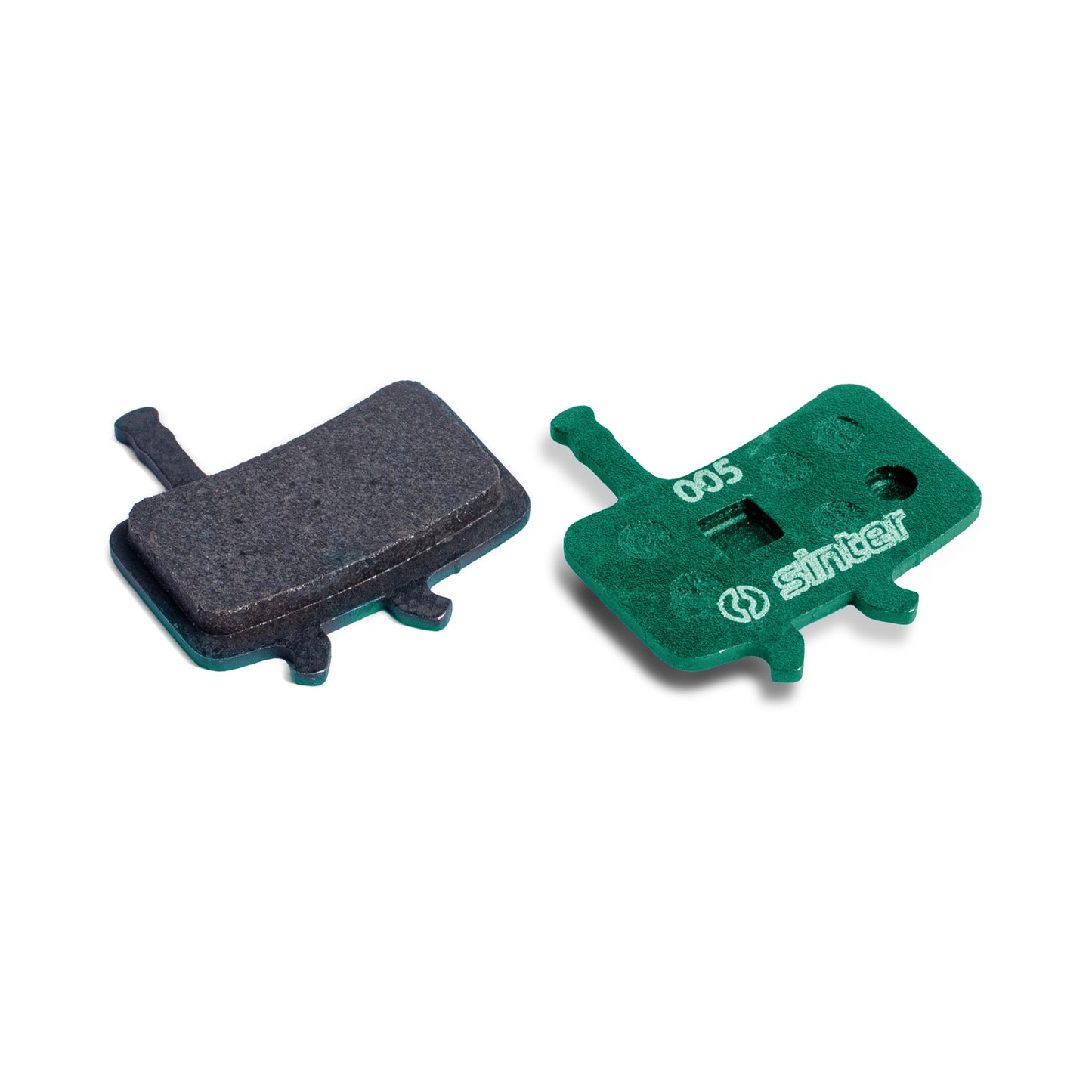
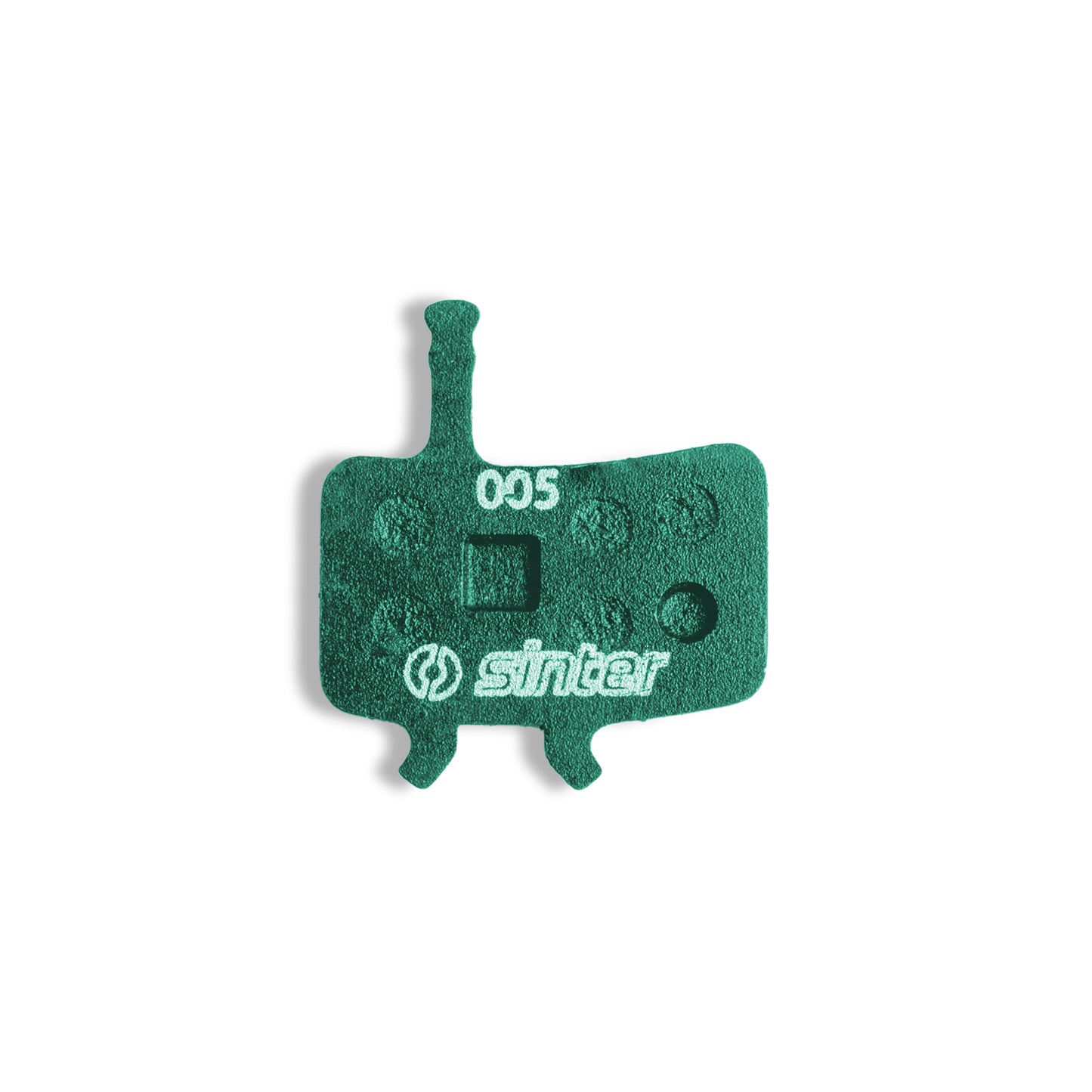
Green s2032
Sinter's race compound. A state-of-the-art material for braking aggressively while keeping ultimate power and control across temperatures.
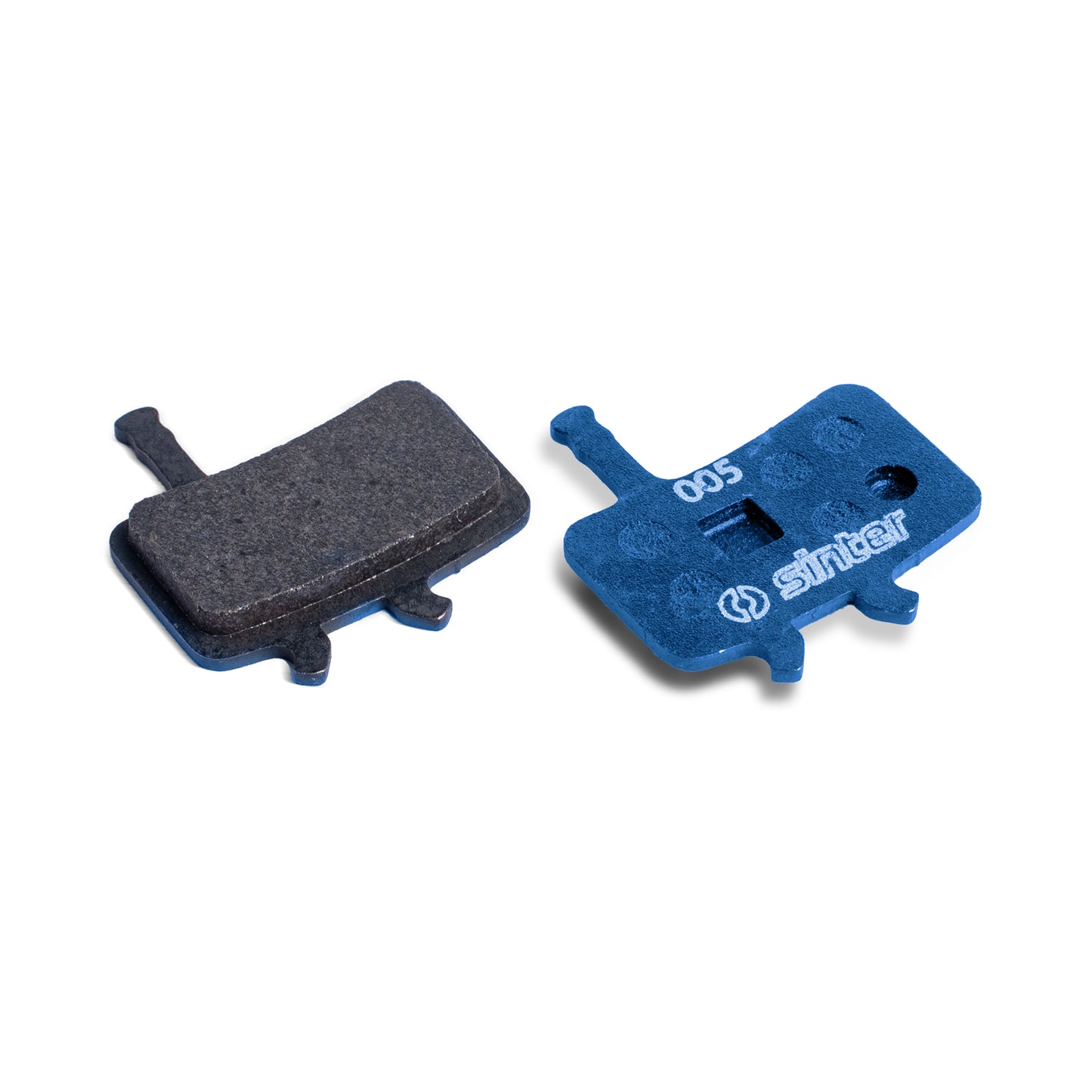
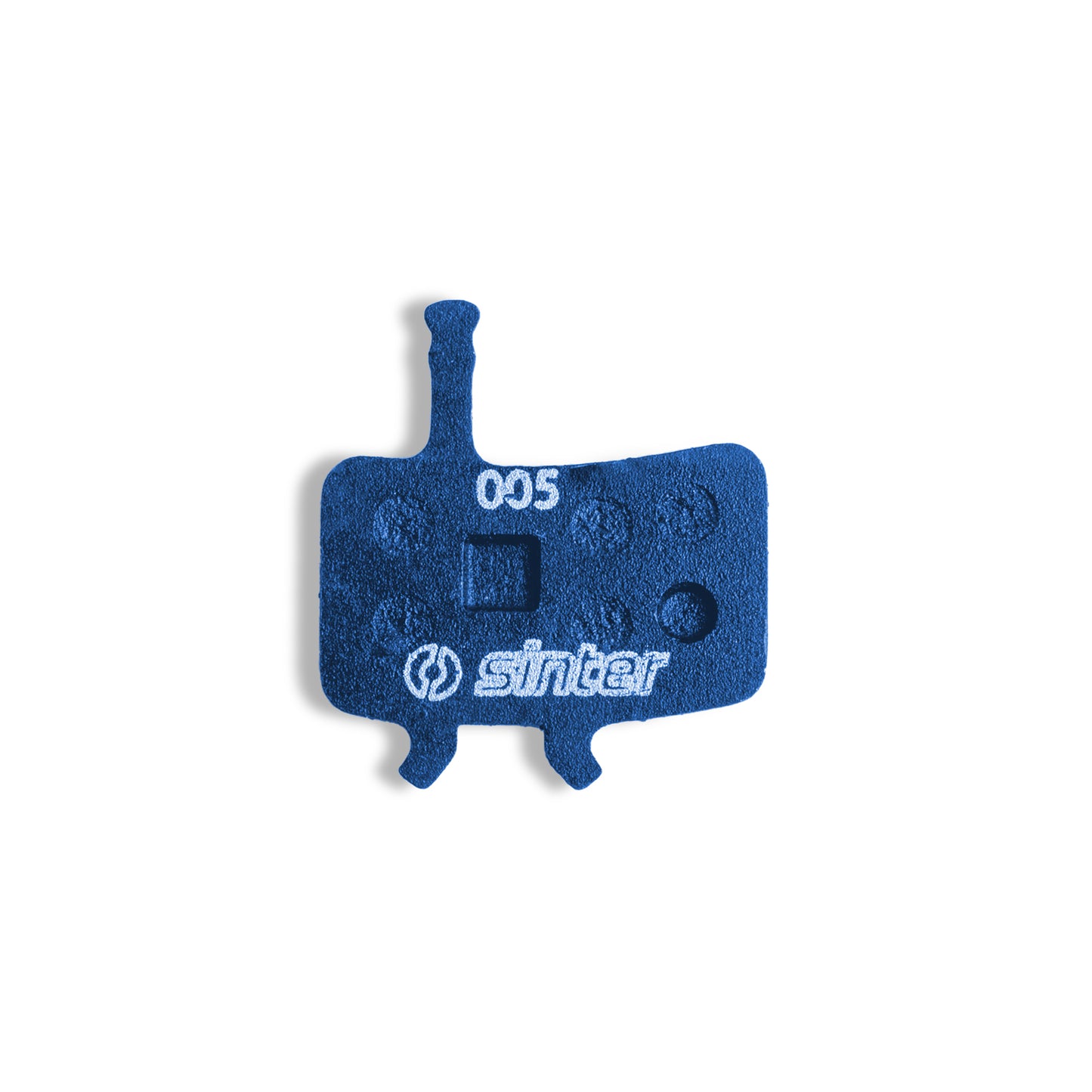
Blue s530
For e-bikes, DH and Enduro. Consistent power with high modulation, lever comfort and slow wear across all temperatures.
Our pick for this brake
Also in the Sinter range: the Cargo pad, built for cargo bikes and heavy daily city loads.
Specs
- Compound: organic (ceramic-loaded, resin-bound)
- Backing plate: steel
- Pad shape: Avid Juicy / BB7
- Pads per package: 2 (one caliper)
- Includes spring
Includes: 2 pads (left and right), spring, bedding-in instructions.
Made in Ljubljana, distributed by Euro Toolworks
Sinter has been making friction materials in Ljubljana since 1969, and developed the first disc brake pads in the former Yugoslavia in 1972. The plant supplies organic-compound pads to motorcycle OEMs alongside the bicycle aftermarket. Unior has been forging hand tools in Zreče since 1919, and sponsors professional road and mountain-bike race teams. Euro Toolworks is the importer behind both brands in North America. The Model 005 is the catalog's long-tail pad; the one that keeps a 2008 cyclocross BB7 or a 2010 trail-bike Juicy 7 working another season instead of replacing the whole brake system.
Pro tip from our mechanics
The BB7 specifically benefits from a careful cable-tension check after a pad swap: fresh pads change the cable-pull-to-pad-engagement geometry slightly, and the BB7's inboard and outboard caliper screws (the static pad and the cable-driven pad) want to be reset against the fresh pad surface, not the worn one they were last centered against. A few minutes with the barrel adjuster and the inboard hex screw after install pays back over the next few hundred miles.
Which compound suits your riding and which Sinter model fits your brake is covered in How to choose Sinter brake pads →.
FAQ
Which Avid brakes does the Sinter Model 005 fit? This Model 005 pad is made for Avid calipers. Avid has used a handful of pad shapes over the years, so the reliable check is to remove your current pad and line up the backing plate, mounting tab, and retaining-pin hole against this one rather than going by name alone. A model number stamped on the old pad makes confirmation even easier. If you are not sure it matches, send us a clear photo of the worn pad and we'll verify the fit before you order.
Are these sintered-metal or organic pads? They are organic, despite the Sinter brand name. Sinter only make organic pads, not sintered-metal ones. Organic compounds run cooler at the caliper, give more lever feedback and modulation, stay quieter, and cause less rotor wear and vibration than sintered pads. For the full picture of how sintered pads are made and when each compound makes sense, read our guide to sintered vs organic brake pads.
Do I need to bed in new pads before riding hard? Yes. Fresh pads need a bedding-in process to transfer an even layer of pad material onto the rotor and reach full braking power. Until that is done, braking will feel weak and can be grabby. Follow the linked Disc Brake Pad Bedding In instructions before your first real ride.
Why won't the new pads fit back into the caliper? As the old pads wore down, the caliper pistons crept outward to take up the gap, so the slot is now too narrow for fresh, full-thickness pads. Before fitting the Model 005 pads, push the pistons back into the caliper body (spread them apart) to make room. A clean tire lever or a dedicated pad spreader works well for this.
 Tech Tips
Disc Brake Pad Bedding In Procedure
Tech Tips
Disc Brake Pad Bedding In Procedure
From the press
The Sinter pads demonstrated the most consistent performance with the least fade, maintaining effective braking under high heat.
The Sinter pads – which are organic, by the way – improved deceleration on all models, but to very different degrees.
