


Cassette teeth wear invisibly until a fresh chain skips under load. Drape the gauge's calibrated chain over a cog and press the last link toward the next tooth valley with about 100 N (10 kg) of force: drops in, the cog is good; sits high, it's worn out. Reads HG and IG sprockets from 12 to 21 teeth.
In stock
Couldn't load pickup availability
Free US shipping on orders $75+
Some exceptions apply — see shipping policy
Unior has made hand tools in Zreče, Slovenia since 1919 and sponsors professional road and mountain-bike race teams.



On this page
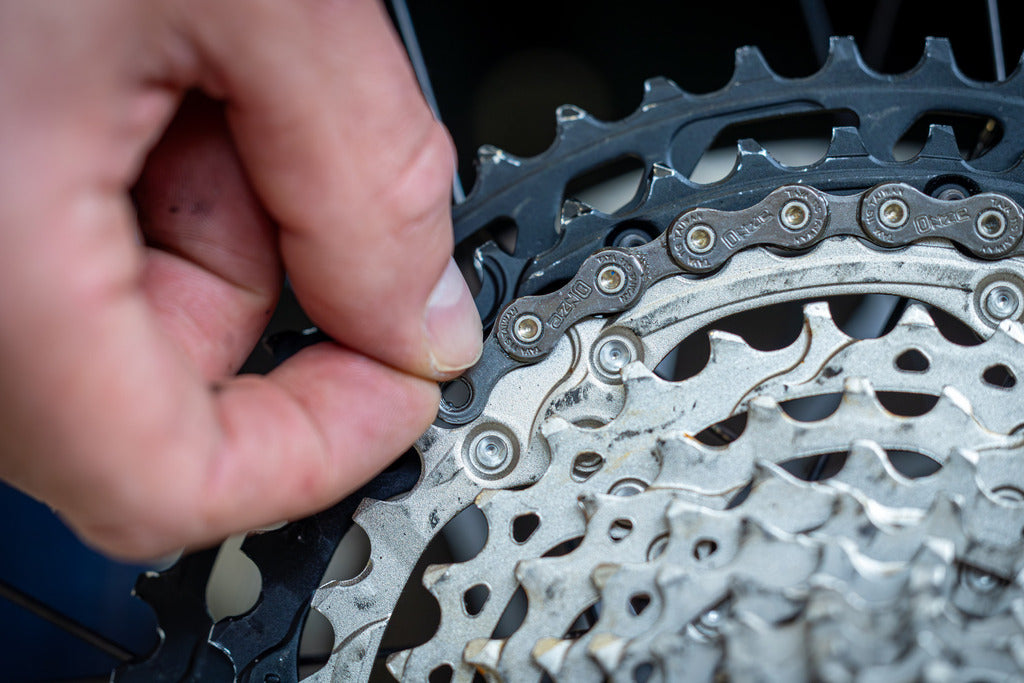
A cassette can wear out without any single cog looking obviously bad. The teeth don't break or visibly bend; they get reshaped; under-cut on the trailing edge, hooked on the leading edge; by a chain that's been ridden past its replacement point. The chain gets replaced, the new chain doesn't fit the reshaped teeth, and the bike skips under load on the cogs the rider uses most. The Sprocket Wear Indicator 1658/2P is the gauge that catches the cassette before the next chain.
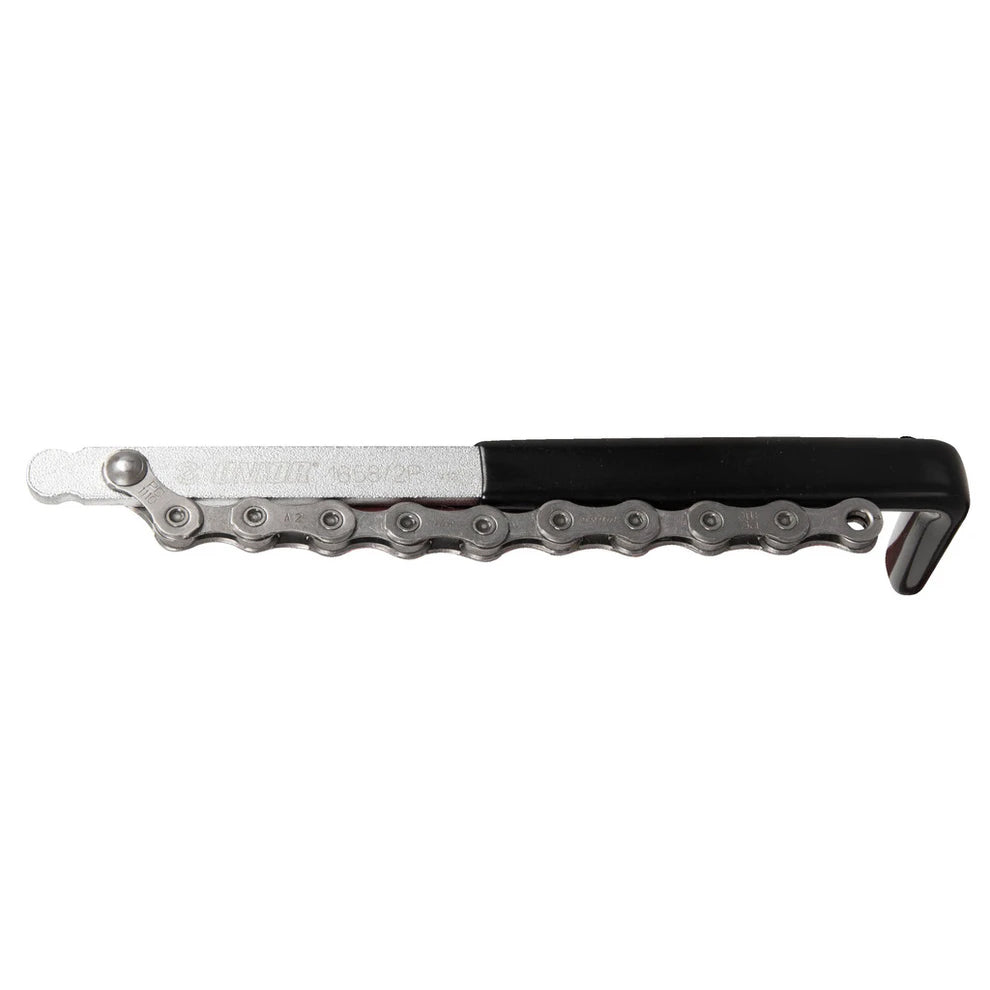
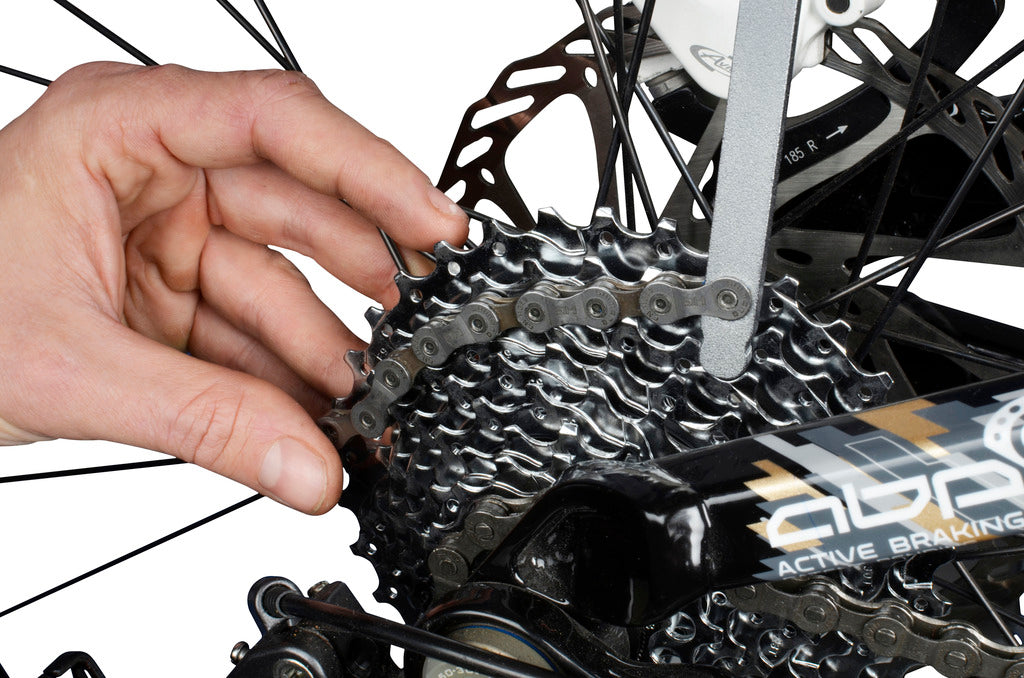
The tool is a chrome-plated steel bar with a calibrated length of chain attached to it. The chain drapes over a cog; the tip of the steel bar plants in the next tooth valley; you apply about 100 N of force (10 kg / 22 lb) to the end of the bar and try to press the last link down into a third tooth valley. If the link drops in easily, the cog still has the geometry a new chain expects; the cassette is in its service window. If the link sits high and resists pressing into the valley, the cog teeth have been reshaped enough that fresh chain won't seat properly; the cassette is done.
It's a 30-second check per cog. We typically read the middle three or four cogs on a road cassette and the climbing cogs on an MTB cassette; the ones the rider actually loads under power. The first cog to fail is the first one they've been hammering.
How to read it
- Remove the chain from the cassette (or just shift the bike's chain off the cassette onto the chainstay clip).
- Drape the gauge's chain segment over the cog you want to read. Land the chrome bar's tip in the tooth valley directly next to the chain's last link.
- Make sure the very last link of the gauge chain is not yet touching the cog; that's the link you're going to press down.
- Press the last link down toward the third tooth valley with about 100 N (10 kg) of force at the end of the bar.
If the link drops in: the cog is still good. If it resists and sits high: the cog is past its window. Repeat on the next cog. Any cog that fails the read (the link can't reach the valley) is worn past Unior's replace point; plan a cassette replacement.
The 1658/2P is paired with the Chain Wear Indicator 1644/6 as a complete drivetrain-wear toolkit. The chain indicator catches the chain at 0.5% or 0.75% elongation depending on speed; the 1658/2P catches the cassette wear that resulted from running the chain too long.
When to read your cassette
- After every chain replacement, before installing the fresh chain
- Before a planned cassette change, to confirm the cassette is actually due
- Any time the bike skips under load on specific cogs with a new chain
- During seasonal service or whenever the rider reports drivetrain feel changing
Compatibility
- Designed for HG and IG sprockets (standard derailleur-cassette tooth geometry)
- Reads 12- through 21-tooth sprockets (the calibrated range)
- Reads with the cassette mounted on the wheel
- The read force is hand pressure — about 100 N (10 kg); no torque wrench needed
Specs
- Chrome-plated steel bar with calibrated chain segment; 270 mm long, 77 g
- ~100 N (10 kg) reference force for the gauge read
- Pairs with chain-wear gauge for full drivetrain monitoring
- Article number: 1658/2P
Built in Zreče, Slovenia
Unior has been forging hand tools in Zreče since 1919, and sponsors professional road and mountain-bike race teams. The 1658/2P is the diagnostic tool that closes the drivetrain-wear loop. Chain-wear gauges have become standard in workshops over the last decade; the cassette equivalent is less common, partly because the visual check (look at the teeth) is misleadingly easy to fall back on. The 1658/2P gives you a yes-or-no answer in less time than the visual check takes, and the answer is right.
Pro tip from our mechanics
Most home mechanics replace the chain on time and skip the cassette read; the bike skips under load with the new chain, and the cassette gets replaced anyway, but with a frustrated trip back to the shop. Reading the cassette before installing the fresh chain; 90 seconds across the loaded cogs; saves that second trip. The cassette-replacement workflow has more on when each tool reads what: When and how to replace your cassette →
FAQ
Which cassettes does the 1658/2P work with? Unior specifies HG and IG sprockets from 12 to 21 teeth — the standard tooth geometry on derailleur cassettes. The check is per-cog, so you read each sprocket individually with the cassette still mounted on the wheel.
How much force do I apply during the check? About 100 N — roughly 10 kg or 22 lb of hand pressure — applied to the tool in the direction of sprocket rotation. It's a by-feel push, not a torque setting, so no torque wrench is involved.
How do I tell a good cog from a worn one? If the last chain link skips easily down onto the cog, the sprocket is in good condition and will run flawlessly even with a new chain. If the link sticks on the tip of the neighbouring tooth or has to be forced, the sprocket is worn out and should be replaced. If the chain falls off the cog while you apply force, the sprocket is heavily worn and replacement is overdue.
What is the tool made of? A premium flex plus carbon steel bar, trivalent chrome plated to ISO 1456:2009, with a calibrated chain segment attached. The tool is 270 mm long, weighs 77 g, and carries Unior's lifetime warranty.
 Tech Tips
When and how to replace your cassette
Tech Tips
When and how to replace your cassette
