

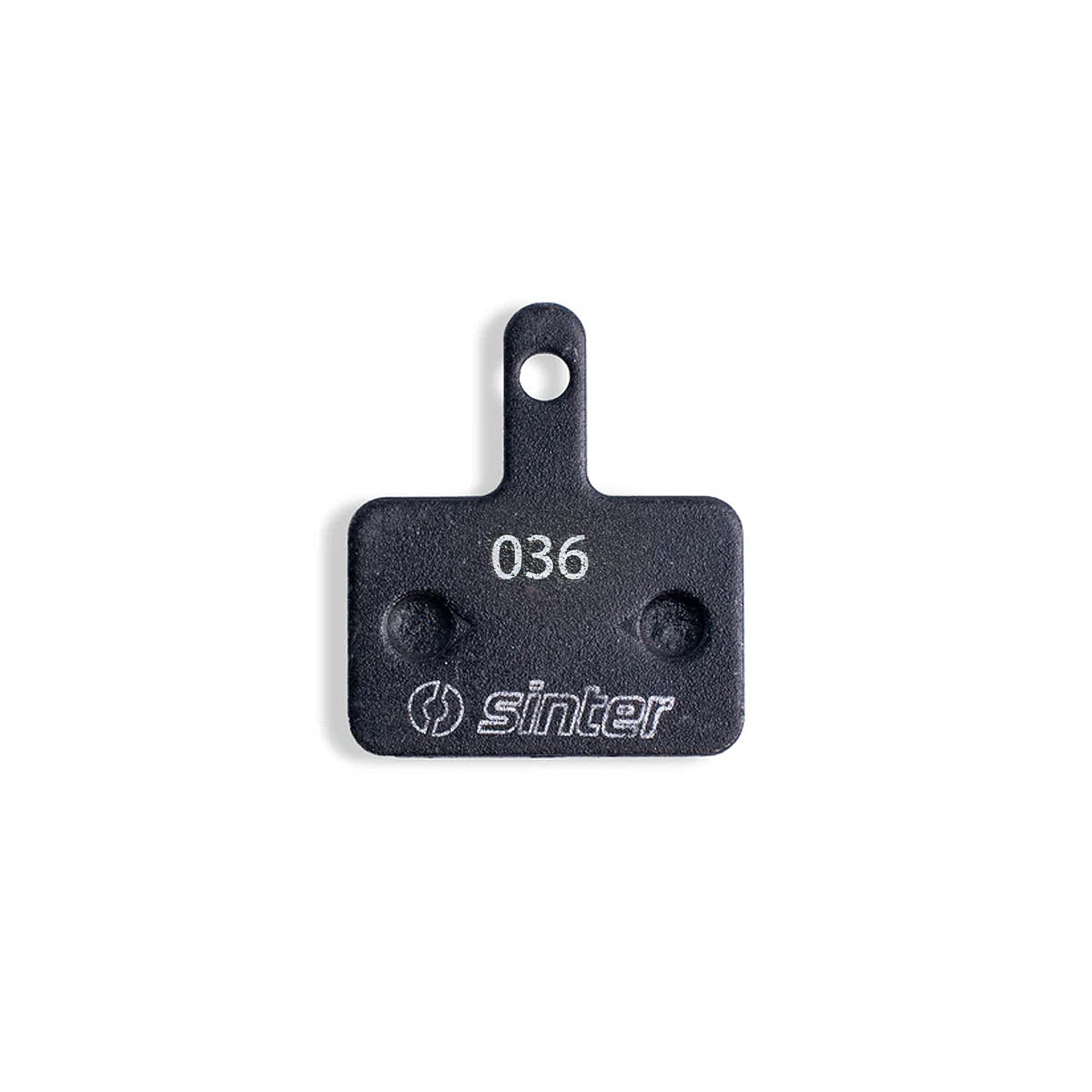
Organic replacement pads for the Tektro two-piston hydraulic caliper used on many electric cargo and family bikes. Despite the name, Sinter only make organic pads, not sintered-metal, so they run cooler and modulate the sustained, moderate braking a loaded bike asks for, with predictable bite and less rotor wear. This fitment ships in one compound, set below.
Out of stock
Couldn't load pickup availability
Free US shipping on orders $75+
Some exceptions apply — see shipping policy
Forged in Zreče, Slovenia since 1919. Sponsors professional road and mountain-bike race teams.

On this page
Tektro's two-piston cargo-bike caliper is the brake that's increasingly common on the new generation of electric cargo bikes; Riese & Müller, Tern, Urban Arrow, Yuba, and the OE platforms that sit behind a long list of last-mile delivery and family-cargo builds. The Sinter Model 036 is the organic-compound pad built specifically for cargo-bike braking on the Tektro 2-piston caliper.
What's in the kit
One caliper's worth of pads (2 pads, left and right) for the Tektro two-piston cargo pocket. The kit ships with bedding-in instructions. Order two kits if you're replacing front and rear pads on the same service.
Fits
Tektro 2-piston cargo-bike caliper:
- Tektro two-piston cargo-spec hydraulic calipers; the platform Tektro builds for electric cargo bike OE channels
Cargo bikes typically run 180 mm or 203 mm rotors paired with a higher-mass system (bike plus cargo plus rider), and the pad's working pattern is sustained moderate braking rather than short hard inputs. The Model 036 is designed for that load profile specifically.
Compound and feel
Sintered pads are the conventional answer for heavy-load braking, but cargo-bike use cases actually favor organic compound. Cargo riders work the brake with sustained moderate pressure on long downhill runs; the resin matrix modulates that pressure linearly, where a sintered pad's higher bite-onset force is harder to control under load. Sinter's organic ceramic-loaded compound stays inside its working envelope on the sustained-load pattern cargo-bike braking creates, bites predictably from the lever, and is kinder to the rotor than sintered alternatives.
Choosing your compound
Despite the name, every Sinter compound is organic — not a sintered-metal pad. Organic pads run cooler at the caliper, give more lever feel and modulation, stay quiet, and are gentler on your rotors. The color of the backing plate tells you the compound.
Red s514
The all-round upgrade from OEM. Consistent performance, smooth modulation and lever feel, excellent durability.
Black s550
Great-value organic compound with ceramic particles — a soft, controlled bite and strong resistance to wear.
Green s2032
Sinter's race compound. A state-of-the-art material for braking aggressively while keeping ultimate power and control across temperatures.
Blue s530
For e-bikes, DH and Enduro. Consistent power with high modulation, lever comfort and slow wear across all temperatures.
Our pick for this brake
Also in the Sinter range: the Cargo pad, built for cargo bikes and heavy daily city loads.
Specs
- Compound: organic (ceramic-loaded, resin-bound)
- Backing plate: steel
- Pad shape: Tektro 2-piston cargo
- Pads per package: 2 (one caliper)
- Built specifically for cargo-bike applications
Includes: 2 pads (left and right), bedding-in instructions.
Sinter's Ljubljana plant, Unior's Zreče forge
Cargo bikes are one of the fastest-growing categories in the European bicycle market, and the Slovenian organic-compound supply chain has scaled with them. Sinter has been making friction materials in Ljubljana since 1969, and developed the first disc brake pads in the former Yugoslavia in 1972. Unior has been forging hand tools in Zreče since 1919, and sponsors professional road and mountain-bike race teams. The Model 036 is Sinter's commitment to the cargo-bike segment; a pad compound designed for sustained-load braking on a heavy bike, not a sintered pad scaled from a DH MTB platform.
Pro tip from our mechanics
Cargo bikes are often serviced less frequently than enthusiast bikes because the rider is a parent or delivery operator, not a wrench. A Sinter Model 036 pad swap is the right moment to also check the rotor wear, the caliper bleed status, and the rotor-bolt torque (the cargo-load environment loosens rotor bolts faster than enthusiast use does). Combined, those checks add fifteen minutes to a pad swap and prevent the most common “brake feels weak six months later” complaints from cargo-bike owners.
How to read the fitment table and choose the right compound for your riding is laid out in How to choose Sinter brake pads →.
FAQ
Which brakes does the Sinter Model 036 fit? The Model 036 pad is made for Tektro two-piston hydraulic calipers, the kind commonly found on cargo and e-bikes. Tektro uses several pad shapes, so don't rely on the brand name alone: pull a worn pad and compare the backing-plate outline, the tab, and the pin hole with this one. A model number stamped on the old pad is a helpful cross-check. If the fit is at all unclear, send us a clear photo of the worn pad and we'll confirm it before you order.
These are called Sinter, so are they sintered metal pads? No. Despite the name, Sinter only make organic pads, not sintered-metal ones. The Model 036 is an organic ceramic-loaded compound. For a heavy cargo bike that's an advantage: the organic compound runs cooler at the caliper, modulates the sustained moderate braking a loaded bike needs, stays quieter, and wears the rotor less than a sintered pad would. For the full picture of how sintered pads are made and when each compound makes sense, read our guide to sintered vs organic brake pads.
How do I bed in the new pads? Once they're installed, find a flat, traffic-free stretch and ride up to a moderate speed, then brake firmly but smoothly to near-walking pace without locking the wheel. Repeat that ten to twelve times, then a few harder stops. This transfers an even layer of pad material onto the rotor so you get full, consistent bite. Expect a little reduced power for the first few stops until that layer builds, which matters more on a cargo bike carrying weight.
The new pads won't fit in the caliper. What's wrong? As the old pads wore down, the caliper pistons crept outward to keep contact with the rotor, so there isn't room for thicker fresh pads. Before fitting the Model 036, push the pistons back into the caliper body to make space. Remove the old pads first, then use a flat tool or a dedicated piston spreader to ease the pistons back evenly. Take your time so you don't damage the seals, and check the reservoir level if it's near full.
 Tech Tips
Disc Brake Pad Bedding In Procedure
Tech Tips
Disc Brake Pad Bedding In Procedure
From the press
The Sinter pads – which are organic, by the way – improved deceleration on all models, but to very different degrees.
