

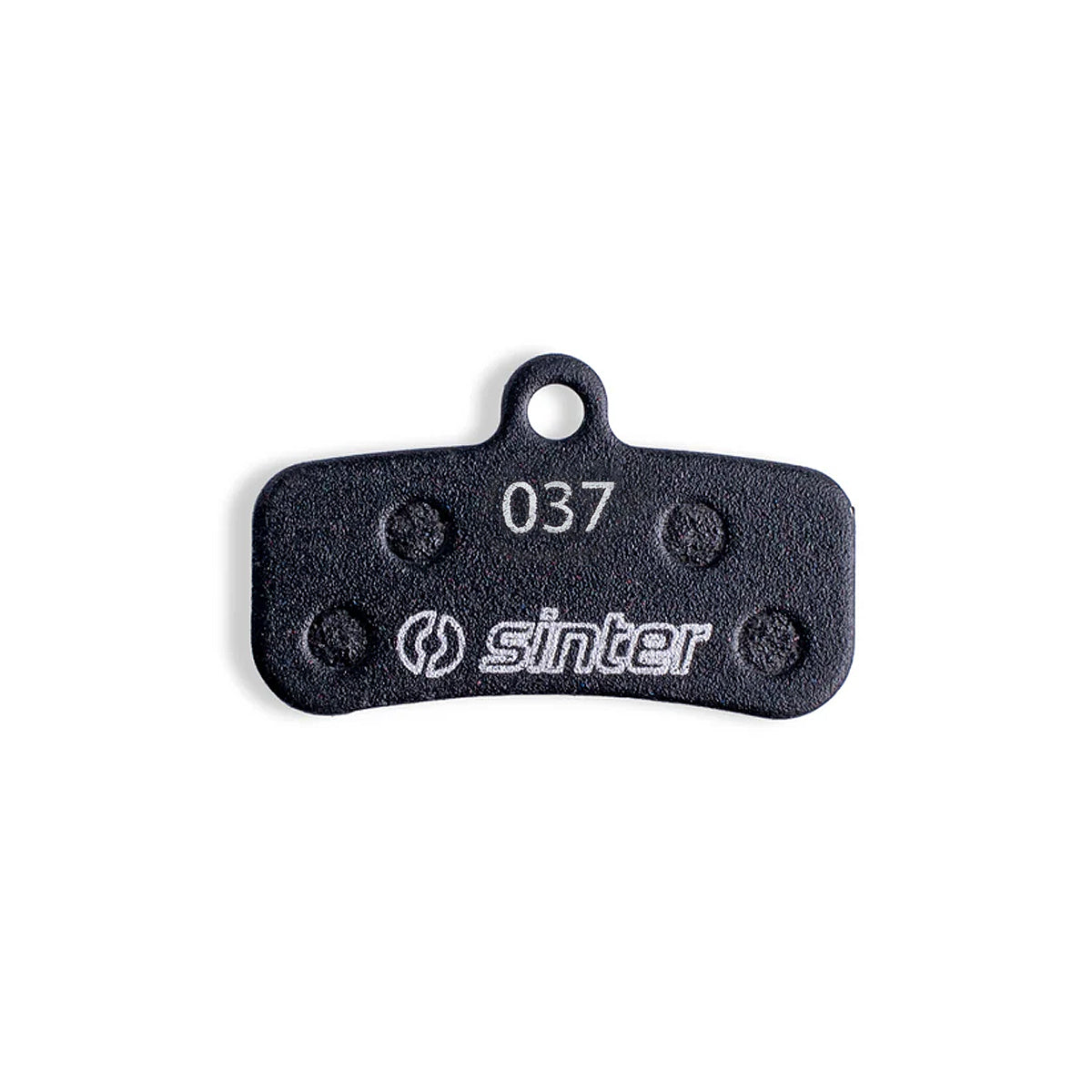
Sinter organic replacement pads for the Tektro four-piston cargo-bike caliper. The Cargo s590 compound, a copper-free formula based on Sinter's Blue s530, is built for heavy loads and long pad life, which suits the sustained, loaded braking a cargo bike does. The compound is fixed for this fitment: Cargo s590.
Out of stock
Couldn't load pickup availability
Free US shipping on orders $75+
Some exceptions apply — see shipping policy
Founded in 1969, Sinter makes brake pads in Ljubljana, Slovenia.

On this page
Tektro's four-piston cargo-bike caliper is the heavy-duty version of the same cargo-bike brake platform that the Model 036 two-piston covers. Four pistons, more pad area, designed for the heaviest cargo bikes; long-tail family cargo, two-wheeled delivery bikes hauling commercial loads, and the new generation of long-john cargo bikes carrying multiple passengers. The Sinter Model 037 is the organic-compound pad for that four-piston cargo caliper.
What's in the kit
One caliper's worth of pads (2 pads, left and right) for the Tektro four-piston cargo pocket. The kit ships with bedding-in instructions. Order two kits if you're replacing front and rear pads on the same service.
Fits
Tektro 4-piston cargo-bike caliper:
- Tektro four-piston cargo-spec hydraulic calipers; the high-load platform behind heavy cargo bike OE channels
The four-piston caliper increases the pad surface area against the rotor and reduces the per-piston load, which keeps pad temperatures lower under the sustained heavy-cargo braking pattern. Cargo-bike OE builders specify this caliper for the heaviest gross-weight applications.
Compound and feel
Sinter's organic ceramic-loaded compound on a four-piston cargo caliper is the right compound choice for the same reason it's the right choice on the two-piston cargo caliper: cargo-bike riding is dominated by sustained moderate-pressure braking, not single hard stops, and organic-matrix modulation outperforms sintered pad raw heat capacity in that pattern. The Model 037's organic compound stays inside its working envelope on a fully-loaded long-tail cargo descent, where the larger pad surface area and four-piston caliper layout do the bulk of the thermal management work.
Choosing your compound
Despite the name, every Sinter compound is organic — not a sintered-metal pad. Organic pads run cooler at the caliper, give more lever feel and modulation, stay quiet, and are gentler on your rotors. The color of the backing plate tells you the compound.
Red s514
The all-round upgrade from OEM. Consistent performance, smooth modulation and lever feel, excellent durability.
Black s550
Long-wearing organic compound. Predictable braking across temperatures in all conditions, including mud and wet.
Green s2032
Sinter's race compound. A state-of-the-art material for braking aggressively while keeping ultimate power and control across temperatures.
Blue s530
For e-bikes, DH and Enduro. Consistent power with high modulation, lever comfort and slow wear across all temperatures.
Our pick for this brake
Also in the Sinter range: the Cargo pad, built for cargo bikes and heavy daily city loads.
Specs
- Compound: organic (ceramic-loaded, resin-bound)
- Backing plate: steel
- Pad shape: Tektro 4-piston cargo
- Pads per package: 2 (one caliper)
- Built specifically for cargo-bike applications
Includes: 2 pads (left and right), bedding-in instructions.
Sinter Ljubljana, since 1969
The same Slovenian plant that supplies Sinter pads to motorcycle OEMs at scale designs the bicycle compound for the use cases the bicycle world is actually asking for; including the long-tail cargo bike segment that conventional bicycle-pad makers have under-served. Sinter has been making friction materials in Ljubljana since 1969, and developed the first disc brake pads in the former Yugoslavia in 1972. Unior has been forging hand tools in Zreče since 1919, and sponsors professional road and mountain-bike race teams. Euro Toolworks distributes both brands in North America. The Model 037 is the four-piston cargo pad in this catalog, sized for the long-tail family cargo and commercial-delivery builds the bicycle market is growing into.
Pro tip from our mechanics
Four-piston cargo calipers reward a careful piston-spread step more than two-piston calipers do, because the four pistons can retract unevenly over a season of cargo use. Before installing the fresh Sinter pads, work each piston individually back to a uniform retracted position with a piston-spreader; uneven retraction on a fully-loaded cargo bike produces the characteristic “rear brake drags on flats” complaint within a few weeks of pad-life.
Compound choice, fitment, and where the Elite line fits in the catalog are covered in How to choose Sinter brake pads →.
FAQ
Which brakes does the Sinter Model 037 fit? This pad is made for Tektro four-piston hydraulic calipers, the heavier-duty units used on cargo and e-bikes, so it suits the four-piston version rather than a two-piston caliper. Because Tektro uses more than one pad shape, the reliable check is to remove a worn pad and match the backing plate, mounting tab, and retaining-pin hole to this one, or read the model number stamped on the old pad. The physical shape is what matters. If you are unsure, send us a photo of the worn pad and we'll verify the fit.
Are these sintered or organic pads? They are organic. Despite the name, Sinter only make organic pads, not sintered-metal. The Cargo s590 compound is an organic, resin-bonded material: a copper-free formula based on Sinter's Blue s530. Compared with sintered pads, organic compounds run cooler at the caliper, give more lever feedback and modulation, stay quieter, and cause less rotor wear and vibration. For the full picture of how sintered pads are made and when each compound makes sense, read our guide to sintered vs organic brake pads.
How do I bed in the new pads? Bedding transfers an even layer of pad material onto the rotor so the pads reach full power. After fitting, ride up to a moderate speed on flat ground and brake firmly to nearly walking pace without locking the wheel, then release. Repeat that ten to twenty times, letting the brake cool between efforts and avoiding a full stop with the lever held. Expect bite to build over the first few rides; with a loaded cargo bike, give it extra passes.
Why do I have to push the pistons back before fitting new pads? As the old pads wore, the caliper pistons advanced to keep contact with the rotor. New pads are thicker, so the pistons sit too far out and the new pads will not clear the rotor. Before installing, push or spread the pistons back to a uniform retracted position with a piston spreader or a plastic tire lever. On this four-piston caliper, work each piston back individually, since they can retract unevenly over a season of cargo use.
 Tech Tips
Disc Brake Pad Bedding In Procedure
Tech Tips
Disc Brake Pad Bedding In Procedure
From the press
The Sinter pads – which are organic, by the way – improved deceleration on all models, but to very different degrees.
