Hammers and striking tools in the bike shop: which face, which weight, which job
Light taps for headsets and bearing seats, dead-blow for piston work, punches for pins. The right strike makes the part go where you want it.
On this page
A bike shop hammer isn’t the same tool as a carpenter’s hammer or a mechanic’s-bay claw hammer. The jobs are different: bicycle work is mostly about seating a part; a headset cup into a head tube, a pin into a chain, a chisel against a stuck nut; without damaging the surrounding components. That means weight, face material, and rebound behavior all matter, and a complete bike-shop hammer collection is more than one tool.
This is the framework we use to decide which hammer (or punch, or chisel) earns its space. The tools themselves are in our hammers, punches and chisels collection.
The bike-shop striking jobs
Three job categories cover most bike-shop striking work:
Seating press-fit components
Headset cups install with a press, but small adjustments after the press is removed sometimes need a tap. Bearing assemblies that aren’t fully seated benefit from a light vertical strike. Stuck-but-not-frozen quick-release skewers can be tapped to seat. Threadless headset spacers compress under a controlled tap.
The right tool: a dead-blow hammer that absorbs rebound. The dead-blow’s polyurethane shell contains lead or steel shot inside, which absorbs the strike energy and prevents the head from bouncing back. The fastener moves; the hammer doesn’t.
Driving pins
Chain rivet pins (when not using a master link). Derailleur hanger studs. Suspension fork seal heads.
The right tool: a pin punch sized to the pin diameter. Standard sizes for bike work are 3 mm (chain pin replacement) and 4 mm (some hanger studs). The punch needs a sharp, square tip to prevent slipping off the pin under strike load.
Persuading stuck fasteners
Stuck cassette lockrings, stuck pedals, stuck BB cups. Sometimes a controlled chisel-and-hammer hit is the right answer; for example, splitting a frozen pinch-bolt nut after every other method has failed.
The right tool: a flat chisel of the right width plus a steel-faced locksmith hammer for the strike. The locksmith hammer (sometimes called a “bumping hammer” or “mechanic’s hammer”) has a flat steel face on one side and a more rounded face on the other, designed for two-handed precision strikes.
When NOT to hit something
The honest answer for most bike-shop hammer questions: don’t. The damage done by an unnecessary hammer strike usually exceeds the benefit. Specifically:
- Don’t hammer a stuck pedal. Use a long-handle 15 mm pedal wrench instead.
- Don’t hammer a stuck cassette lockring. Use a chainwhip and the right lockring tool with leverage.
- Don’t hammer a seized seatpost. Use penetrating oil, time, and rotational force.
- Don’t hammer on a carbon component. Ever. Carbon fails catastrophically at point loads, not gradually.
When you do need to strike, do it with the right face material for the workpiece. Steel-on-steel is for steel-only workpieces; polyurethane-on-alloy is for alloy workpieces. Mismatched face-to-workpiece is what marrs finishes, dents components, and ruins parts.
Face materials, briefly
- Steel face. Used for striking other steel (a chisel, a punch). Maximum energy transfer. Marrs softer materials, so never used directly on aluminum, titanium, or finished surfaces.
- Polyurethane face. Used for striking finished components without marring. Softer than steel, but still firm enough to seat a part. A bike-shop standard.
- Brass face. Used for striking steel without marring the strike face on the hammer. Less common in bike shops than in automotive bays.
- Wooden face / mallet. Used historically for striking wooden or leather workpieces. Niche in bike work.
Weight
Hammer weight is the energy multiplier on the strike. Heavier hammer + same swing = more energy. For bike work, the weight ranges that matter:
- Light (under 350 g): seating, precision work, dead-blow on small components.
- Medium (350–600 g): general shop work, hanger driving, chisel strikes.
- Heavy (600 g and up): persuading stuck parts when leverage tools have failed.
A working bike shop typically owns one dead-blow hammer (medium weight) and one steel-faced locksmith hammer (medium weight) at minimum, plus a pin punch set and at least one flat chisel.
The toolset we recommend
For a complete bike-shop striking-tool kit:
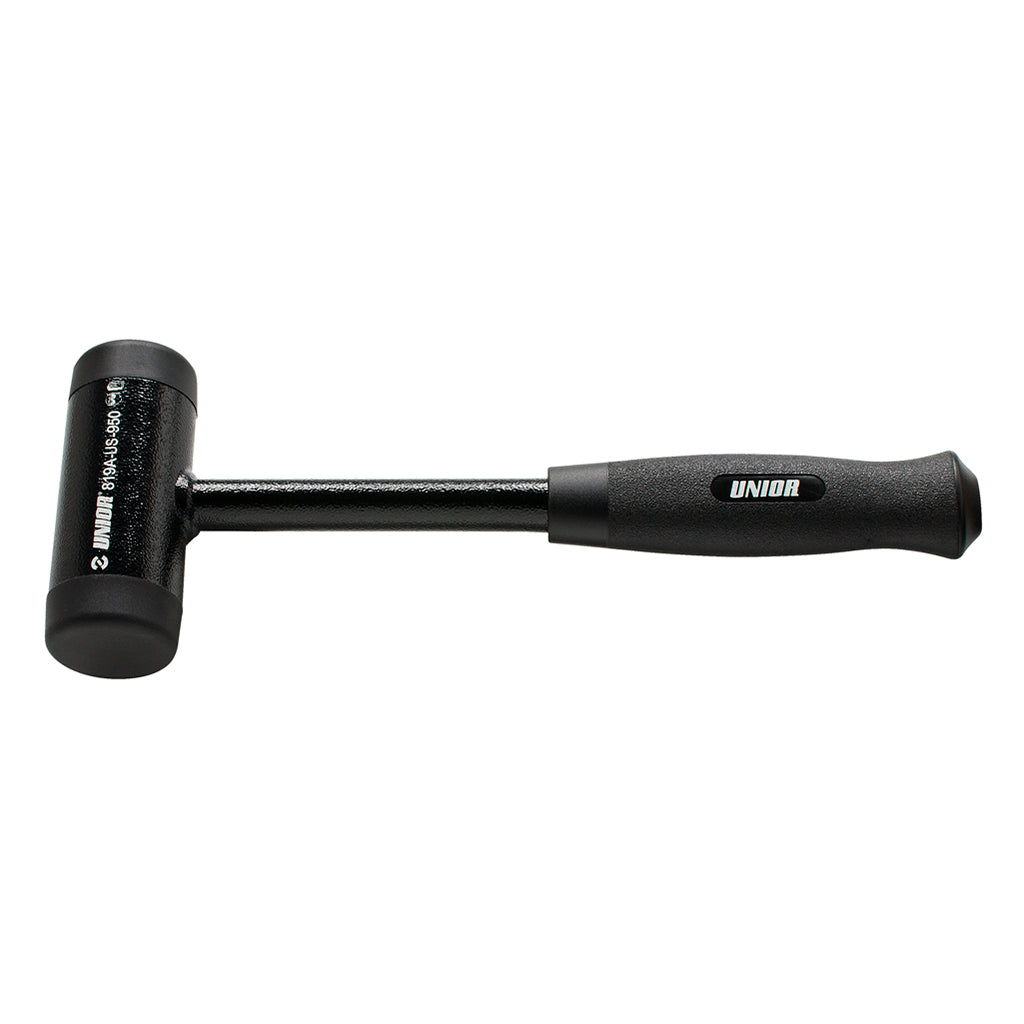
- One dead-blow hammer, polyurethane shell, around 866 g; see the deadblow hammer. The bike-shop default for seating work.
- One plastic-faced bumping hammer, two polyurethane tips, around 320 mm length; see the plastic hammer 820A. Lighter than the dead-blow, for finer seating work.
- One locksmith hammer with a steel face and a wooden handle; see the locksmith hammer 812. For chisel-and-punch strikes.
- A pin punch set with a 3 mm punch for chain rivets and a 4 mm for hanger studs; see the 3 mm pin punch 641/6.
- A flat chisel in a small size for splitting stuck nuts; see the flat chisel 660/6.
That’s four hammers and two chisels for a complete kit. Each one does a job the others don’t.
Care
Hammers are low-maintenance tools. The handle (wood or polymer) is what wears; the head lasts indefinitely. Check the handle-to-head fit annually; a loose head is dangerous. Replace the handle, don’t try to re-seat the head.
Chisels and pin punches need occasional tip dressing; a sharp tip is what keeps the tool from slipping off the workpiece. A few seconds on a bench grinder restores a worn tip; over-grinding wastes the tool. Light touch.
A note on the locksmith hammer’s name
“Locksmith hammer” is the European naming convention for what American shops call a “bumping hammer” or “machinist’s hammer”; a small, flat-faced steel hammer with a wooden handle, designed for precision strikes against pins, punches, and chisels. The locksmith heritage is real; locksmiths historically used this hammer profile for re-pinning cylinder locks. The bike-shop application is the same precision-strike use case applied to a different workpiece.
Made in Slovenia, since 1919
Unior has been forging hand tools in Zreče since 1919, and sponsors professional road and mountain-bike race teams. Hammers and chisels are forge-heritage tools; the drop-forging process used on the chisel and pin-punch bodies is the same process the brand has run since the founding year, applied across the cycling-tools line as a whole. The locksmith hammer's ash-handle pattern reflects the European workshop tradition where wood-handle hammers stayed standard through the era of synthetic-handle adoption: a deliberate choice for the precision-strike use cases where shock absorption at the handle matters more than chemical resistance.