What Is a Bike Chain Tool and Which One Do You Need?
What a bike chain tool does, when a chain breaker beats master link pliers, and which press fits 12-speed, AXS Flattop, and 1/8-inch chains.
On this page
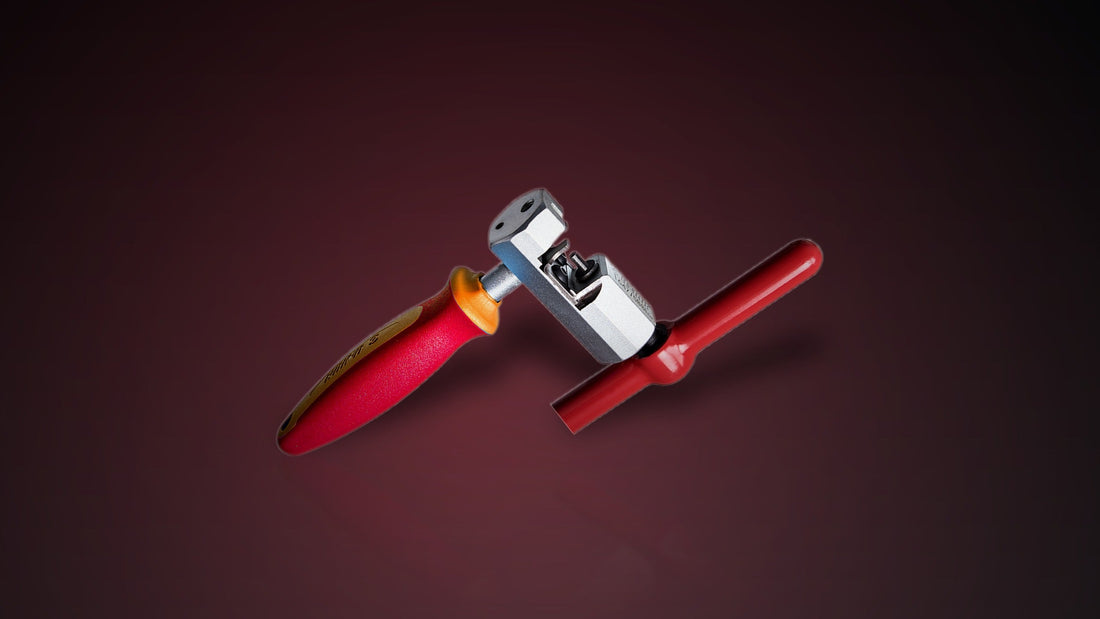
A bike chain tool is a small hand press for the pins that hold a chain together. It drives a pin out to cut a new chain to length or to open a worn one, and on chains that join with a connecting pin, the same spindle presses the new pin home. Most riders call it a chain breaker, and the name undersells it: breaking is half the work, and the other half is putting a chain back into service straight enough to trust under load.
Modern drivetrains split that second half off to another tool. Most current 11- and 12-speed chains close on a master link rather than a pressed pin, and master links want pliers, not a press. So "chain tool" today really names a small family of three: the screw-type press, the one-squeeze breaking pliers, and the master link pliers.
What does a chain tool do?
Strip away the handles and every screw-type chain tool is the same machine: a support that cradles one link by its plates, and a threaded spindle that advances a hardened driving pin against the chain pin. Wind the spindle in and the chain pin backs out through its plate hole until the link separates. The whole job rides on alignment. If the driving pin meets the chain pin off-center, it can flare the plate hole or bend the pin, and a chain that's been opened badly once is a chain you stop trusting on a sprint. Better tools spend their engineering exactly here, on holding the plate true while the force goes through.
The same stroke works in reverse on chains that rejoin with a connecting pin: seat the new pin, press it through to spec, and the joint closes. That pressed-pin path is how Shimano road and MTB chains have traditionally joined, which is why the chain tool earned its place in every saddle bag long before master links took over the market.
Chain breaker vs master link pliers: which do you need?
A workshop that services chains ends up with both a press and a pair of pliers, because neither does the other's job.
| Tool | What it does | Where it wins |
|---|---|---|
| Screw-type chain tool | Presses pins out and connecting pins in | Cutting chains to length; any pin-joined chain |
| Chain-breaking pliers | Drives a pin out in one squeeze of the handles | Speed, when chains are opened every day |
| Master link pliers | Snaps quick links open and shut | Closing and removing master links without drama |
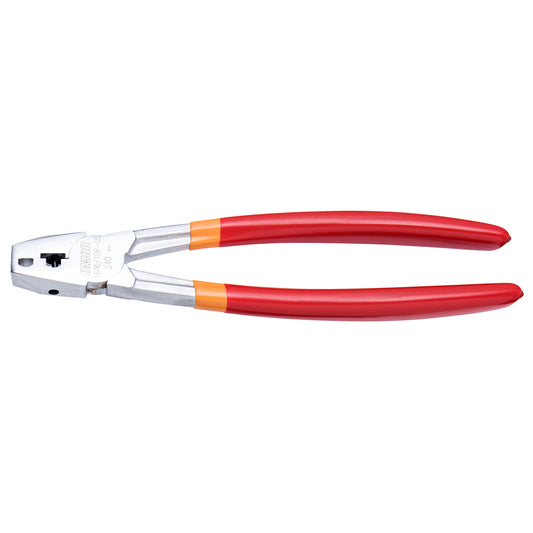
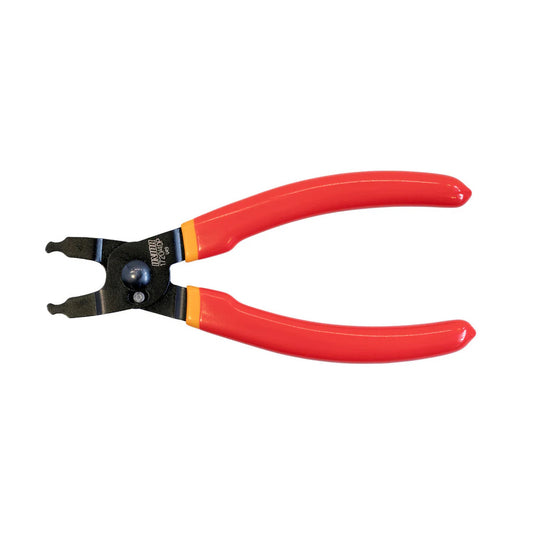
The screw-type press is the one tool of the three that no chain escapes: even a chain that closes on a master link ships longer than your bike needs, and shortening it means pressing pins out. The Chain Breaking Pliers 1640/1DP trade the spindle's many turns for a single hand stroke, which matters in a shop that opens chains every day. And the Master Link Pliers 1720/4DP handle the link itself, in both directions, with jaws that install and remove rather than forcing you to carry one plier for each.
Which chain tool fits which chain?
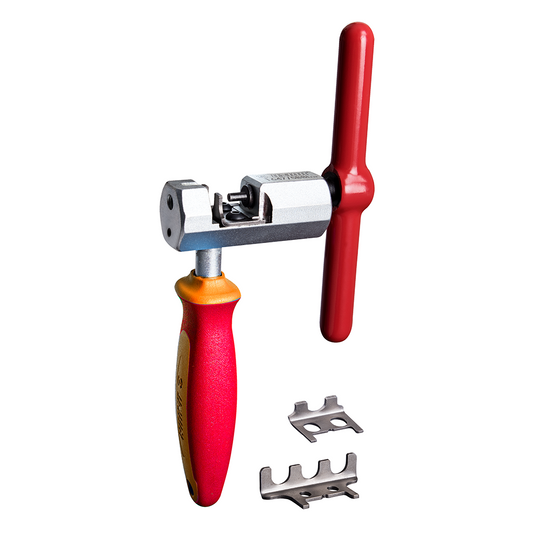
Speed count is the first filter. Chains get narrower as sprockets multiply, and a chain tool's support has to hold the plates of the chain in front of it. The Master Chain Tool 1647/2BBI is the wide-coverage answer in our range: 6- through 13-speed derailleur chains, an insert for SRAM AXS Flattop chains, whose tall flat-topped plates won't sit in a standard cradle, and a separate support for 1/8-inch chains, the wide format on many singlespeed, BMX, and hub-geared e-cargo drivetrains. Its floating support is the alignment problem solved in hardware: the cradle finds the plate's position itself before the pin ever loads it.
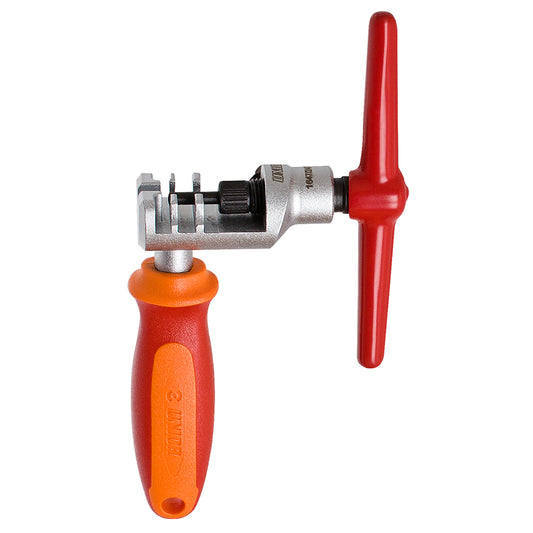
The Professional Chain Tool 1647/2ABI is the simpler workshop screw-type: it covers most modern derailleur chains, supports Campagnolo 11-speed, and skips the modular inserts. Skipping the inserts also means skipping SRAM's Flattop chains, which only seat properly in tooling shaped for them. One caution on the pliers: the 1640/1DP doesn't fit 1/8-inch chains at all, so the singlespeed and BMX crowd should plan around a screw-type press with the right support.
Do you need a chain wear tool too?
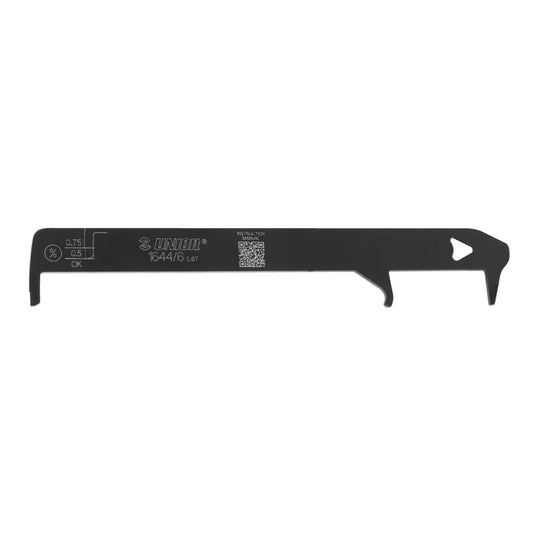
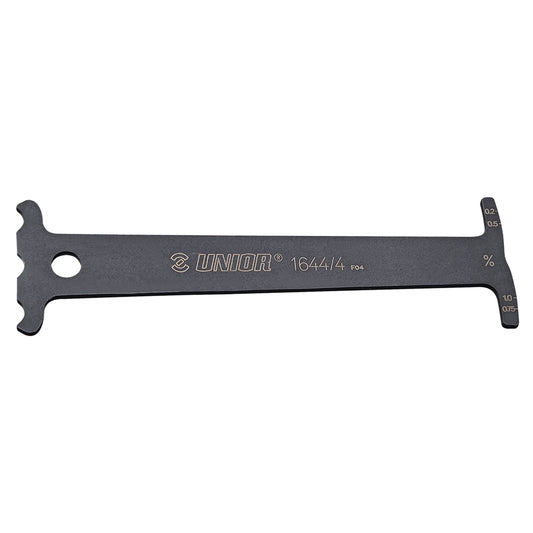
Yes, and arguably first. The most common reason to reach for a chain tool is a wear gauge saying the chain is done, and the gauge costs a fraction of the cassette it protects. A worn chain elongates at every pin, and past the service threshold its rollers start recutting the cassette teeth to match. The Chain Wear Indicator 1644/6 reads pin stretch alone; its three contact points keep loose, worn rollers from skewing the measurement, and its triggers sit at 0.5% for 11-, 12-, and 13-speed chains and 0.75% for older drivetrains. The simpler Manual Chain Wear Indicator 1644/2 is the classic go/no-go gauge built around the legacy 0.7% convention, which holds for 6- through 10-speed chains.
How do you use a chain tool without ruining the chain?
Seat the link fully in the support, advance the spindle until the driving pin touches the chain pin dead center, and only then apply real force; the moment of contact is where misalignment does its damage. Press with smooth, continuous turns; don't jerk the handle. Where you stop depends on what comes next: if the chain is coming off for good, or going back together on a master link, drive the pin clear through; if you plan to rejoin the old way on the same pin, stop while the pin still hangs in the outer plate, or you'll fight to start it again. If the freshly joined link binds, flex it laterally a few degrees by hand, or give the pin a fractional back-press from the opposite side, and it frees.
Length comes before any of this on a new chain, and that's its own subject: how to measure bike chain length covers the sizing methods, and when and how to replace your chain walks the full swap from wear verdict to first ride, gauge reading included. The full family of presses, pliers, and gauges lives in our chain tools collection.
Bike chain tool FAQ
Is a chain tool the same as a chain breaker? Same tool, two names. "Breaker" describes the pin-out stroke, but the screw-type tool also presses connecting pins in, so "chain tool" is the fuller name for what it does.
Do I need a chain tool if my chain uses a master link? Yes, just less often. The pliers own the link, but the press still owns length: a new chain ships long, and the excess comes out by pressing pins, master link or not.
What chain tool works on singlespeed and BMX chains? The 1/8-inch format is wider than any derailleur chain, so the support a 12-speed tool carries simply won't close around it. Look for a press whose maker states 1/8-inch capacity outright; in our range that's the Master Chain Tool's dedicated wide support.
Can a chain tool put a chain back together? On pin-joined chains, yes: it presses the connecting pin in with the same stroke that drives pins out. On master-link chains it only opens the chain; the link itself closes by hand or with pliers.
What separates a good chain tool from a cheap one? Where the force goes. A cheap tool leaves pin-to-pin alignment to your eye, and its threads wander under load; a good one locates the plate in a machined support so the press can only travel straight. You feel the difference on the third chain, not the first.
Unior has been forging hand tools in Zreče since 1919, and sponsors professional road and mountain-bike race teams. The chain tools in our catalog run from saddle-bag essentials to the presses our sponsored race mechanics pack for service courses.
Pro tip from our mechanics
Cut to length on the workbench, not on the bike. A chain held between one hand and a chainstay never sits square in the tool, and a pin pressed off-axis leaves a weakened joint you can't inspect afterward; the damage is inside the plate hole. Thread the chain through the derailleur to confirm the length, then bring it back to the bench for the cut, and let the support do the centering. For the wear-check rhythm that decides when any of this happens, see when and how to replace your chain.
Tools used in this guide
Straight from the article — no hunting through the catalog.
-
Master Chain Tool
Regular price $109.99 USDRegular priceUnit price per -
Professional Chain Tool
Regular price $49.95 USDRegular priceUnit price per -
Chain Breaking Pliers
Regular price $49.99 USDRegular priceUnit price per -
Master Link Pliers
Regular price $24.99 USDRegular priceUnit price per -
Chain Wear Indicator
Regular price $19.99 USDRegular priceUnit price per -
Manual Chain Wear Indicator
Regular price $12.99 USDRegular priceUnit price per
Frequently asked questions
What is a bike chain tool?
A bike chain tool is a small hand press that drives the pins out of a bicycle chain. It is used to cut a new chain to length or open a worn one, and on pin-joined chains it presses the connecting pin back in. Most riders call it a chain breaker.
Is a chain tool the same as a chain breaker?
Yes, they are two names for the same tool. Breaker describes the pin-out stroke, but a screw-type chain tool also presses connecting pins in, so it both opens chains and closes pin-joined ones.
Do I need a chain tool if my chain uses a master link?
Yes, just less often. Master link pliers open and close the link itself, but a new chain ships longer than most bikes need, and shortening it to length still means pressing pins out with a chain tool.
What chain tool works on singlespeed and BMX chains?
The 1/8-inch chain format is wider than any derailleur chain, so a tool sized for 12-speed chains will not close around it. Use a press whose maker states 1/8-inch capacity, such as the Unior Master Chain Tool 1647/2BBI with its dedicated wide support.
Can a chain tool put a chain back together?
On pin-joined chains, yes: it presses the connecting pin in with the same stroke that drives pins out. On master-link chains it only opens the chain, and the link itself closes by hand or with master link pliers.
What separates a good chain tool from a cheap one?
Alignment. A cheap tool leaves pin-to-pin alignment to your eye, while a good one locates the chain plate in a machined support so the driving pin can only travel straight, which is what protects the plate hole and the pin.