Pliers for bike work: which tool for which job
Long-nose, slip-joint, locking, retaining-ring: a working bike shop reaches for a different plier almost every job. Here is the decision tree we use.
On this page
A bike-shop tool drawer with one pair of pliers in it is a tool drawer that’s about to chew up a brake cable end, slip off a snap ring, or mar the finish on a quick-release lever. Pliers are a category, not a single tool, and most bike jobs that involve pliers really involve a specific plier whose jaw geometry was designed for that exact job.
This is the decision tree we use at the bench, organized around the actual jobs that pull a plier out of the drawer.
The plier types worth knowing
There are five plier families that earn shelf space in a working bike shop. Each one solves a problem the others cannot. The Unior versions are grouped in our bike shop pliers collection.
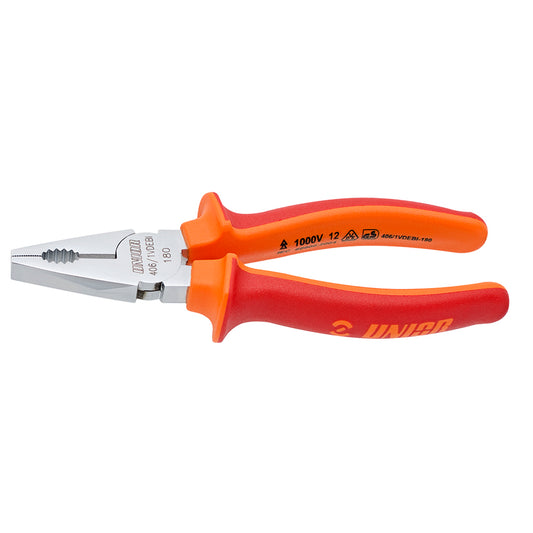
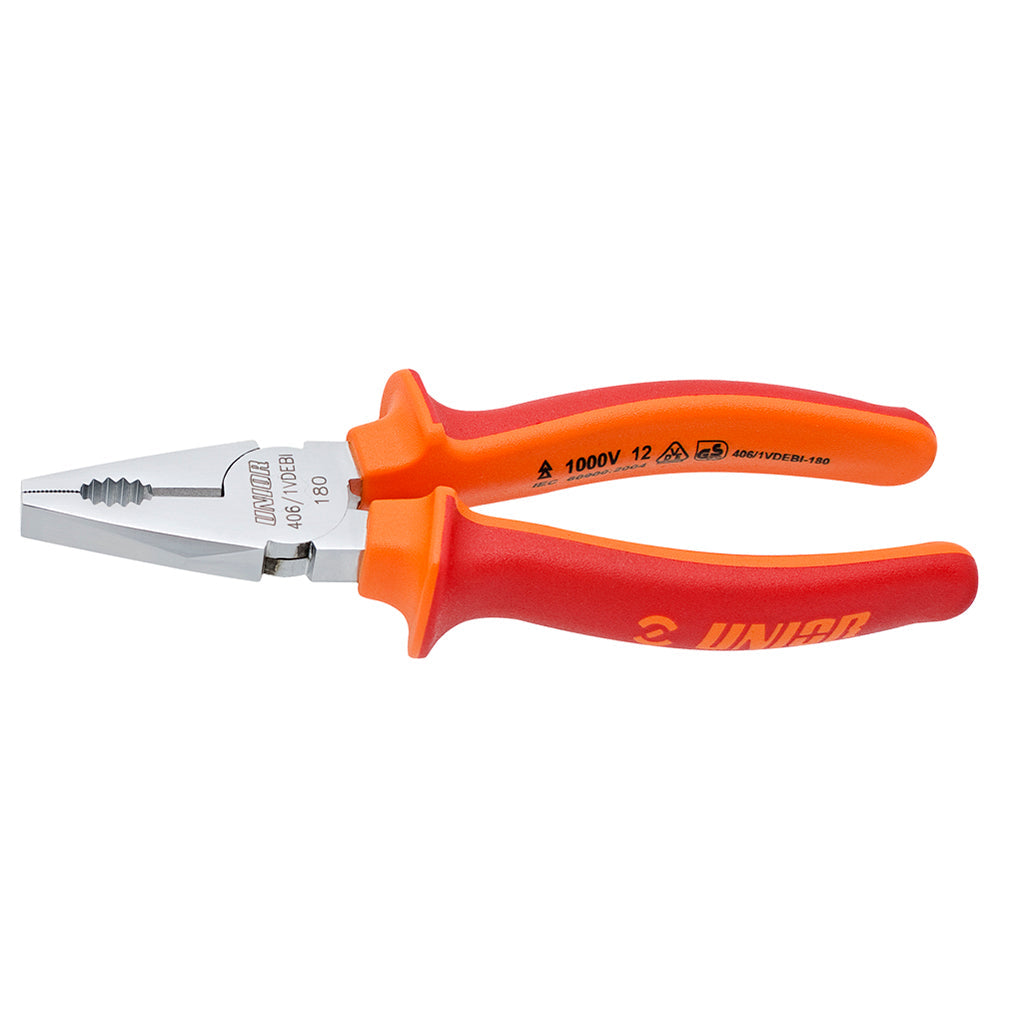
Combination pliers (slip-joint with side cutters). The generalist. Jaws have a serrated front section for round stock, a knurled middle for flat stock, and a side cutter at the pivot. Good for almost anything that doesn’t have a more-specific tool. Our combination pliers are drop-forged with induction-hardened cutting edges, which is what separates a 20-year tool from a tool that goes dull on the second cable-housing cut.
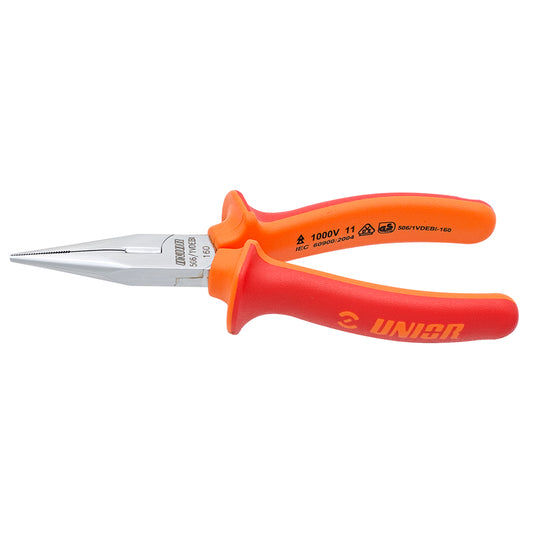
Long-nose (needle-nose) pliers. Long, tapered jaws for getting into tight spots. The bike-shop case is reaching past a brake caliper to grab a stranded cable end, fishing a rolled-up tube valve out of a deep rim well, or threading a spring back onto a derailleur cage. We carry three lengths and shapes because how far in and what angle both matter; see the family at needle nose pliers, long needle nose, and bent long needle nose.
Side cutters (diagonal cutters / dikes). Pure cutting jaws, no gripping function. The job is severing cable, zip ties, and (with the right tool) thicker stainless brake-housing strands. The diagonal side cutters are sized for shop work and use VDE-insulated handles.
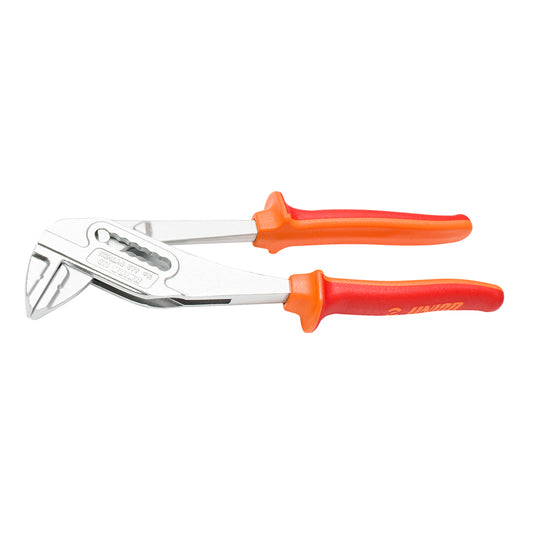
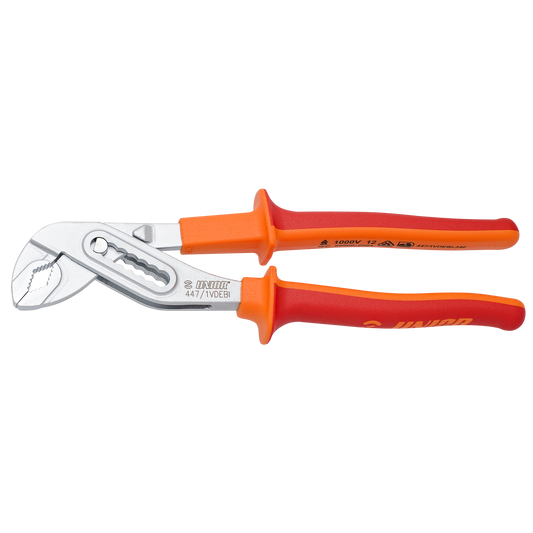
Slip-joint / parallel-jaw pliers. Adjustable jaws that grip flat or round stock at variable widths without rocking off-center. The bike-shop case is a stuck pedal axle, a rounded-off lockring, or anything that an open-end wrench is about to chew up. The parallel-jaw pliers we sell use a cam-action mechanism that keeps the jaws parallel across all seven width positions; cheaper slip-joints rotate as they open and contact the workpiece at two points instead of a full face. Adjustable box-joint pliers offer a similar wide-grip range with a simpler pivot.
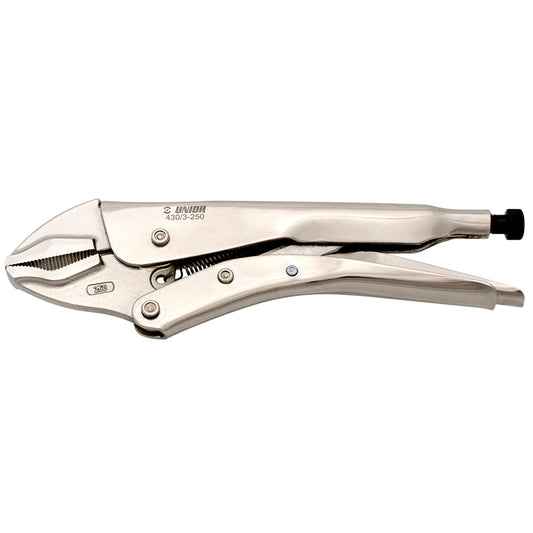
Locking pliers (Vise-Grip style). Clamp-and-walk-away pliers. You shouldn’t need them often, but when you do, nothing else works. A stripped axle nut, a seized rear-derailleur stop screw, a snapped seatpost binder bolt. Our locking pliers are nickel-plated with drop-forged heat-treated jaws.
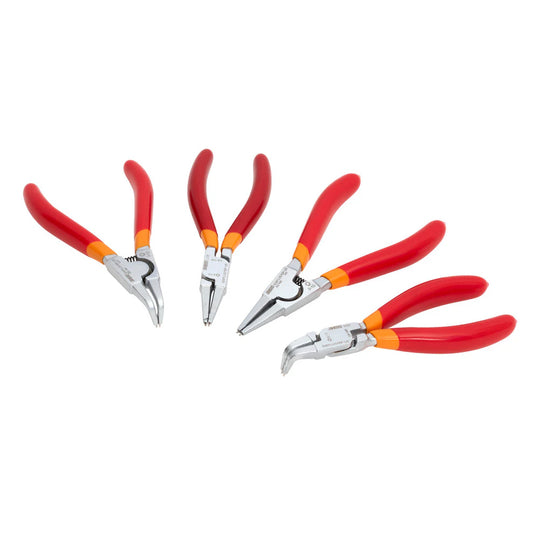
Retaining-ring (circlip / snap-ring) pliers. A separate category because the jaws have pins, not faces, and the pins go into holes drilled into the circlip. Internal circlips squeeze closed; external circlips spread open. You need different pliers for each, and within each direction there are straight-tip and bent-tip versions for clearance.
Bike-specific use cases worth the dedicated tool
A few jobs come up often enough in bike service that the right plier becomes the difference between a 30-second fix and a 20-minute fight.
Cable end finishing
A frayed cable end is mostly a cosmetic issue, but a fraying brake cable will eventually catch on a brake hood or your fingers. The fix is a cable-end crimp cap, applied with the side cutters' or combination pliers' jaws. The trick is not to crimp too hard, since over-crimping shears the cap off the cable. A light pinch on the knurled middle section of combination-plier jaws is what you want.
Master link removal and installation
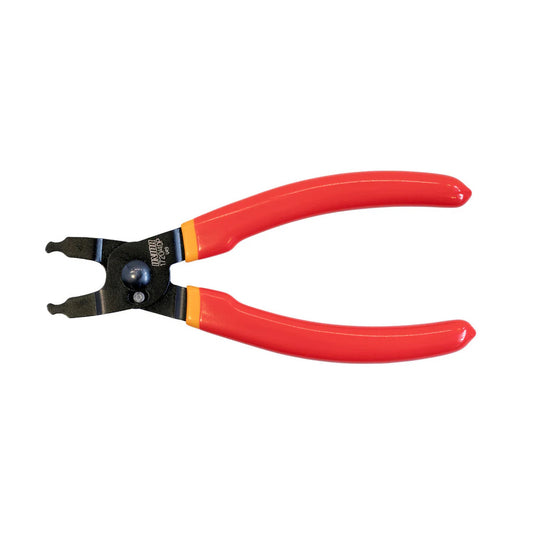
Most modern chains use a master link rather than a riveted pin connector. SRAM PowerLocks, Shimano Quick-Link, KMC MissingLinks, Wippermann Connex; they all install hand-tight, but breaking them open with bare hands becomes harder as the chain settles into use. A dedicated Master Link Pliers is the right tool for this job; the bike-shop default. In a pinch, long needle-nose pliers can compress a master link from outside, but the geometry isn’t ideal and you’ll want the dedicated tool once you’ve serviced a few chains.
Retaining rings on hub axles, pedals, and headsets
This is where many home shops get stuck. Snap rings show up inside cup-and-cone hub axles, on some pedal spindles holding the bearing assembly, on internal-cup headset adjusters, and on suspension fork seal heads. Trying to free one with a flat-blade screwdriver bends the ring, breaks the screwdriver, or sends the ring across the shop floor.
The right tool is a circlip plier with tapered tips. Our pliers use a 9-degree taper so the tip seats into the circlip hole and stays seated under load, instead of cam-rolling out. Internal rings need a plier whose jaws close when you squeeze the handles, compressing the ring out of its bore; external rings need a plier whose jaws spread when you squeeze, opening the ring off its shaft. The angle (straight vs bent) is a clearance question, not a function one. The retaining ring circlip pliers set covers all four combinations.
Parallel-jaw work on the rear derailleur P-spring
When a rear derailleur is partially disassembled for a hanger swap or a service, the P-spring (the spring loaded against the derailleur body) needs a steady, parallel clamp to hold while you index it. A traditional slip-joint plier rolls off and lets the spring fire. A cam-action parallel-jaw plier holds across the full face. Same principle works on derailleur knuckles, hanger studs, and brake-line olive crimps.
Stuck or rounded fasteners
Locking pliers are the last-resort tool. The honest truth is that if you reach for them often, something earlier in the process is going wrong: undersized hex key, missing thread prep, over-torqued bolt. Keep them in the drawer for the day a 6 mm hex strips and the seatpost won’t budge. When they earn their keep, they really earn it.
A decision table for the home shop
| Job | First-choice tool | Why |
|---|---|---|
| Cable-end crimp cap | Combination pliers or side cutters | Light pinch on knurled middle section |
| Master link install/remove | Dedicated master link pliers | Designed for the geometry; bike-shop default |
| Cable / zip-tie cutting | Side cutters | Cleanest cut, no jaw wear |
| Stripped pedal axle nut | Slip-joint or parallel-jaw pliers | Wide grip, parallel face |
| Hub axle snap ring (internal) | Internal circlip pliers, tapered tips | 9° taper prevents tip cam-roll |
| Hub axle snap ring (external) | External circlip pliers, tapered tips | Same, different jaw direction |
| Reaching past brake caliper | Long needle nose | Jaw length and tip diameter |
| Seized bolt, broken head | Locking pliers | Clamps and stays clamped |
| Holding a P-spring while indexing | Parallel-jaw pliers | Won’t rock off the spring |
Quality signals worth checking before you buy
Three details separate a plier you’ll keep for 20 years from one that will frustrate you on the second job.
Drop-forged jaws. The forging step aligns the steel grain so the jaws don’t fatigue-crack under repeated clamping load. Stamped jaws bend; forged jaws don’t. Every Unior plier in the catalog above is drop-forged.
Induction-hardened cutting edges. Side cutters and the cutter section on combination pliers face the harshest wear: thin steel strands compressing in a very small contact patch. Induction hardening targets the cutting edge specifically and leaves the rest of the jaw with the toughness it needs for grip work. Look for “induction-hardened cutting edges” on the spec sheet; if it isn’t there, the cutter will dull within a year.
Pivot tightness without binding. A new plier should close smoothly without slop in the pivot. After ten years of use, that pivot should still close smoothly. Cheap pliers loosen at the pivot; quality pliers stay tight because the pivot pin is hardened and the jaw bores are reamed to match.
Care, briefly
Wipe the pivot with a drop of light oil every couple of months. Store somewhere dry. Don’t use pliers as makeshift hammers, pry bars, or wire strippers; each of those compromises the jaw geometry that makes them work for their intended job. A 20-year plier is mostly a plier whose owner respected what it was for.
Made in Slovenia, since 1919
Unior has been forging hand tools in Zreče since 1919, and sponsors professional road and mountain-bike race teams. The plier line carries the same forging-and-heat-treatment process as our chain tools and torque wrenches: forged from a billet, hardened and tempered, then finished with trivalent chrome plating to ISO 1456:2009. The construction matters because pliers see asymmetric load; the jaws lever against the pivot every time you squeeze, and the metallurgy is what keeps that load from walking the jaws out of true.
Forge work is the family business at Unior; the cycling-tool line is one of three product areas (forging parts and hand tools are the others). The pliers above carry that heritage.
Tools used in this guide
Straight from the article — no hunting through the catalog.
-
Combination Pliers
Regular price $25.99 USDRegular priceUnit price per -
Needle Nose Pliers
Regular price $32.99 USDRegular priceUnit price per -
Diagonal Side Cutters
Regular price $29.99 USDRegular priceUnit price per -
Adjustable Box Slip Joint Pliers
Regular price $59.99 USDRegular priceUnit price per -
 Sold out
Locking Pliers
Regular price $29.99 USDRegular priceUnit price per -
Adjustable Box Joint Pliers 447/1VDEBI
Regular price $48.99 USDRegular priceUnit price per -
Master Link Pliers
Regular price $24.99 USDRegular priceUnit price per -
Retaining Ring Circlip Pliers Set
Regular price $114.99 USDRegular priceUnit price per